THE CLASSIC COLLECTION✦My diaries, being a personal narrative of events 1888-1914, Part 2 (1900-1914)CLASSIC FREE BOOKS
My diaries, being a personal narrative of events 1888-1914, Part 2 (1900-1914)
Wilfrid Scawen Blunt
THE CLASSIC COLLECTION · 1874
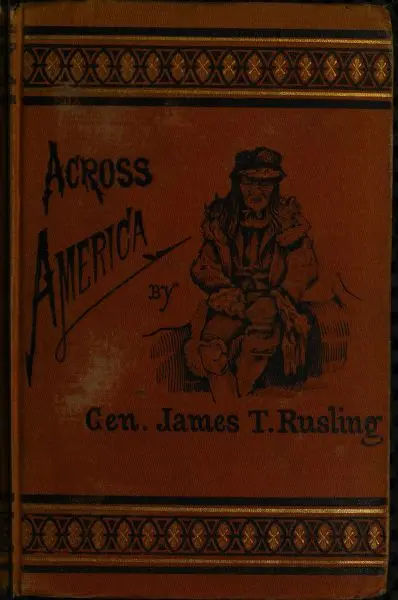
"Across America; Or, The Great West and the Pacific Coast" by James Fowler Rusling is a historical account written in the mid-19th century. The work details the author's extensive journey across America, specifically focusing on the exploration and inspection of military posts from Fort Leavenworth to the Pacific Coast, including his observations of the people, landscapes, and changing cultures he encounters along the way. At the start of the narrative, Rusling sets the stage for his journey with a description of his orders to inspect various military posts in the West following the Civil War. He describes the logistical aspects of his travels, including the modes of transportation, the people he travels with, and his initial impressions of the landscapes he traverses. The opening chapters cover his departure from New York, passage through multiple states, and his encounter with both settlers and Indigenous peoples, illustrating the rich and often challenging realities of the American frontier during that era. The author employs a vivid and engaging style, inviting readers into the world of 1866 America as he navigates varied terrains and unfamiliar cultures.
Introduction adapted from the source catalogue; source summaries may be automatically generated.
Free to read · English · 147,892 words · No account needed
MAKE TIME FOR A GOOD BOOK
On by default. Untick to stop anonymous reading totals. Each page counts after 10 seconds in view. How this works.
Anonymous counting is on unless you have switched it off.
The true status of this Salt Lake militia appears pretty clearly, I judge, from the following conversation with the said Lieutenant-General. We were still "on the field," and I had casually asked him, whether this was the militia of the Church or of the Territory?
"O, of the Territory, of course!" he replied, with a smile that was
child-like and bland.
"But its officers are all Mormons, and its men mostly so, I believe?"
"Why, yes, sir!" sobering down.
"Its chief officers, especially, I observe, are men high in the church, like yourself, Generals C---- and Y----, and others I see here; are they not?"
"Well, yes sir!" becoming more grave.
"Are these troops, then, the quota of Utah, or only of a single county?"
"Only of Salt Lake County. The other counties have similar organizations, but smaller; and all are required to spend at least three days per year in camp, for drill and review."
"To whom, however, does your militia report?"
"To myself only. By act of the Territorial Legislature, I am Commander-in-Chief of the Utah Militia, and of course they take orders only from me."
"Then his excellency, the governor of the Territory, though its chief executive, has no power to call out the territorial militia, or in any way to control it?"
"Why, no--no--sir! I believe--not!" very hesitatingly, and as if a
good deal confused.
By this time, he began to see the drift of things somewhat, and suddenly remembered he had important business elsewhere. This was not surprising; for had he not already virtually acknowledged, that this whole militia force--such as it is--was nothing more nor less, than an auxiliary of the Mormon church, organized and held well in hand to do her bidding? Gov. Durkee, the territorial governor, a few days afterwards confirmed this view of the subject, and added, that in his judgment this militia was a standing menace to our authority in Utah, and would make us trouble there yet. He said, in his last Annual Message, he had called the attention of the Legislature to its anomalous character, and recommended that the militia laws be amended, so that the troops should report to him, and that he be provided with the usual staff--Adjutant-General, Quartermaster-General, Inspector-General, etc.--the same as in all our other Territories. The Legislature, however, being wholly Mormon, paid no attention to his recommendations, and he did not suppose it would very soon. No doubt this militia from its Lieutenant-General commanding, down, is a mere creature of Brigham Young's--Mormon in composition and organization--Mormon in spirit and purpose--Mormon in body, brain, and soul--and what Brother Brigham proposes to do with it, it remains for our good-natured Uncle Samuel yet to see. In case of a future collision in Utah, between United States and Mormon authority, we shall probably soon learn.
Your reading position is saved on this browser. Take it to another device with a library code. Reading pages adapt to text, rather than matching a printed edition.
BEHIND THE BOOK
This eBook is for the use of anyone anywhere in the United States and most other parts of the world at no cost and with almost no restrictions whatsoever. You may copy it, give it away or re-use it under the terms of the Project Gutenberg License included with this eBook or online at www.gutenberg.org. If you are not located in the United States, you will have to check the laws of the country where you are located before using this eBook. Read the source licence.
The original source file, including credits and licence, is retained by this library. Request an original-format copy at no charge. Please include the book title and Project Gutenberg identifier #42706.
KEEP YOUR CURIOSITY GOING
Wilfrid Scawen Blunt
Wilfrid Scawen Blunt

E. W. (Edgar Watson) Howe
Cécile Tormay

Moritz Busch
John L. Ransom