THE CLASSIC COLLECTION✦My diaries, being a personal narrative of events 1888-1914, Part 2 (1900-1914)CLASSIC FREE BOOKS
My diaries, being a personal narrative of events 1888-1914, Part 2 (1900-1914)
Wilfrid Scawen Blunt
THE CLASSIC COLLECTION · 1874
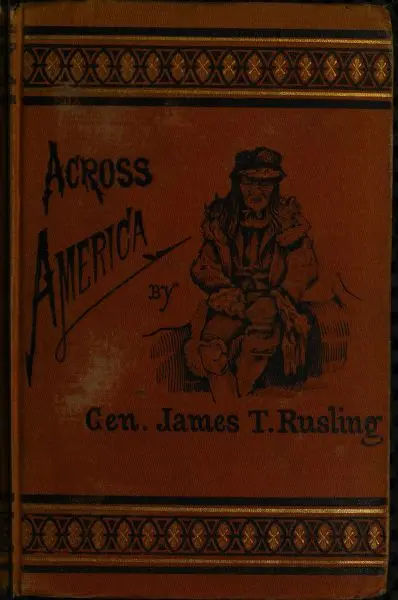
"Across America; Or, The Great West and the Pacific Coast" by James Fowler Rusling is a historical account written in the mid-19th century. The work details the author's extensive journey across America, specifically focusing on the exploration and inspection of military posts from Fort Leavenworth to the Pacific Coast, including his observations of the people, landscapes, and changing cultures he encounters along the way. At the start of the narrative, Rusling sets the stage for his journey with a description of his orders to inspect various military posts in the West following the Civil War. He describes the logistical aspects of his travels, including the modes of transportation, the people he travels with, and his initial impressions of the landscapes he traverses. The opening chapters cover his departure from New York, passage through multiple states, and his encounter with both settlers and Indigenous peoples, illustrating the rich and often challenging realities of the American frontier during that era. The author employs a vivid and engaging style, inviting readers into the world of 1866 America as he navigates varied terrains and unfamiliar cultures.
Introduction adapted from the source catalogue; source summaries may be automatically generated.
Free to read · English · 147,892 words · No account needed
MAKE TIME FOR A GOOD BOOK
On by default. Untick to stop anonymous reading totals. Each page counts after 10 seconds in view. How this works.
Anonymous counting is on unless you have switched it off.
Religious services had already begun, and we found a Mr. Nicholson, a returned missionary from England, expatiating at the desk with much fervor. We were too late for his text, but found him discussing at length the evidences and undeniability of their peculiar doctrines. He was a fluent, but vapid speaker, and, with all our curiosity to hear him, soon became very tiresome. The gist of his argument was, that the saints knew for themselves, in their own hearts, that Mormonism was true, and, therefore, that no Gentile (or outside unbeliever) could possibly disprove it. He said, "My brethren, we know our doctrines to be true, yea and amen, forever. They have come to us by express revelation from heaven, and we have tested them in our own experience; and, therefore, to argue against them is the same as to argue against the multiplication-table, or to doubt logic itself. Yes, our priesthood, from Brother Brigham down, is God's own appointed succession, and whoever rejects its teachings will be damned for time and eternity." He iterated and reiterated these crude and common-place ideas for an hour or more ad nauseam, until finally Brigham Young (who presided) stopped him, and ordered the sacrament administered. This consisted only of bread and water, passed through the audience, everybody partaking of the elements. This over, singing followed, in which all participated, the chief functionaries leading. Now came another "returned missionary," whose name we missed. He talked for twenty minutes or more, in a very loose and rambling way, about the work in England and Wales, and evidently was regarded as a rather "weak brother," to say the least of him. The next speaker was George Q. Cannon, a leading dignitary of the church, and a man of decided parts in many ways. He is an Englishman by birth, and for awhile after arriving here served Brigham Young as secretary. Now he was a stout, hearty looking man, in his prime, with good frontal developments, and impressed us as the smartest Mormon on the platform--Brigham, perhaps, excepted. He spoke for nearly an hour, delivering a calm, connected, methodical address, and evidently moved his audience deeply. The substance of his discourse was, that they as a church were blessed beyond and above all other churches, because they had a genuine priesthood, appointed by God himself, and in constant communication with Him. "Other churches," he said, "in their decadence had dropped this doctrine, and accordingly had lost their spirituality and power. But Joseph Smith, in the fulness of time, found the Book of Mormon, where God had concealed it, and so became His vice-gerent on earth. Brother Joseph selected Brigham Young, Heber Kimball, and Orson Pratt, as his co-workers, and through these and others Jehovah now communicates his unchanging will to the children of men. These great and good men speak not themselves, but the Holy Ghost in and through them. What we shall speak, we know not, nor how we shall speak it; but God inspires our hearts and tongues. Ofttimes we are moved to declare things, that are seemingly incredible. If left to ourselves, we would prefer not to declare them. But Jehovah speaks through us--we are but his mouth-pieces--and what are we to do? We must proclaim His solemn revelations, and to-day I tell you, brothers, what Brother Brigham has often said before, that the time is not distant--nay, is near at hand--when the North and South will both call upon Brigham Young and his holy priesthood to come and help them re-establish free constitutional government there. We, here in Utah, have the only free and Christian government upon the earth, and God has revealed it to us, that His holy church shall yet occupy and possess the continent. Some of you may doubt this, and Gentiles especially may mock at and deride it. But Jehovah has so spoken it, to Brother Brigham and others, and many now here will yet live to see this fulfilled. Heaven and earth may pass away, but my words shall not fail, saith the Lord!" All this, and much more of the same purport, he uttered with the greatest solemnity, as if devoutly believing it, and his audience received it with a hearty chorus of "amens." There was more singing, and then Brigham, who had presided over the meeting as a sort of moderator, dismissed the congregation with the usual benediction. We had hoped to hear him speak also, as their great chief and leader; but he was ailing that day, and so disappointed us.
Your reading position is saved on this browser. Take it to another device with a library code. Reading pages adapt to text, rather than matching a printed edition.
BEHIND THE BOOK
This eBook is for the use of anyone anywhere in the United States and most other parts of the world at no cost and with almost no restrictions whatsoever. You may copy it, give it away or re-use it under the terms of the Project Gutenberg License included with this eBook or online at www.gutenberg.org. If you are not located in the United States, you will have to check the laws of the country where you are located before using this eBook. Read the source licence.
The original source file, including credits and licence, is retained by this library. Request an original-format copy at no charge. Please include the book title and Project Gutenberg identifier #42706.
KEEP YOUR CURIOSITY GOING
Wilfrid Scawen Blunt
Wilfrid Scawen Blunt

E. W. (Edgar Watson) Howe
Cécile Tormay

Moritz Busch
John L. Ransom