THE CLASSIC COLLECTION✦My diaries, being a personal narrative of events 1888-1914, Part 2 (1900-1914)CLASSIC FREE BOOKS
My diaries, being a personal narrative of events 1888-1914, Part 2 (1900-1914)
Wilfrid Scawen Blunt
THE CLASSIC COLLECTION · 1874
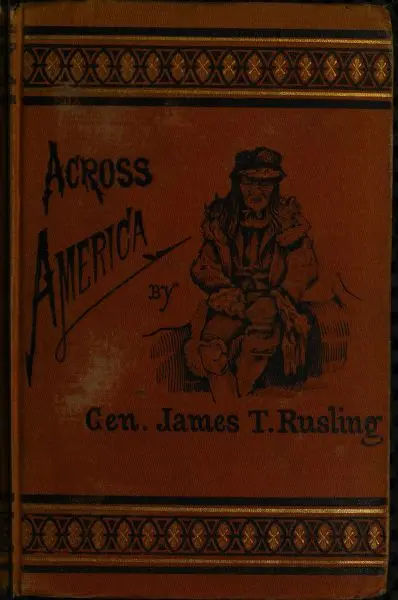
"Across America; Or, The Great West and the Pacific Coast" by James Fowler Rusling is a historical account written in the mid-19th century. The work details the author's extensive journey across America, specifically focusing on the exploration and inspection of military posts from Fort Leavenworth to the Pacific Coast, including his observations of the people, landscapes, and changing cultures he encounters along the way. At the start of the narrative, Rusling sets the stage for his journey with a description of his orders to inspect various military posts in the West following the Civil War. He describes the logistical aspects of his travels, including the modes of transportation, the people he travels with, and his initial impressions of the landscapes he traverses. The opening chapters cover his departure from New York, passage through multiple states, and his encounter with both settlers and Indigenous peoples, illustrating the rich and often challenging realities of the American frontier during that era. The author employs a vivid and engaging style, inviting readers into the world of 1866 America as he navigates varied terrains and unfamiliar cultures.
Introduction adapted from the source catalogue; source summaries may be automatically generated.
Free to read · English · 147,892 words · No account needed
MAKE TIME FOR A GOOD BOOK
On by default. Untick to stop anonymous reading totals. Each page counts after 10 seconds in view. How this works.
Anonymous counting is on unless you have switched it off.
I have spoken several times of Kit Carson, and as he is a real historical character, perhaps can not conclude this chapter better, than with a word or two more in regard to him. We met him first at Fort Garland, where we found him in command of a battalion of New Mexico Volunteers, and Brevet Brigadier-General. When the war broke out, and most of our troops were withdrawn from the Plains and Mountains, he applied to Mr. Lincoln for permission to raise a Regiment of Volunteers in New Mexico, to protect our settlements there, and the "good President" very properly granted it. At the head of these, Kit did excellent service during the war, on one occasion taking 9,000 Navajoes prisoners with less than 600 men, and at its close was ordered to Fort Garland and given command of a wide region there. We found him in log quarters, rough but comfortable, with his Mexican wife and half-breed children around him. We had expected to see a small and wiry man, weather-beaten and reticent; but met a medium sized, rather stoutish, florid, and quite talkative person instead. He certainly bore the marks of exposure, but none of that extreme "roughing it," that we had anticipated. In age, he seemed to be about forty-five. His head was a remarkably good one, with the bumps of benevolence and reflection well developed. His eye was mild and blue, the very type of good nature, while his voice was as soft and sympathetic as a woman's. He impressed you at once as a man of rare kindliness and charity, such as a truly brave man ought always to be. As simple as a child, but brave as a lion, he soon took our hearts by storm, and grew upon our regard all the while we were with him. He talked and smoked far into the night each evening we spent together, and we have no room here for a tithe of what he told us. Born in Kentucky, he emigrated to the Plains and Mountains when a child, and attached himself to a party of trappers and hunters, when he was so small that he couldn't set a trap. When he became older, he turned trapper himself, and as such wandered all over our possessions, from the Missouri to the Pacific, and from British America to Mexico. Next he became a government scout and guide, and as such piloted Fremont and others all over the Plains and through the Mountains. He confirmed the accounts, we had heard, that Fremont, as an explorer, was somewhat of a charlatan, and said the worst time the Pathfinder ever had was, when on one of his expeditions, he disregarded his (Kit's) advice, and endeavored to force the Mountains northwest of where Fort Garland now stands. Kit told him he could not get through or over them at that period of the year, and, when Fremont nevertheless insisted on proceeding, he resigned as guide. The Pathfinder, however, went sternly forward, but got caught in terrible snow-storms, and presently returned, with half of his men and animals perished outright, from cold and hunger. Subsequently, Kit became a U.S. Indian Agent, and one of the best we ever had. Familiar with their language and customs, he frequently spent months together among them, without seeing a white man, and indeed became sort of half Indian himself. In talking, I observed, that he frequently hesitated for the right English word; but when speaking bastard Spanish (Mexican) or Indian, he was as fluent as a native. Both Mexican and Indian, however, are largely pantomime, which may have helped him along somewhat. The Utes seemed to have the greatest possible confidence in him, and invariably called him simply "Kit." Said Sherman, while at Garland, "These Red Skins think Kit twice as big a man as me. Why his integrity is simply perfect. They know it, and they would believe him and trust him any day before me." And Kit returned this confidence, by being their most steadfast and unswerving friend. He declared all our Indian troubles were caused originally by bad white men, and was terribly severe on the barbarities of the Border. He said he was once among the Indians for two or three years exclusively, and had seen an Indian kill his brother even, for insulting a white man in the old times. He protested, that in all the peculiar and ingenious outrages for which the Indians had been so much abused of late years, they were only imitating or improving on the bad example of wicked white men. His anathemas of Col. Chivington, and the Sand Creek massacre of 1864, were something fearful to listen to. He pleaded for the Indians, as "pore ignorant creatures," whom we were daily despoiling of their hunting grounds and homes, and his denunciations of the outrages and wrongs we had heaped upon them were sometimes really eloquent.
Your reading position is saved on this browser. Take it to another device with a library code. Reading pages adapt to text, rather than matching a printed edition.
BEHIND THE BOOK
This eBook is for the use of anyone anywhere in the United States and most other parts of the world at no cost and with almost no restrictions whatsoever. You may copy it, give it away or re-use it under the terms of the Project Gutenberg License included with this eBook or online at www.gutenberg.org. If you are not located in the United States, you will have to check the laws of the country where you are located before using this eBook. Read the source licence.
The original source file, including credits and licence, is retained by this library. Request an original-format copy at no charge. Please include the book title and Project Gutenberg identifier #42706.
KEEP YOUR CURIOSITY GOING
Wilfrid Scawen Blunt
Wilfrid Scawen Blunt

E. W. (Edgar Watson) Howe
Cécile Tormay

Moritz Busch
John L. Ransom