THE CLASSIC COLLECTION✦My diaries, being a personal narrative of events 1888-1914, Part 2 (1900-1914)CLASSIC FREE BOOKS
My diaries, being a personal narrative of events 1888-1914, Part 2 (1900-1914)
Wilfrid Scawen Blunt
THE CLASSIC COLLECTION · 1905
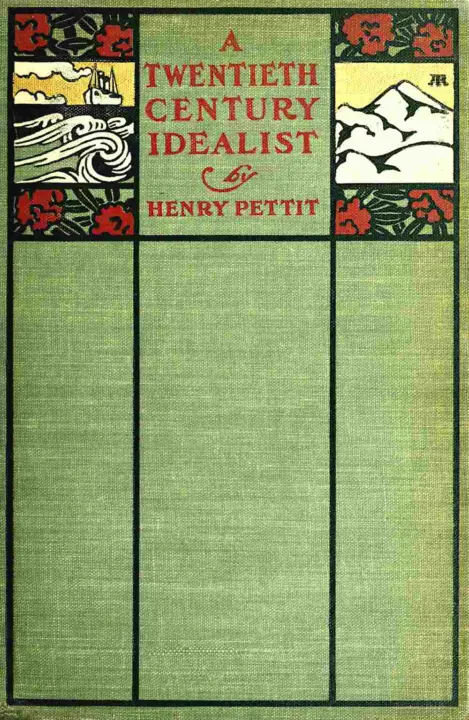
"A Twentieth Century Idealist" by Henry Pettit is a historical novel written in the early 20th century. The book explores the ideals and aspirations of its central character, Adele Cultus, alongside the philosophical musings of those around her, particularly the Doctor and Paul. Themes of spirituality, personal ambition, and the subtlety of human interactions are likely to feature prominently throughout the narrative. The opening portion introduces us to the characters of the Doctor and Paul as they engage in a thought-provoking conversation about ideals and personalities, specifically discussing the intriguing Adele Cultus. The Doctor reflects on his admiration for her sincerity and spiritual nature, while Paul appears more practical and focused on surface impressions. Their dialogue reveals complexities in their perspectives, setting the stage for the exploration of Adele’s character and her influence on those around her. Additionally, the Doctor's interest in palmistry hints at a deeper exploration of character traits and innate qualities, promising a nuanced examination of human behavior and relationships as the narrative unfolds.
Introduction adapted from the source catalogue; source summaries may be automatically generated.
Free to read · English · 89,531 words · No account needed
MAKE TIME FOR A GOOD BOOK
On by default. Untick to stop anonymous reading totals. Each page counts after 10 seconds in view. How this works.
Anonymous counting is on unless you have switched it off.
“But you missed seeing the Lepcha ritual; you should see how the natives make their sacrifices.”
“Sacrifices? God forbid, my dear. No! it’s all gain for us here; please don’t even think of sacrificing anything.”
“Then we can attend some other ritual,” said Adele; which remark was so very much of an acknowledgment on her part that Paul imagined she would consent at once.
“All right!” said he. “There is a Church of England curate in the village--I’m not particular.”
“Also Taoist monks with masks and wheels. I’m not so very particular myself about the form,” quizzed Adele.
“Don’t keep me on the rack, my dear; just tell me which you prefer.”
“Well, the Taoist ritual is the most spectacular, the Lepcha the most thrilling, and the Church of England the most serious--probably, but I have my doubts.”
“I never was more serious in my life,” said Paul. “The English will do; that is, if it suits you?”
“Me! suits me!” she exclaimed, but her expression told him well enough his allusions were clearly understood.
“Yes, of course, you have the final say.”
“To decide what? It was you who spoke about something you hoped would happen before we left. You haven’t told me what it is, have you?”
“But you guessed it at once, Adele, I’m sure; and better than I can tell you. Would not this be an ideal place for our marriage? Just arrange it to suit yourself.”
Adele turned her face away--a little embarrassed, rather confused.
“Oh, don’t be in such a hurry, Paul. I really must think.”
“I am not, my dear. I’ve thought of it for a week,” said the ardent
lover.
“A week! you don’t call that much time to decide for life!” Adele was now as serious as her lover was ardent.
“I decided at Olympus--oh, months ago,” said Paul, a little nervous.
“Didn’t you?”
“Yes, but this is like a surprise, after all, when it comes to the actual. I must have some time. Oh, Paul, you’re so--impatient; just like a boy.”
“Why shouldn’t I be? I feel as if we were really married that evening when under the brow of Olympus”--and in one sense this was true; Paul had felt so, conscientiously, as to the bond between them.
“Do you? I don’t,” said Adele.
“Why you must have thought so,” said Paul, very inconsiderate in his
ardor.
Adele thought him too harsh to her, at such a time; and her manner showed how uncomfortable he had made her feel.
Your reading position is saved on this browser. Take it to another device with a library code. Reading pages adapt to text, rather than matching a printed edition.
BEHIND THE BOOK
This eBook is for the use of anyone anywhere in the United States and most other parts of the world at no cost and with almost no restrictions whatsoever. You may copy it, give it away or re-use it under the terms of the Project Gutenberg License included with this eBook or online at www.gutenberg.org. If you are not located in the United States, you will have to check the laws of the country where you are located before using this eBook. Read the source licence.
The original source file, including credits and licence, is retained by this library. Request an original-format copy at no charge. Please include the book title and Project Gutenberg identifier #64612.
KEEP YOUR CURIOSITY GOING
Wilfrid Scawen Blunt
Wilfrid Scawen Blunt

E. W. (Edgar Watson) Howe
Cécile Tormay

Moritz Busch
Coulson Kernahan