THE CLASSIC COLLECTION✦My diaries, being a personal narrative of events 1888-1914, Part 2 (1900-1914)CLASSIC FREE BOOKS
My diaries, being a personal narrative of events 1888-1914, Part 2 (1900-1914)
Wilfrid Scawen Blunt
THE CLASSIC COLLECTION · 1905
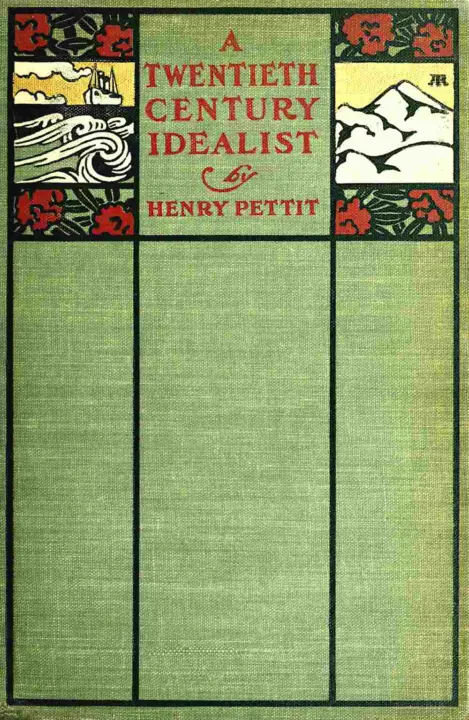
"A Twentieth Century Idealist" by Henry Pettit is a historical novel written in the early 20th century. The book explores the ideals and aspirations of its central character, Adele Cultus, alongside the philosophical musings of those around her, particularly the Doctor and Paul. Themes of spirituality, personal ambition, and the subtlety of human interactions are likely to feature prominently throughout the narrative. The opening portion introduces us to the characters of the Doctor and Paul as they engage in a thought-provoking conversation about ideals and personalities, specifically discussing the intriguing Adele Cultus. The Doctor reflects on his admiration for her sincerity and spiritual nature, while Paul appears more practical and focused on surface impressions. Their dialogue reveals complexities in their perspectives, setting the stage for the exploration of Adele’s character and her influence on those around her. Additionally, the Doctor's interest in palmistry hints at a deeper exploration of character traits and innate qualities, promising a nuanced examination of human behavior and relationships as the narrative unfolds.
Introduction adapted from the source catalogue; source summaries may be automatically generated.
Free to read · English · 89,531 words · No account needed
MAKE TIME FOR A GOOD BOOK
On by default. Untick to stop anonymous reading totals. Each page counts after 10 seconds in view. How this works.
Anonymous counting is on unless you have switched it off.
From the time that this region of the Himalayas first impressed itself as a Cathedral upon the mind of Adele, an idealist, she invariably spoke of the various natural beauties of the locality as parts of the Grand Edifice.
“This Cathedral has magnificent proportions. I must explore it, and go all over it, from crypt to dome, visit the baptistry, and, as the Doctor says, ‘mount upon a pinnacle;’” then musingly: “I should like to attend a service.”
“All right,” said Doctor Wise, the liberal, “we can have a service of some sort, even if we are obliged to read prayers ourselves.”
“It would be better to have the natives officiate--one of the local
bishops,” said Adele.
“He would not have Apostolic succession,” said Paul, of Non-conformist
proclivities.
“Apostolic, nevertheless,” remarked Professor Cultus, who habitually looked at things from a literary point of view. “He would consider himself sent by some one--that makes him apostolic. He would have been ‘called’ to preach, or to write, or to do something, fundamentally apostolic, if he is a true man.”
“I should like to see a primitive cassock or stole,” said Miss Winchester, who was inclined to ritualism, “and a real old-time monk with his beads and a rope around his waist.”
“You shall,” said the Doctor, “and we will investigate to see whether the clergy face towards the East.”
“Not here,” said Adele promptly; “they would not if they knew.”
“Why not?” exclaimed Miss Winchester.
“Because they must look up.”
“Oh, of course.”
“Northward, I mean--up north.”
“What has that got to do with it?”
“It’s towards the centre of things--the pole star in the heavens.”
“Dear me!” said Miss Winchester, “you’re so ‘broad’, you’ll flatten out, become thin. I don’t like my bread buttered too thin; but tell me, Adele, why here, in this place?”
“This Cathedral is so constructed.”
Miss Winchester said she had not before observed it in that light.
“Which way shall we start?” inquired Paul.
“For a good view, down the nave,” said Adele. “Let’s ask a verger to
show us around.”
The verger presented himself in the person of a Bhootan peasant
astride of a Manchu pony, and leading others saddled for members of
the party.
“I’m not accustomed to attending church on horseback,” remarked Miss Winchester. “But I rather like the idea.”
“Our ancestors did; often two on the same pony,” laughed Paul. “That’s why I like it; heredity, I suppose.”
“It strikes me it was a case of go-as-you-please with our primitive ancestors,” said the Doctor, jovial. “That’s why we all like it.”
Your reading position is saved on this browser. Take it to another device with a library code. Reading pages adapt to text, rather than matching a printed edition.
BEHIND THE BOOK
This eBook is for the use of anyone anywhere in the United States and most other parts of the world at no cost and with almost no restrictions whatsoever. You may copy it, give it away or re-use it under the terms of the Project Gutenberg License included with this eBook or online at www.gutenberg.org. If you are not located in the United States, you will have to check the laws of the country where you are located before using this eBook. Read the source licence.
The original source file, including credits and licence, is retained by this library. Request an original-format copy at no charge. Please include the book title and Project Gutenberg identifier #64612.
KEEP YOUR CURIOSITY GOING
Wilfrid Scawen Blunt
Wilfrid Scawen Blunt

E. W. (Edgar Watson) Howe
Cécile Tormay

Moritz Busch
Coulson Kernahan