THE CLASSIC COLLECTION✦My diaries, being a personal narrative of events 1888-1914, Part 2 (1900-1914)CLASSIC FREE BOOKS
My diaries, being a personal narrative of events 1888-1914, Part 2 (1900-1914)
Wilfrid Scawen Blunt
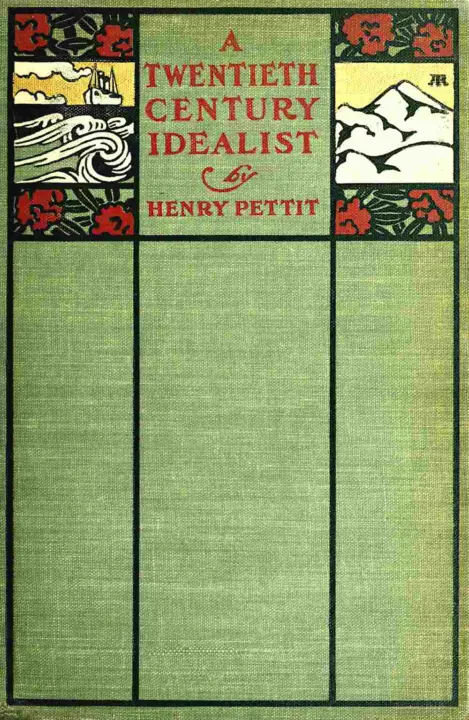
THE CLASSIC COLLECTION · 1905
"A Twentieth Century Idealist" by Henry Pettit is a historical novel written in the early 20th century. The book explores the ideals and aspirations of its central character, Adele Cultus, alongside the philosophical musings of those around her, particularly the Doctor and Paul. Themes of spirituality, personal ambition, and the subtlety of human interactions are likely to feature prominently throughout the narrative. The opening portion introduces us to the characters of the Doctor and Paul as they engage in a thought-provoking conversation about ideals and personalities, specifically discussing the intriguing Adele Cultus. The Doctor reflects on his admiration for her sincerity and spiritual nature, while Paul appears more practical and focused on surface impressions. Their dialogue reveals complexities in their perspectives, setting the stage for the exploration of Adele’s character and her influence on those around her. Additionally, the Doctor's interest in palmistry hints at a deeper exploration of character traits and innate qualities, promising a nuanced examination of human behavior and relationships as the narrative unfolds.
Introduction adapted from the source catalogue; source summaries may be automatically generated.
Free to read · English · 89,531 words · No account needed
MAKE TIME FOR A GOOD BOOK
On by default. Untick to stop anonymous reading totals. Each page counts after 10 seconds in view. How this works.
Anonymous counting is on unless you have switched it off.
Again the shores had vanished, this time Europe left behind, and the Orient lifting before them. It was after the sun had plunged beneath the waves, and the distance was illumined with the afterglow; when the Parsee matrons had retired to rest, publicly, upon the saloon floors, and some mysterious figures re-entered to recline on deck in awkward pose, with crooked necks against chairs and skylights, that Paul and Adele also glided forward, past captain and capstan, to their favorite spot. Only the prow of the vessel when it mounted the billows, and a spooky lanthorn aloft, hung in space between them and the constellations. Together they gazed forwards and upwards, listening to the thoughts of the stilly night.
“Fond memories for other days,” remarked Adele.
Paul looked round to discover the object supposed to suggest
memories, and then concluded his chair was not quite close enough to
hers.
“There it is,” said she, looking toward the constellation of the Southern Cross, resplendent in the heavens. “I never shall forget it.”
“Beautiful, each star a gem, all gems; but----”
“I cannot conceive anything more suggestive or more appropriate in the heavens than that cross,” said Adele.
“I am yet inclined to think that perhaps Orion is still more
magnificent.”
“Don’t let’s make comparisons, Paul. I don’t feel in the mood just now; that only spoils our present enjoyment.”
“All right; take things as they are,” and Paul looked again at the
constellation.
“See those four stars, Adele; they would make an exquisite pin. Would you like one in that form?”
“Pin! Please don’t think I care only for trinkets, and at such a time as this! Please don’t, it only belittles everything;” her voice betraying a slight trace of emotion.
Paul vowed inwardly that he would acquiesce in everything she said, so in duty bound endeavored to be philosophic himself.
“There’s nothing like being natural, even when it feels unnatural.”
Adele laughed outright.
“My dear Paul, philosophy never did sit well on you; please don’t.” Paul felt somewhat subdued, and immediately changed the subject.
“What was it you said you wished to ask me?”
“Oh, yes, about being inquisitive. We’re all getting so horribly inquisitive that I’ve had a curious experience. I really don’t know what I think.”
It was Paul’s turn to laugh. “Oh, that comes from thinking too much. Give it up; we’ve got something else on hand just now; don’t let’s think.”
This idea seemed to impress Adele rather favorably in her present mood, but she could not resist the temptation to continue.
Your reading position is saved on this browser. Take it to another device with a library code. Reading pages adapt to text, rather than matching a printed edition.
BEHIND THE BOOK
This eBook is for the use of anyone anywhere in the United States and most other parts of the world at no cost and with almost no restrictions whatsoever. You may copy it, give it away or re-use it under the terms of the Project Gutenberg License included with this eBook or online at www.gutenberg.org. If you are not located in the United States, you will have to check the laws of the country where you are located before using this eBook. Read the source licence.
The original source file, including credits and licence, is retained by this library. Request an original-format copy at no charge. Please include the book title and Project Gutenberg identifier #64612.
KEEP YOUR CURIOSITY GOING
Wilfrid Scawen Blunt
Wilfrid Scawen Blunt

E. W. (Edgar Watson) Howe
Cécile Tormay

Moritz Busch
Coulson Kernahan