THE CLASSIC COLLECTION✦My diaries, being a personal narrative of events 1888-1914, Part 2 (1900-1914)CLASSIC FREE BOOKS
My diaries, being a personal narrative of events 1888-1914, Part 2 (1900-1914)
Wilfrid Scawen Blunt
THE CLASSIC COLLECTION · 1905
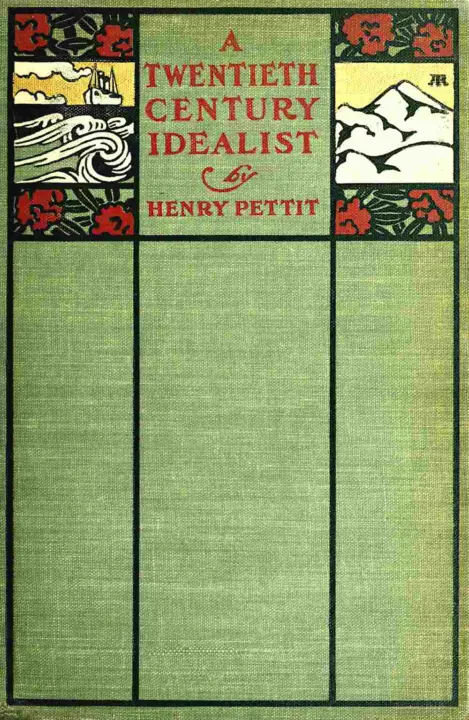
"A Twentieth Century Idealist" by Henry Pettit is a historical novel written in the early 20th century. The book explores the ideals and aspirations of its central character, Adele Cultus, alongside the philosophical musings of those around her, particularly the Doctor and Paul. Themes of spirituality, personal ambition, and the subtlety of human interactions are likely to feature prominently throughout the narrative. The opening portion introduces us to the characters of the Doctor and Paul as they engage in a thought-provoking conversation about ideals and personalities, specifically discussing the intriguing Adele Cultus. The Doctor reflects on his admiration for her sincerity and spiritual nature, while Paul appears more practical and focused on surface impressions. Their dialogue reveals complexities in their perspectives, setting the stage for the exploration of Adele’s character and her influence on those around her. Additionally, the Doctor's interest in palmistry hints at a deeper exploration of character traits and innate qualities, promising a nuanced examination of human behavior and relationships as the narrative unfolds.
Introduction adapted from the source catalogue; source summaries may be automatically generated.
Free to read · English · 89,531 words · No account needed
MAKE TIME FOR A GOOD BOOK
On by default. Untick to stop anonymous reading totals. Each page counts after 10 seconds in view. How this works.
Anonymous counting is on unless you have switched it off.
“I understand--only do it,” and she took the hand of him who thus loved her, in her own, and pressed it to her, her heart going out to him in tenderness.
A thrill of blissful content passed through Paul’s innermost being. He knew her in whom he had believed; and she had faith and trust in her protector for life. They were truly happy.
The dandy had passed--gone forever--a mere episode in their
experience.
Their lives were thus becoming as one.
“I shall never forget our walks in this Cathedral,” said Adele.
“I hope not,” said Paul, laconic, and not nearly so enthusiastic as
Adele had anticipated.
“You hope not? Why, what on earth is to prevent our remembering?”
At this point Paul’s natural tendency to tease a little got the better of him; but Adele also by this time had had enough experience to recognize his moods, and to meet him on his own ground.
“I should like to clinch it,” said he, “so that we couldn’t forget.”
“I’ll remind you if I see your memory weakening,” said Adele.
Paul’s countenance exhibited that sort of smile usually described as capacious. “I should like something to happen before we left,” and he looked doubtfully at her. Being a man of normal growth, the masculine desire for actual possession of his future wife had grown upon Paul recently in a marked degree; and the incidents of that particular day led him to speak out. He felt sure Adele would be sincere with him in response.
Adele as natural as he was, woman’s instinct told her to be cautious, in fact shy; and her intellect suggested that she act upon what she had just heard Paul say about people who undervalued themselves. Of course, Adele suspected at once what Paul hoped would happen; but she took her own way to make him ask for it.
“What’s going to happen?” said Adele, leading him on. “I mean what do
you hope for?”
“It’s just this way; let me tell you.”
“I’m listening.”
“You call this a Cathedral, don’t you? I think it a first-rate place,
myself.”
“Admirable for a short sojourn.”
“And more, it’s very suitable for something special--something for us
two.”
“Not to live in; it’s too breezy.”
“I don’t mind a breeze, if it don’t result in something worse--a
squall.”
“Squalls! I don’t permit squalls,” said Adele.
“No, nor I, either; especially when another fellow tells you squarely to ‘forever after hold your peace.’”
Adele did not quite enjoy this turn in the conversation, so changed
it a little.
Your reading position is saved on this browser. Take it to another device with a library code. Reading pages adapt to text, rather than matching a printed edition.
BEHIND THE BOOK
This eBook is for the use of anyone anywhere in the United States and most other parts of the world at no cost and with almost no restrictions whatsoever. You may copy it, give it away or re-use it under the terms of the Project Gutenberg License included with this eBook or online at www.gutenberg.org. If you are not located in the United States, you will have to check the laws of the country where you are located before using this eBook. Read the source licence.
The original source file, including credits and licence, is retained by this library. Request an original-format copy at no charge. Please include the book title and Project Gutenberg identifier #64612.
KEEP YOUR CURIOSITY GOING
Wilfrid Scawen Blunt
Wilfrid Scawen Blunt

E. W. (Edgar Watson) Howe
Cécile Tormay

Moritz Busch
Coulson Kernahan