THE CLASSIC COLLECTION✦A dead man’s diaryCLASSIC FREE BOOKS
A dead man’s diary
Coulson Kernahan
THE CLASSIC COLLECTION · 1902
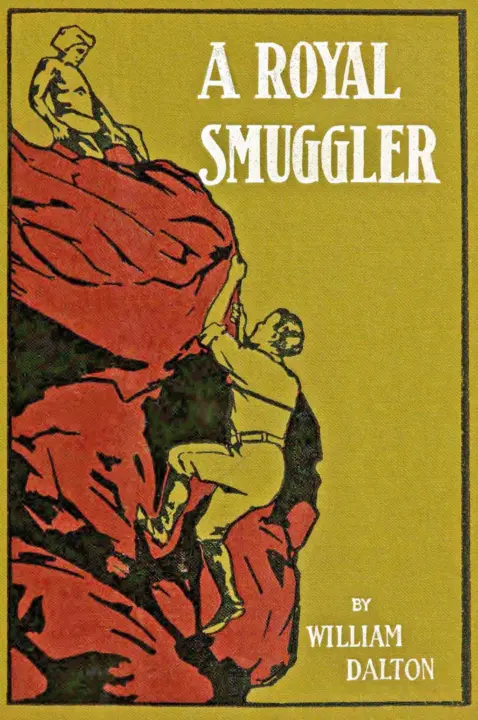
"A Royal Smuggler: or The Adventures of Two Boys in the Indian Archipelago" by William Dalton is a novel written in the early 20th century. The story unfolds the exciting and turbulent adventures of two boys, Claud and Martin, who are thrust into a world of intrigue following the death of their mother and their father’s desperate move to Java to seek fortune. As they settle in their uncle's household, they become embroiled in a complex web of family secrets, impending danger, and a captivating yet threatening new environment. The opening of the novel sets up the backdrop of familial loss and the promise of adventure as the boys receive an unexpected letter from their Uncle Adam. This letter invites them to Java, filled with hope for a new life after their father's financial downfall. However, upon arrival, the boys are met with shock; their uncle has died, leaving them in the guardianship of his widow, who displays dubious motives. As tensions mount within the household, the boys navigate the treacherous waters of suspicion and danger, setting the stage for their courageous escape from a life filled with potential treachery. The dynamics of their relationships, especially with their new aunt and the mysterious characters around them, promise an engaging story filled with adventure, mystery, and the boys' determination to assert their agency in a complex world.
Introduction adapted from the source catalogue; source summaries may be automatically generated.
Free to read · English · 96,774 words · No account needed
MAKE TIME FOR A GOOD BOOK
On by default. Untick to stop anonymous reading totals. Each page counts after 10 seconds in view. How this works.
Anonymous counting is on unless you have switched it off.
But to return to my narrative. Upon entering the opening, we found it so narrow that it was with difficulty we could walk in single file; nay, at every step, one shoulder or the other grazed the sides, causing a most unpleasant sensation--a kind of dread that the walls would collapse, crushing us between them; and thus contracted did we find them for a distance of at least a quarter of a mile, but then we came to an opening of about double the width on the right-hand side; and, foolish as it may seem, and as it really was, we chose to enter that path only for its greater width. But no--we had another motive; there was a slight wind.
“That breeze indicates a large open space somewhere ahead--probably the cave for which we are in search.”
“We cannot do better, Claud; let us go on,” said my brother. “But stay,” he added; “for fear we may be suddenly parted, I will light my torch.”
“No, no,” said I, “mine will be sufficient; keep yours in reserve. It would be unwise to use two at a time.”
“What a prudent old boy you are, Claud! But go on,” said Martin.
We did go on--and on, until we came to another opening, wider still than the one we were then in, and also upon the right-hand side.
“Shall we go down here?” said I, doubtfully.
“Yes--always to the right; and keeping that in mind, we shall find no difficulty in returning,” said Martin.
Again onwards--but about two hundred yards further, finding four different openings, three upon one side, and one upon the other, I came to a halt, and expressed my doubts as to the prudence of passing further; but Martin laughed at my indecision.
“Oh, bother!” said he, “we won’t stop now; this poking about in the dark is capital fun.”
“Well, then,” I replied, leading the way, “to the right again.”
“By Jingo, here’s a breeze!” exclaimed Martin, as, after about five minutes, a cold cutting wind whistled through the passage, nearly extinguishing the torch.
“Yes; and now, I believe, the cave cannot be far away. If, however, we do not soon fall in with it, I shall return, and that’s a fact.”
“Agreed,” answered my brother. “But go on, we must find this cave before the light burns too low; for my torch is shorter than yours, and will scarcely serve to light us back.”
Your reading position is saved on this browser. Take it to another device with a library code. Reading pages adapt to text, rather than matching a printed edition.
BEHIND THE BOOK
This eBook is for the use of anyone anywhere in the United States and most other parts of the world at no cost and with almost no restrictions whatsoever. You may copy it, give it away or re-use it under the terms of the Project Gutenberg License included with this eBook or online at www.gutenberg.org. If you are not located in the United States, you will have to check the laws of the country where you are located before using this eBook. Read the source licence.
The original source file, including credits and licence, is retained by this library. Request an original-format copy at no charge. Please include the book title and Project Gutenberg identifier #74489.
KEEP YOUR CURIOSITY GOING
Coulson Kernahan

Maurice Baring
Frances Wright
Cécile Tormay

Frederic Jesup Stimson

W. H. P. (William Henry Pope) Jarvis