THE CLASSIC COLLECTION✦A dead man’s diaryCLASSIC FREE BOOKS
A dead man’s diary
Coulson Kernahan
THE CLASSIC COLLECTION · 1902
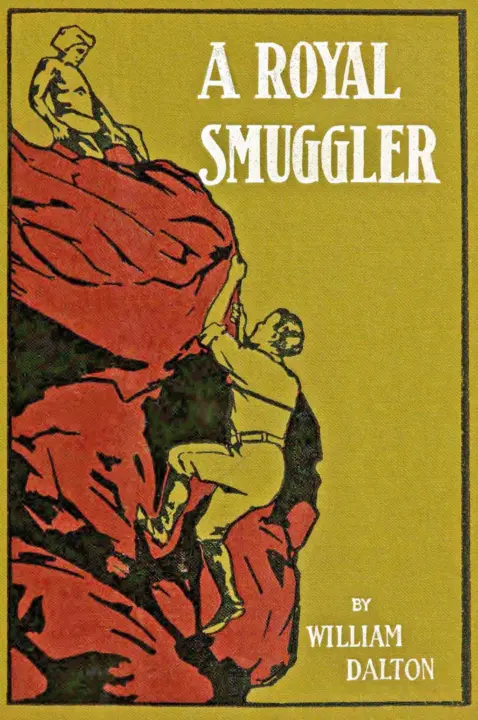
"A Royal Smuggler: or The Adventures of Two Boys in the Indian Archipelago" by William Dalton is a novel written in the early 20th century. The story unfolds the exciting and turbulent adventures of two boys, Claud and Martin, who are thrust into a world of intrigue following the death of their mother and their father’s desperate move to Java to seek fortune. As they settle in their uncle's household, they become embroiled in a complex web of family secrets, impending danger, and a captivating yet threatening new environment. The opening of the novel sets up the backdrop of familial loss and the promise of adventure as the boys receive an unexpected letter from their Uncle Adam. This letter invites them to Java, filled with hope for a new life after their father's financial downfall. However, upon arrival, the boys are met with shock; their uncle has died, leaving them in the guardianship of his widow, who displays dubious motives. As tensions mount within the household, the boys navigate the treacherous waters of suspicion and danger, setting the stage for their courageous escape from a life filled with potential treachery. The dynamics of their relationships, especially with their new aunt and the mysterious characters around them, promise an engaging story filled with adventure, mystery, and the boys' determination to assert their agency in a complex world.
Introduction adapted from the source catalogue; source summaries may be automatically generated.
Free to read · English · 96,774 words · No account needed
MAKE TIME FOR A GOOD BOOK
On by default. Untick to stop anonymous reading totals. Each page counts after 10 seconds in view. How this works.
Anonymous counting is on unless you have switched it off.
“For birds, monkeys, or these fellows, who are trained to it from childhood, perhaps not,” said I; but before my brother could reply, Prabu, pulling us back by the legs, said:
“Are my young masters ready to make the descent?”
Now, from the very expression of his countenance, I knew he thought we should refuse, and oh! how I longed to do so; but then, who could have borne to be set down “coward” by those grinning natives behind me?--and so I resolved rather to risk my life. As for my brother, he cried on the instant:
“Ready! Aye, I should think so, Prabu, if you will only make the rope
taut round the spike.”
For an instant he appeared surprised, but then he said: “You are brave lads, but too impatient; I will descend first, so as to receive you at the mouth of the cave, and Kati will stay here, keeping an eye upon the cord and spike until you are landed safely.”
“All right,” said I, well satisfied with the arrangement, and over the side went our captain; but he was not so expert as his men, for ere he could “light” at an entrance to a cave, he swung about in mid-air, making several failures.
“Our friend is not so well up in his business as the other fellows,”
said Martin.
“He is a gallant fellow, notwithstanding. But see, he has done it at last; and it is our turn now, Martin.”
“All right, Claud; I will go down first.”
“No, you won’t.”
“Yes, I will.”
This amiable dispute would have lasted some time, but Kati, having hauled up Prabu’s rope, without one word of notice, passed it round my chest, and under my arm, saying:
“S’pose sahib’s hand come sore, so him can’t hold tight, he no tumble now, for rope catchee.”
But however kindly intended, and much as I liked caution in a general way, I felt annoyed at being taken by our mahogany-colored companion for a milksop, who was obliged to make the descent in a kind of cradle, while the others used their hands only, and said, angrily:
“Remove the rope, Kati; I will do as the others have done. My hands are strong enough to hold it.”
But the latter, having once received his orders, you might as easily have moved a mountain as have induced him to swerve from them, even in a degree; thus, as he very coolly continued to adjust the rope, so that it should cause me the least possible inconvenience, he replied:
Your reading position is saved on this browser. Take it to another device with a library code. Reading pages adapt to text, rather than matching a printed edition.
BEHIND THE BOOK
This eBook is for the use of anyone anywhere in the United States and most other parts of the world at no cost and with almost no restrictions whatsoever. You may copy it, give it away or re-use it under the terms of the Project Gutenberg License included with this eBook or online at www.gutenberg.org. If you are not located in the United States, you will have to check the laws of the country where you are located before using this eBook. Read the source licence.
The original source file, including credits and licence, is retained by this library. Request an original-format copy at no charge. Please include the book title and Project Gutenberg identifier #74489.
KEEP YOUR CURIOSITY GOING
Coulson Kernahan

Maurice Baring
Frances Wright
Cécile Tormay

Frederic Jesup Stimson

W. H. P. (William Henry Pope) Jarvis