THE CLASSIC COLLECTION✦A dead man’s diaryCLASSIC FREE BOOKS
A dead man’s diary
Coulson Kernahan
THE CLASSIC COLLECTION · 1902
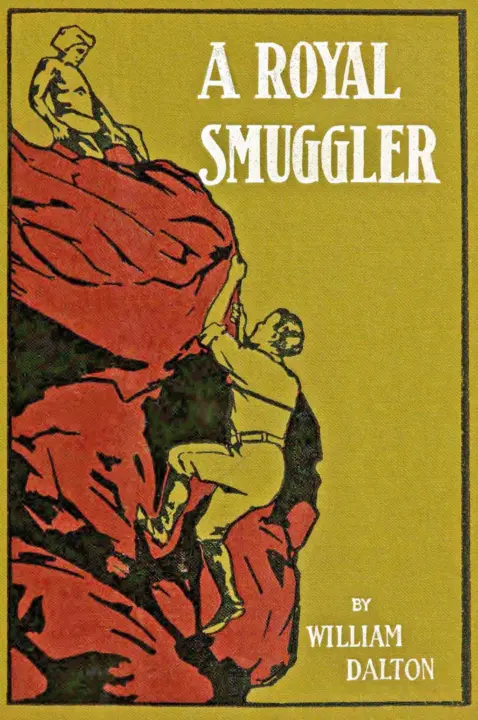
"A Royal Smuggler: or The Adventures of Two Boys in the Indian Archipelago" by William Dalton is a novel written in the early 20th century. The story unfolds the exciting and turbulent adventures of two boys, Claud and Martin, who are thrust into a world of intrigue following the death of their mother and their father’s desperate move to Java to seek fortune. As they settle in their uncle's household, they become embroiled in a complex web of family secrets, impending danger, and a captivating yet threatening new environment. The opening of the novel sets up the backdrop of familial loss and the promise of adventure as the boys receive an unexpected letter from their Uncle Adam. This letter invites them to Java, filled with hope for a new life after their father's financial downfall. However, upon arrival, the boys are met with shock; their uncle has died, leaving them in the guardianship of his widow, who displays dubious motives. As tensions mount within the household, the boys navigate the treacherous waters of suspicion and danger, setting the stage for their courageous escape from a life filled with potential treachery. The dynamics of their relationships, especially with their new aunt and the mysterious characters around them, promise an engaging story filled with adventure, mystery, and the boys' determination to assert their agency in a complex world.
Introduction adapted from the source catalogue; source summaries may be automatically generated.
Free to read · English · 96,774 words · No account needed
MAKE TIME FOR A GOOD BOOK
On by default. Untick to stop anonymous reading totals. Each page counts after 10 seconds in view. How this works.
Anonymous counting is on unless you have switched it off.
“Yonder, my master,” he replied, pointing to a cluster of houses upon another hill in the distance. “But look!” he added; “beware!” and scarcely had we time, I to clutch my pistol, and Martin and Prabu to draw their creeses, when a huge wild boar, which had just come from the wood at the bottom of the hill, came tearing and grunting up the slope, followed by several hunters.
“It is the chief!” cried Prabu, as an old man, spear in hand, and in advance of his party, pursued the animal.
“Let us show him a bold front,” said Martin. And as we prepared to receive him, the hog stood for a minute, as if greatly astonished at meeting with such an unexpected opposition.
“He is taking our measure,” said I, at the same time aiming at the
brute.
“Here, move aside,” cried my brother, brandishing his creese; “this is the weapon to tackle master piggy with; he is only grinning at that whipper-snapper pop-gun of yours.”
“That thrust will save us further trouble, Martin,” said I, as the old chief, who had now come within reach of the hog, sent his spear into its side. But not so; the weapon broke short off at the neck-head, and piggy, giving one loud grunt, turned suddenly round, and rushed into a neighboring thicket.
“After him!” shouted my brother; but the old gentleman, in very angry tones, called to us to remain where we were.
“Who are these,” he cried, “sons of burnt mothers, that they should step between Datoo and his game?”
“Why, uncivil old person, we were going to help you to the pig!” replied Martin; then, seeing the chief stood looking at the thicket, he added: “It is the dog and the manger over again; the old fellow will neither kill the pig himself, nor let us.”
“Son of a dog!” cried the chief, “my spear is broken, and Datoo dares not defile Blaber with the blood of a hog.”
Now this Blaber, about the defilement of which he was so sensitive, was his creese, and Martin, believing it was only an excuse for want of pluck, said, as he offered him his own weapon,--
“Well, I am not so particular; take this, my friend.”
“Allah reward you!” cried the chief, snatching the creese, and, with all the agility of a hunter some half a century younger, he leaped into the thicket. The next minute, there was a grunt, a scream; blood spurted from the bush, and the chief came forth flourishing the red steel in his hand, and, now in a much better temper, went up to Prabu, saying,--
Your reading position is saved on this browser. Take it to another device with a library code. Reading pages adapt to text, rather than matching a printed edition.
BEHIND THE BOOK
This eBook is for the use of anyone anywhere in the United States and most other parts of the world at no cost and with almost no restrictions whatsoever. You may copy it, give it away or re-use it under the terms of the Project Gutenberg License included with this eBook or online at www.gutenberg.org. If you are not located in the United States, you will have to check the laws of the country where you are located before using this eBook. Read the source licence.
The original source file, including credits and licence, is retained by this library. Request an original-format copy at no charge. Please include the book title and Project Gutenberg identifier #74489.
KEEP YOUR CURIOSITY GOING
Coulson Kernahan

Maurice Baring
Frances Wright
Cécile Tormay

Frederic Jesup Stimson

W. H. P. (William Henry Pope) Jarvis