THE CLASSIC COLLECTION✦A dead man’s diaryCLASSIC FREE BOOKS
A dead man’s diary
Coulson Kernahan
THE CLASSIC COLLECTION · 1902
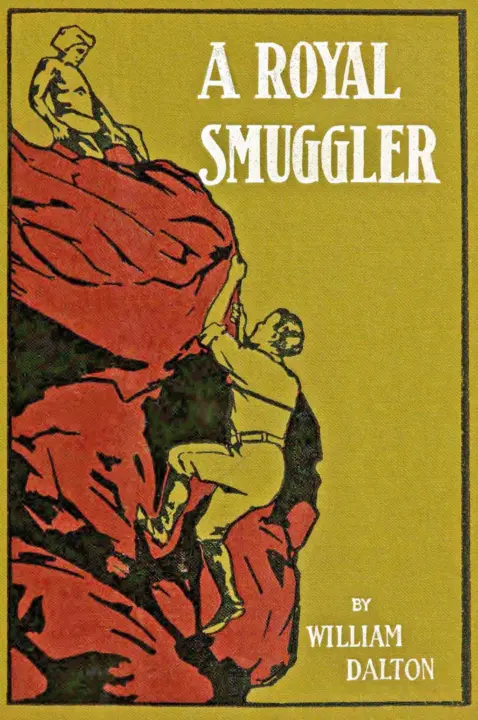
"A Royal Smuggler: or The Adventures of Two Boys in the Indian Archipelago" by William Dalton is a novel written in the early 20th century. The story unfolds the exciting and turbulent adventures of two boys, Claud and Martin, who are thrust into a world of intrigue following the death of their mother and their father’s desperate move to Java to seek fortune. As they settle in their uncle's household, they become embroiled in a complex web of family secrets, impending danger, and a captivating yet threatening new environment. The opening of the novel sets up the backdrop of familial loss and the promise of adventure as the boys receive an unexpected letter from their Uncle Adam. This letter invites them to Java, filled with hope for a new life after their father's financial downfall. However, upon arrival, the boys are met with shock; their uncle has died, leaving them in the guardianship of his widow, who displays dubious motives. As tensions mount within the household, the boys navigate the treacherous waters of suspicion and danger, setting the stage for their courageous escape from a life filled with potential treachery. The dynamics of their relationships, especially with their new aunt and the mysterious characters around them, promise an engaging story filled with adventure, mystery, and the boys' determination to assert their agency in a complex world.
Introduction adapted from the source catalogue; source summaries may be automatically generated.
Free to read · English · 96,774 words · No account needed
MAKE TIME FOR A GOOD BOOK
On by default. Untick to stop anonymous reading totals. Each page counts after 10 seconds in view. How this works.
Anonymous counting is on unless you have switched it off.
The apartments to which we were conducted were situated in another wing of the building, upon the ground floor, and consisted of two bedrooms and a large sitting-room. They all had French windows opening into the grounds, and had evidently been carefully and thoughtfully prepared for our reception. Leaving our parent to give full vent to his grief, for the death of a brother to whom he had been passionately attached, we boys (who had never known our uncle, and could not, therefore, so keenly feel his loss) went to our own chamber, which, by the way, was of ample size, and fitted up as both sitting and bedroom.
“I am so sorry for poor, dear uncle, though we never saw him,” said Martin, as soon as we were alone.
“I am more sorry for our father, Martin. I fear that this fresh stroke of misfortune, coming so soon after our dear mother’s death, will utterly destroy his already weak health.”
“Nay, Claud, we boys must be his support. Then, you know, it must be consoling even to him to find our new aunt so kind and thoughtful.”
“New aunt!” I repeated; then, looking cautiously round, and first listening to hear if footsteps were at hand, I said, in a whisper, “Do you know, Martin, I don’t like that woman.”
“Don’t you, though,” he replied, with a look of astonishment. “But why?”
“Well, I don’t know, but I don’t. You remember the lines poor mother used to repeat to us----
“‘I do not like thee, Doctor Fell,
The reason why, I cannot tell;
But this I do know, very well,
I do not like thee, Doctor Fell.’”
“Claud,” replied my brother, “I am beginning to be afraid of you; you are like a witch. But--but,” he added, “this is foolish; it is wicked; for she is a relation--at least, a kind of a one, you know--and you have no reason to dislike her. But isn’t she pretty, though?”
“Pretty! Well, so is a tigress, so is a serpent, and she reminds me of both; she puts me in mind of the portrait in that French story-book we used to read at home, of the woman who poisoned so many husbands--just the same plump figure, raven hair, pale skin, dark eyes, that seem to mean everything, under an effort to look as if they meant nothing, and soft hands; then her embrace was as mock as a play-actor’s, nothing real in it, and her kiss like that of Judas.”
Your reading position is saved on this browser. Take it to another device with a library code. Reading pages adapt to text, rather than matching a printed edition.
BEHIND THE BOOK
This eBook is for the use of anyone anywhere in the United States and most other parts of the world at no cost and with almost no restrictions whatsoever. You may copy it, give it away or re-use it under the terms of the Project Gutenberg License included with this eBook or online at www.gutenberg.org. If you are not located in the United States, you will have to check the laws of the country where you are located before using this eBook. Read the source licence.
The original source file, including credits and licence, is retained by this library. Request an original-format copy at no charge. Please include the book title and Project Gutenberg identifier #74489.
KEEP YOUR CURIOSITY GOING
Coulson Kernahan

Maurice Baring
Frances Wright
Cécile Tormay

Frederic Jesup Stimson

W. H. P. (William Henry Pope) Jarvis