THE CLASSIC COLLECTION✦A dead man’s diaryCLASSIC FREE BOOKS
A dead man’s diary
Coulson Kernahan
THE CLASSIC COLLECTION · 1902
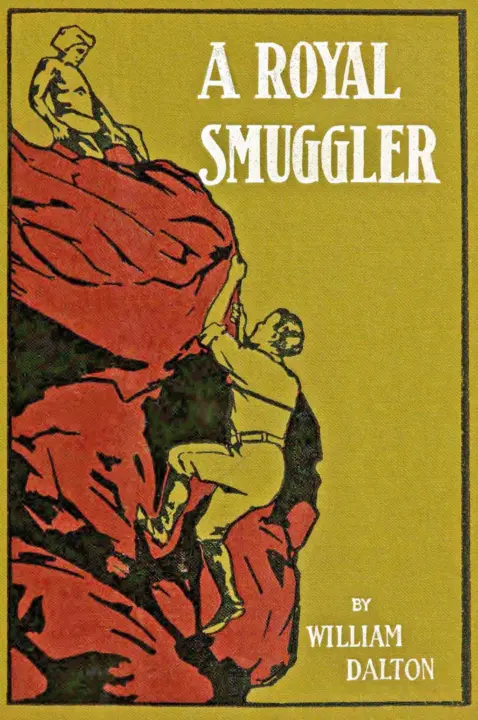
"A Royal Smuggler: or The Adventures of Two Boys in the Indian Archipelago" by William Dalton is a novel written in the early 20th century. The story unfolds the exciting and turbulent adventures of two boys, Claud and Martin, who are thrust into a world of intrigue following the death of their mother and their father’s desperate move to Java to seek fortune. As they settle in their uncle's household, they become embroiled in a complex web of family secrets, impending danger, and a captivating yet threatening new environment. The opening of the novel sets up the backdrop of familial loss and the promise of adventure as the boys receive an unexpected letter from their Uncle Adam. This letter invites them to Java, filled with hope for a new life after their father's financial downfall. However, upon arrival, the boys are met with shock; their uncle has died, leaving them in the guardianship of his widow, who displays dubious motives. As tensions mount within the household, the boys navigate the treacherous waters of suspicion and danger, setting the stage for their courageous escape from a life filled with potential treachery. The dynamics of their relationships, especially with their new aunt and the mysterious characters around them, promise an engaging story filled with adventure, mystery, and the boys' determination to assert their agency in a complex world.
Introduction adapted from the source catalogue; source summaries may be automatically generated.
Free to read · English · 96,774 words · No account needed
MAKE TIME FOR A GOOD BOOK
On by default. Untick to stop anonymous reading totals. Each page counts after 10 seconds in view. How this works.
Anonymous counting is on unless you have switched it off.
“Hilloa! Claud, this don’t look like tyranny, at all events: that Prabu must be a good fellow, after all,” said Martin, as, opening his eyes, he saw a dish of delicious-looking fruits placed at the other end of the cabin, ready for our first meal. Then we arose, but ere we had dressed, a Hindu boy came to us, bringing cups, boiling water, and tea, which we mixed after the Chinese fashion--namely, placing a couple of pinches in the cup, and then pouring the boiling water thereon.
Well, we had partaken of our first cup, and were preparing the second; Martin was pouring the boiling water into the cup, when suddenly it danced out of the saucer, upsetting its contents over his hand.
“Hang it! what’s that?” he exclaimed, shaking his hand with pain.
I jumped up, frightened; was as quickly capsized; but the cause at once flitting through my mind, I, laughing, said, “that it was the lurching of the vessel, and we haven’t got our sea-legs yet.”
“Why, do you mean to say that we have sailed--that we are out at sea already?” and Martin ran out upon deck.
I followed him. Prabu was standing upon the poop, giving orders to his lieutenant, Kati; but, seeing us, he said, pointing to the now somewhat distant shore: “My young masters need not fear that their enemy will catch them; they are safe.”
“But, Prabu,” said my brother, “this is not fair sailing; when I asked you last night when we should sail, you said with the first wind.”
“That was true; for without one, the prophet himself could not sail a
prahu.”
“Yes, yes, I know that; but why did you not tell us how soon?”
“A wise man keepeth his left hand in ignorance of the actions of his right: besides, what is written is written; and it was written that my young master should go with Prabu this voyage. It was well, therefore, not to let them know the hour of departure, for they are young, and their hearts might have grown faint at the last moment; as it is, they are refreshed; they have had a long, undisturbed sleep, which has made men of them.”
“Then you thought I was a coward, who would shrink from an adventure after I had taken the first step?”
“Prabu thinks no evil of the young masters; he knows they are not cowards, yet the bravest men have faltered at their first beginnings.”
Our new captain then, walking away upon some ship’s business, left us to make a survey of the craft which carried the Blacks and their fortunes.
Your reading position is saved on this browser. Take it to another device with a library code. Reading pages adapt to text, rather than matching a printed edition.
BEHIND THE BOOK
This eBook is for the use of anyone anywhere in the United States and most other parts of the world at no cost and with almost no restrictions whatsoever. You may copy it, give it away or re-use it under the terms of the Project Gutenberg License included with this eBook or online at www.gutenberg.org. If you are not located in the United States, you will have to check the laws of the country where you are located before using this eBook. Read the source licence.
The original source file, including credits and licence, is retained by this library. Request an original-format copy at no charge. Please include the book title and Project Gutenberg identifier #74489.
KEEP YOUR CURIOSITY GOING
Coulson Kernahan

Maurice Baring
Frances Wright
Cécile Tormay

Frederic Jesup Stimson

W. H. P. (William Henry Pope) Jarvis