THE CLASSIC COLLECTION✦A dead man’s diaryCLASSIC FREE BOOKS
A dead man’s diary
Coulson Kernahan
THE CLASSIC COLLECTION · 1902
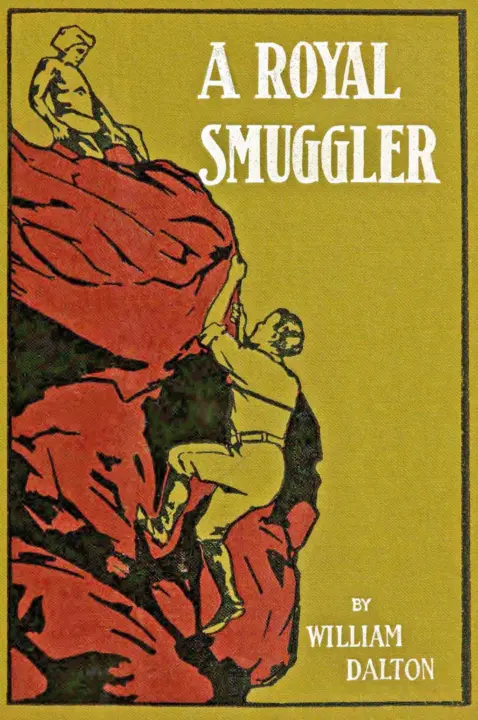
"A Royal Smuggler: or The Adventures of Two Boys in the Indian Archipelago" by William Dalton is a novel written in the early 20th century. The story unfolds the exciting and turbulent adventures of two boys, Claud and Martin, who are thrust into a world of intrigue following the death of their mother and their father’s desperate move to Java to seek fortune. As they settle in their uncle's household, they become embroiled in a complex web of family secrets, impending danger, and a captivating yet threatening new environment. The opening of the novel sets up the backdrop of familial loss and the promise of adventure as the boys receive an unexpected letter from their Uncle Adam. This letter invites them to Java, filled with hope for a new life after their father's financial downfall. However, upon arrival, the boys are met with shock; their uncle has died, leaving them in the guardianship of his widow, who displays dubious motives. As tensions mount within the household, the boys navigate the treacherous waters of suspicion and danger, setting the stage for their courageous escape from a life filled with potential treachery. The dynamics of their relationships, especially with their new aunt and the mysterious characters around them, promise an engaging story filled with adventure, mystery, and the boys' determination to assert their agency in a complex world.
Introduction adapted from the source catalogue; source summaries may be automatically generated.
Free to read · English · 96,774 words · No account needed
MAKE TIME FOR A GOOD BOOK
On by default. Untick to stop anonymous reading totals. Each page counts after 10 seconds in view. How this works.
Anonymous counting is on unless you have switched it off.
Five anxious days and sleepless nights were we kept in suspense as to the fate of our cousin, and, to do our aunt justice, she at least seemed to share our grief. Imagine, therefore, our sensations when, on the morning of the sixth, we heard Ebberfeld’s berlin rattling across the courtyard. In an instant we ran to my lady’s sitting-room, knowing that he would at once go there. Mynheer was standing, sadly, gloomily, with his hand resting upon the back of the sofa, upon which his wife was sitting, and looking as dismal as himself, for he had hastily imparted to her the gist of his news.
“Our cousin, have you news of her, Mynheer?” we asked.
“Alas! yes.”
“Why alas? Is it bad? What is it?” exclaimed Martin.
“My dear lads,” he said, in his most oily tone, and with the mock sorrow of a hired mute upon his countenance, “you will never see poor Marie again; she is in heaven.”
We stood as if dumb with amazement.
“The villains,” he continued, “it is supposed, finding themselves pursued, and fearing that the incumbrance of their prisoner would insure their capture, slew the poor, dear girl, and threw her body into the nearest stream.”
“It is false! I don’t believe it!” cried Martin; whereupon I expected Mynheer would have fallen into a passion, and told us no more; but, not noticing the offensive words, he added, “That, although there was some little difficulty at first in recognizing the features, as when found life must have been extinct two days”--a long period in such a climate--“from the clothes, a locket, ring, watch, and the purse found upon her, there was not the least doubt as to her identity.”
“Strange,” observed Martin, thoughtfully, skeptically, “that robbers should not have taken such valuables.”
“Most wonderful!” replied Mynheer, quickly; “but it is supposed that, in their haste and fear of being captured, they overlooked the trinkets. But it matters not,” he added, in a whining tone; “would that they had taken them, aye, and all I possess, had they but saved the poor dear child’s life. It is sad, most sad!”
“For us,” said my brother, fiercely, “it is sad--worse than our own deaths; but for you, Mynheer--”
“It is a calamity that has cut me to the heart,” interposed our
guardian.
“It may be so, or it may not,” said my brother, adding defiantly, but deliberately, and with a searching glance into the notary’s face, as if to watch the effect the words would produce, “but, Mynheer, you will find a consolation in her fortune. Now you will be able to give the Prince more money.”
Your reading position is saved on this browser. Take it to another device with a library code. Reading pages adapt to text, rather than matching a printed edition.
BEHIND THE BOOK
This eBook is for the use of anyone anywhere in the United States and most other parts of the world at no cost and with almost no restrictions whatsoever. You may copy it, give it away or re-use it under the terms of the Project Gutenberg License included with this eBook or online at www.gutenberg.org. If you are not located in the United States, you will have to check the laws of the country where you are located before using this eBook. Read the source licence.
The original source file, including credits and licence, is retained by this library. Request an original-format copy at no charge. Please include the book title and Project Gutenberg identifier #74489.
KEEP YOUR CURIOSITY GOING
Coulson Kernahan

Maurice Baring
Frances Wright
Cécile Tormay

Frederic Jesup Stimson

W. H. P. (William Henry Pope) Jarvis