THE CLASSIC COLLECTION✦A dead man’s diaryCLASSIC FREE BOOKS
A dead man’s diary
Coulson Kernahan
THE CLASSIC COLLECTION · 1902
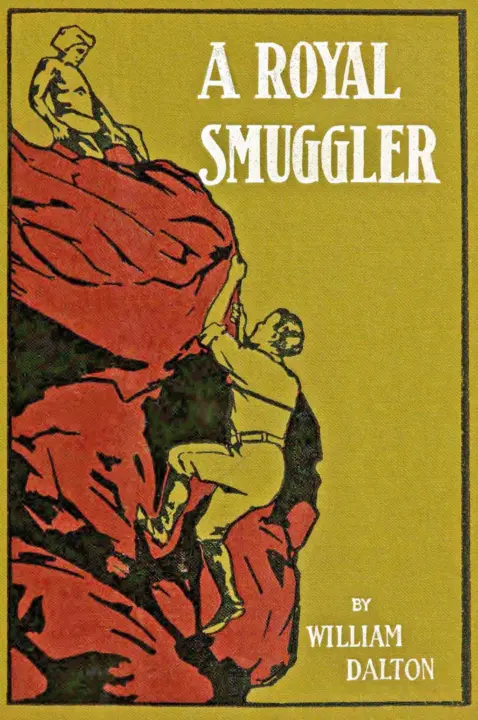
"A Royal Smuggler: or The Adventures of Two Boys in the Indian Archipelago" by William Dalton is a novel written in the early 20th century. The story unfolds the exciting and turbulent adventures of two boys, Claud and Martin, who are thrust into a world of intrigue following the death of their mother and their father’s desperate move to Java to seek fortune. As they settle in their uncle's household, they become embroiled in a complex web of family secrets, impending danger, and a captivating yet threatening new environment. The opening of the novel sets up the backdrop of familial loss and the promise of adventure as the boys receive an unexpected letter from their Uncle Adam. This letter invites them to Java, filled with hope for a new life after their father's financial downfall. However, upon arrival, the boys are met with shock; their uncle has died, leaving them in the guardianship of his widow, who displays dubious motives. As tensions mount within the household, the boys navigate the treacherous waters of suspicion and danger, setting the stage for their courageous escape from a life filled with potential treachery. The dynamics of their relationships, especially with their new aunt and the mysterious characters around them, promise an engaging story filled with adventure, mystery, and the boys' determination to assert their agency in a complex world.
Introduction adapted from the source catalogue; source summaries may be automatically generated.
Free to read · English · 96,774 words · No account needed
MAKE TIME FOR A GOOD BOOK
On by default. Untick to stop anonymous reading totals. Each page counts after 10 seconds in view. How this works.
Anonymous counting is on unless you have switched it off.
“There can be little doubt,” I said, “that the Prince would like to exterminate the conquerors of his race, and, like his ancestors, establish barbaric rule over the island; but, then, it is not possible, and he is not mad enough to attempt impossibilities. It would be to resign the substance for the shadow.”
“True, Claud; but then, if there be truth in history, vanity, revenge, and ambition have caused many a man to give up his one bird in hand for a chance of catching the two in the bush.”
“But look you, brother Martin; it is no business of ours, and I vote we don’t bother ourselves about it.”
“Agreed,” replied Martin.
Now we both honestly intended to keep to this agreement, and to trouble our heads with our own affairs alone; but fate would have it otherwise.
A few days after the foregoing conversation, as my brother and I were sitting at our studies in the apartment which had been originally our father’s, but which we had occupied since his death, Marie came running into the room with tears in her eyes, and looking the very picture of terror.
“Cousin Claud! cousin Martin!” she cried, “that wicked, wicked man!”
“What is the matter, Marie? why are you so frightened?” asked Martin.
“Enough to make one frightened--that bad man is going to kill us all--you, Claud, and poor me.”
“Nonsense, Marie. Kill us, indeed! What for?” said I, laughing.
“To get the money my father left us in his will. You know it goes to her, if we all die first.”
“This is indeed foolish, you silly girl,” said Martin. “What can he want with our money? Why, he is as rich as Crœsus.”
“Oh!” she replied, “that is no matter; he wants more than he has of his own, and that grand but wicked-looking Prince wants it, too. But listen, and I will tell you how I found it all out. You must know,” she added, in whispered tones, “that Cæsar” (a favorite dog) “and I were having a game of romps, when suddenly he scampered into Mynheer Ebberfeld’s private garden, which, you know, he has forbidden either of us to enter. Well, not dreaming that Mynheer was there, indeed, quite thoughtlessly, I ran after Cæsar, and found myself close to the pavilion before I knew where I was. Then, hearing two voices--those of the Prince and Mynheer--I could not help going near, quite near, to the woodwork--”
“And listening,” said Martin. “Had you forgotten the fate of
Bluebeard’s wives?”
Your reading position is saved on this browser. Take it to another device with a library code. Reading pages adapt to text, rather than matching a printed edition.
BEHIND THE BOOK
This eBook is for the use of anyone anywhere in the United States and most other parts of the world at no cost and with almost no restrictions whatsoever. You may copy it, give it away or re-use it under the terms of the Project Gutenberg License included with this eBook or online at www.gutenberg.org. If you are not located in the United States, you will have to check the laws of the country where you are located before using this eBook. Read the source licence.
The original source file, including credits and licence, is retained by this library. Request an original-format copy at no charge. Please include the book title and Project Gutenberg identifier #74489.
KEEP YOUR CURIOSITY GOING
Coulson Kernahan

Maurice Baring
Frances Wright
Cécile Tormay

Frederic Jesup Stimson

W. H. P. (William Henry Pope) Jarvis