THE CLASSIC COLLECTION✦A dead man’s diaryCLASSIC FREE BOOKS
A dead man’s diary
Coulson Kernahan
THE CLASSIC COLLECTION · 1902
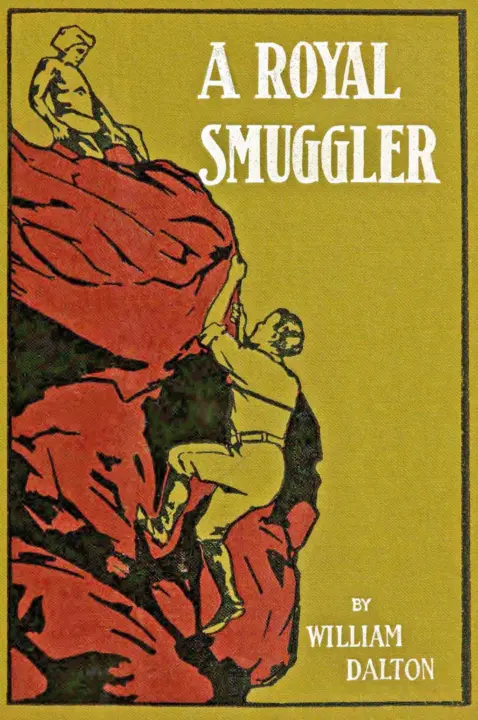
"A Royal Smuggler: or The Adventures of Two Boys in the Indian Archipelago" by William Dalton is a novel written in the early 20th century. The story unfolds the exciting and turbulent adventures of two boys, Claud and Martin, who are thrust into a world of intrigue following the death of their mother and their father’s desperate move to Java to seek fortune. As they settle in their uncle's household, they become embroiled in a complex web of family secrets, impending danger, and a captivating yet threatening new environment. The opening of the novel sets up the backdrop of familial loss and the promise of adventure as the boys receive an unexpected letter from their Uncle Adam. This letter invites them to Java, filled with hope for a new life after their father's financial downfall. However, upon arrival, the boys are met with shock; their uncle has died, leaving them in the guardianship of his widow, who displays dubious motives. As tensions mount within the household, the boys navigate the treacherous waters of suspicion and danger, setting the stage for their courageous escape from a life filled with potential treachery. The dynamics of their relationships, especially with their new aunt and the mysterious characters around them, promise an engaging story filled with adventure, mystery, and the boys' determination to assert their agency in a complex world.
Introduction adapted from the source catalogue; source summaries may be automatically generated.
Free to read · English · 96,774 words · No account needed
MAKE TIME FOR A GOOD BOOK
On by default. Untick to stop anonymous reading totals. Each page counts after 10 seconds in view. How this works.
Anonymous counting is on unless you have switched it off.
“What is the meaning of all this, is it a jollification day, I wonder?” asked Martin of Prabu; but the latter, as if no less surprised, addressing the head-man, our host, asked,--
“What day is this, oh my brother?”
“Can my elder brother have suddenly fallen from the moon, that he knows not that this is the twelfth of the month of Rabbi ul awal?”[D]
“Allah! and the Prophet pardon a miserable wretch for having forgotten it,” exclaimed Prabu, adding very truly, “but we must have lost our reckoning of time in the wilds, for I thought it wanted two more days to it. But Allah be thanked that we are yet in time for the festival.”
“My elder brother,” replied the head-man, “has committed no sin, for the day has only come, not passed; but,” he added, “let my brother attire himself fittingly, and accompany my party to Marang, for the day will be a great one, greater than usual, to do honor to the newly-arrived envoy from the unbelieving Dutch chief at Batavia.”
“When, O my elder brother, did this Dutch envoy arrive in Marang?” asked Prabu, with evident vexation, if not fear, depicted upon his countenance.
“Three days since. It is believed that it was to receive this Hollander, his highness the Pangeran left Pugar, and came to his great palace of Marang.”
“Will the Hollander attend the ceremonies at the palace?” asked Prabu.
“It is not known, but if my elder brother and his two friends will join our party they will see,” replied the head-man, and then again he offered to lend us the holiday attire of villagers that we might make an appropriate appearance, and to don these we went into his house.
“I say, Prabu,” said Martin while we were attiring ourselves, “isn’t it a little foolhardy for us, and you especially, to venture too near this Dutchman; won’t it be to walk into the lion’s mouth?”
“Not so, sahib; he will not recognize us, even if he has ever seen us before, for he cannot dream that we are in this part of the island.”
“But why go at all into the city until this envoy has quitted it, if there be any danger?” I asked.
“Because, Sahib Claud,” replied Prabu, sternly, “there is treachery at work in a quarter where I least expected to find it, and I must scent it out; still, if the sahibs fear, they can remain here.”
Your reading position is saved on this browser. Take it to another device with a library code. Reading pages adapt to text, rather than matching a printed edition.
BEHIND THE BOOK
This eBook is for the use of anyone anywhere in the United States and most other parts of the world at no cost and with almost no restrictions whatsoever. You may copy it, give it away or re-use it under the terms of the Project Gutenberg License included with this eBook or online at www.gutenberg.org. If you are not located in the United States, you will have to check the laws of the country where you are located before using this eBook. Read the source licence.
The original source file, including credits and licence, is retained by this library. Request an original-format copy at no charge. Please include the book title and Project Gutenberg identifier #74489.
KEEP YOUR CURIOSITY GOING
Coulson Kernahan

Maurice Baring
Frances Wright
Cécile Tormay

Frederic Jesup Stimson

W. H. P. (William Henry Pope) Jarvis