THE CLASSIC COLLECTION✦A dead man’s diaryCLASSIC FREE BOOKS
A dead man’s diary
Coulson Kernahan
THE CLASSIC COLLECTION · 1902
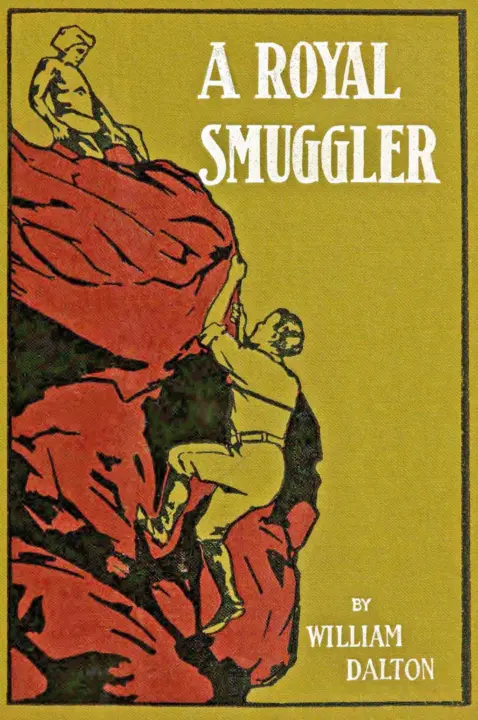
"A Royal Smuggler: or The Adventures of Two Boys in the Indian Archipelago" by William Dalton is a novel written in the early 20th century. The story unfolds the exciting and turbulent adventures of two boys, Claud and Martin, who are thrust into a world of intrigue following the death of their mother and their father’s desperate move to Java to seek fortune. As they settle in their uncle's household, they become embroiled in a complex web of family secrets, impending danger, and a captivating yet threatening new environment. The opening of the novel sets up the backdrop of familial loss and the promise of adventure as the boys receive an unexpected letter from their Uncle Adam. This letter invites them to Java, filled with hope for a new life after their father's financial downfall. However, upon arrival, the boys are met with shock; their uncle has died, leaving them in the guardianship of his widow, who displays dubious motives. As tensions mount within the household, the boys navigate the treacherous waters of suspicion and danger, setting the stage for their courageous escape from a life filled with potential treachery. The dynamics of their relationships, especially with their new aunt and the mysterious characters around them, promise an engaging story filled with adventure, mystery, and the boys' determination to assert their agency in a complex world.
Introduction adapted from the source catalogue; source summaries may be automatically generated.
Free to read · English · 96,774 words · No account needed
MAKE TIME FOR A GOOD BOOK
On by default. Untick to stop anonymous reading totals. Each page counts after 10 seconds in view. How this works.
Anonymous counting is on unless you have switched it off.
“Oh, bother! an English donkey would be worth a dozen of these brutes! I tell you what, Claud, I believe we should save time by reversing our positions, and carrying these animals on our shoulders;” at which, by the way, Prabu administered a very proper rebuke.
“These horses,” said he, “know their business better than the Sahib Martin. They know that they have to traverse mountain and valley--through brushwood and jungle--and meet with tigers or snakes, therefore they are slow; but they are cautious and sure-footed.”
“Ah!” replied my brother, “the old story of ‘the tortoise and the hare.’ Well, we must make the best of it.”
But then his “making the best of it” consisted in goading his pony till, becoming restive, it literally “bolted,” and, in its rage, regardless of the character Prabu had given him for sure-footedness, went, head foremost, into the ruins of a huge tank, some twelve feet deep.
“My brother is killed!” I exclaimed, half-frightened out of my wits, as horse and rider suddenly disappeared into an abyss, which, for what I then knew, might be as deep as the chasm down which I had fallen in the caves.
“Not kill! tank all full of grass and brushwood,” said the guide; and, to my great satisfaction, so it proved, for by the time we had reached the edge of the tank Martin had clambered up its sides, and stood before us rubbing his limbs.
“The ill-tempered brute!” he exclaimed, as we came up to him. “But I hope he is not killed.”
“No, sahib; horse not kill!” replied our guide; and, dismounting, he jumped into the tank, and in less than half-an-hour we saw him leading the animal up a slope.
Onward again along the side of this great tank, which once supplied the inhabitants of Mojopahit; through the vast ruins of palaces and magnificent temples, overgrown with forest trees and jungle, where once had stood the classic city of Java--the seat of her ancient kings.
With awe and veneration I listened to the description Prabu gave us of the former greatness of Mojopahit; but scarcely with the same feelings did Prabu regard these ruins.
“God is great!” he exclaimed. Pointing to fragments of walls and pillars: “those were once the palaces and temples of pagans--but what is written is written--now they are the haunts of the beast of the field; and the faith of the Prophet is triumphant through the land!”
“But,” said I, as we rode onwards, “I have heard that it was to a Hindoo or Buddhist king of Mojopahit that Mahomedanism was indebted for its first introduction into Java.”
Your reading position is saved on this browser. Take it to another device with a library code. Reading pages adapt to text, rather than matching a printed edition.
BEHIND THE BOOK
This eBook is for the use of anyone anywhere in the United States and most other parts of the world at no cost and with almost no restrictions whatsoever. You may copy it, give it away or re-use it under the terms of the Project Gutenberg License included with this eBook or online at www.gutenberg.org. If you are not located in the United States, you will have to check the laws of the country where you are located before using this eBook. Read the source licence.
The original source file, including credits and licence, is retained by this library. Request an original-format copy at no charge. Please include the book title and Project Gutenberg identifier #74489.
KEEP YOUR CURIOSITY GOING
Coulson Kernahan

Maurice Baring
Frances Wright
Cécile Tormay

Frederic Jesup Stimson

W. H. P. (William Henry Pope) Jarvis