THE CLASSIC COLLECTION✦A dead man’s diaryCLASSIC FREE BOOKS
A dead man’s diary
Coulson Kernahan
THE CLASSIC COLLECTION · 1902
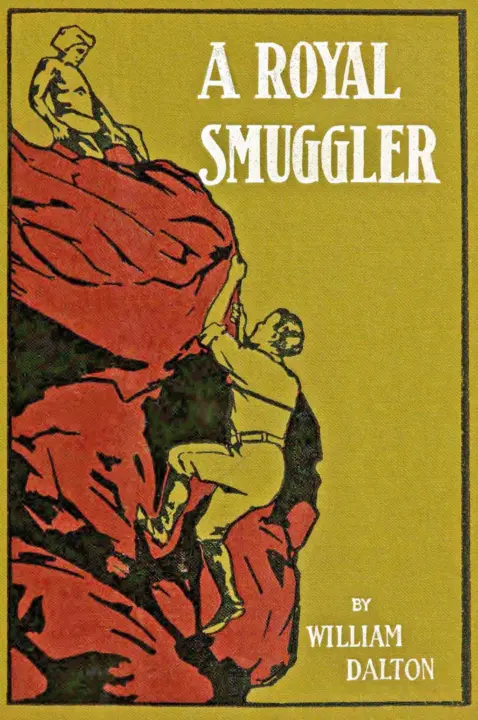
"A Royal Smuggler: or The Adventures of Two Boys in the Indian Archipelago" by William Dalton is a novel written in the early 20th century. The story unfolds the exciting and turbulent adventures of two boys, Claud and Martin, who are thrust into a world of intrigue following the death of their mother and their father’s desperate move to Java to seek fortune. As they settle in their uncle's household, they become embroiled in a complex web of family secrets, impending danger, and a captivating yet threatening new environment. The opening of the novel sets up the backdrop of familial loss and the promise of adventure as the boys receive an unexpected letter from their Uncle Adam. This letter invites them to Java, filled with hope for a new life after their father's financial downfall. However, upon arrival, the boys are met with shock; their uncle has died, leaving them in the guardianship of his widow, who displays dubious motives. As tensions mount within the household, the boys navigate the treacherous waters of suspicion and danger, setting the stage for their courageous escape from a life filled with potential treachery. The dynamics of their relationships, especially with their new aunt and the mysterious characters around them, promise an engaging story filled with adventure, mystery, and the boys' determination to assert their agency in a complex world.
Introduction adapted from the source catalogue; source summaries may be automatically generated.
Free to read · English · 96,774 words · No account needed
MAKE TIME FOR A GOOD BOOK
On by default. Untick to stop anonymous reading totals. Each page counts after 10 seconds in view. How this works.
Anonymous counting is on unless you have switched it off.
Not so quietly did our friend To-ki take his sentence; on the contrary, he set up a yelling that almost shook the hall of audience. Suddenly, however, his eyes lighting upon Prabu and me, he burst into an hysterical laugh, and, falling at the feet of the chief, he exclaimed,--
“Thy slave, oh, great chief, claims the remission of his sentence!”
“What means the dog, is he possessed?” cried the chief, kicking the
kneeling man.
“Claims it,” continued To-ki, “as his reward for giving into the great chief’s hands rogues, traitors, for whose heads the Dutch chief at Batavia offers a thousand dollars each. Let the great man cast his lightning glance upon those dogs,” he added, pointing to us.
Unfortunately, the meaning of these words was but too intelligible to Martin and me, and we placed our hands upon our cresses.
“Resistance is useless, sahibs, submit,” whispered Prabu.
“What means the Chinese dog? Who is this man that has come to us in the guise of a merchant and a sailor?”
“Prabu, the slave, the descendant of the traitor Surapati,” cried the
Chinese.
Seeing the chief regarding him, as if in astonishment and unbelief, Prabu advanced, and with an air of dignity, said--
“O great chief, this Chinese dog is a thief and a slayer of men for hire; but his words are good. I am he they call Prabu, the descendant of Surapati.”
The chief arose, I thought, from the mild expression in his eye and general manner, to pay his obeisance to Prabu, but quickly, sharply, he said,--
“Then art thou a traitor and a rebel to our good friends the Dutch--seize these dogs, and thy lives shall answer for their safety,” he added, to his guards. Whereupon we were all three secured, and taken at once to a small, dark, fetid-smelling dungeon.
“It has come at last; I said it would,” said Martin, surlily, as the guards fastened the door after quitting us.
“What is written is written,” was Prabu’s answer.
“That’s true, but it doesn’t follow that it can’t be scratched out.”
“Shame, Martin!” I exclaimed, “we have long since accepted our position, it is cowardice to complain now.”
Your reading position is saved on this browser. Take it to another device with a library code. Reading pages adapt to text, rather than matching a printed edition.
BEHIND THE BOOK
This eBook is for the use of anyone anywhere in the United States and most other parts of the world at no cost and with almost no restrictions whatsoever. You may copy it, give it away or re-use it under the terms of the Project Gutenberg License included with this eBook or online at www.gutenberg.org. If you are not located in the United States, you will have to check the laws of the country where you are located before using this eBook. Read the source licence.
The original source file, including credits and licence, is retained by this library. Request an original-format copy at no charge. Please include the book title and Project Gutenberg identifier #74489.
KEEP YOUR CURIOSITY GOING
Coulson Kernahan

Maurice Baring
Frances Wright
Cécile Tormay

Frederic Jesup Stimson

W. H. P. (William Henry Pope) Jarvis