THE CLASSIC COLLECTION✦A dead man’s diaryCLASSIC FREE BOOKS
A dead man’s diary
Coulson Kernahan
THE CLASSIC COLLECTION · 1902
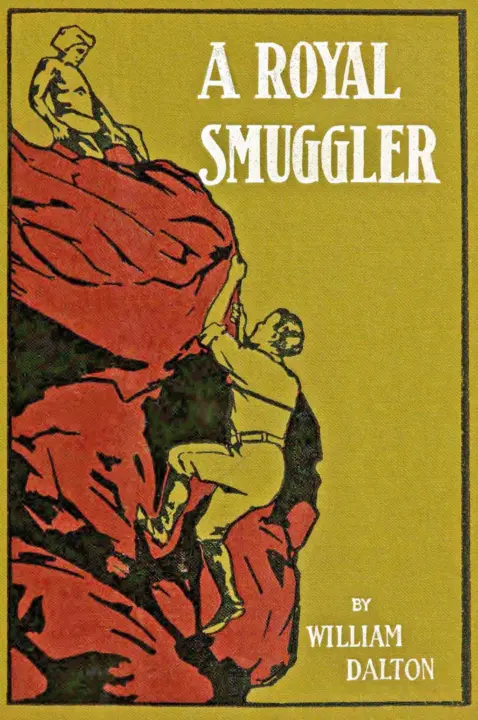
"A Royal Smuggler: or The Adventures of Two Boys in the Indian Archipelago" by William Dalton is a novel written in the early 20th century. The story unfolds the exciting and turbulent adventures of two boys, Claud and Martin, who are thrust into a world of intrigue following the death of their mother and their father’s desperate move to Java to seek fortune. As they settle in their uncle's household, they become embroiled in a complex web of family secrets, impending danger, and a captivating yet threatening new environment. The opening of the novel sets up the backdrop of familial loss and the promise of adventure as the boys receive an unexpected letter from their Uncle Adam. This letter invites them to Java, filled with hope for a new life after their father's financial downfall. However, upon arrival, the boys are met with shock; their uncle has died, leaving them in the guardianship of his widow, who displays dubious motives. As tensions mount within the household, the boys navigate the treacherous waters of suspicion and danger, setting the stage for their courageous escape from a life filled with potential treachery. The dynamics of their relationships, especially with their new aunt and the mysterious characters around them, promise an engaging story filled with adventure, mystery, and the boys' determination to assert their agency in a complex world.
Introduction adapted from the source catalogue; source summaries may be automatically generated.
Free to read · English · 96,774 words · No account needed
MAKE TIME FOR A GOOD BOOK
On by default. Untick to stop anonymous reading totals. Each page counts after 10 seconds in view. How this works.
Anonymous counting is on unless you have switched it off.
For a short time we stood stock-still among the shrubs and trees; then, believing our aunt had recovered from her alarm, we moved, creeping softly, in an opposite direction to the house, so that, should any person or persons be on the lookout, we might escape them; but by so doing, in those large and intricately laid out grounds, after an hour’s ramble we had literally lost ourselves.
“What shall we do now?” asked my brother, coming to a dead halt.
“Remain where we are till daybreak, when there will be light enough to show us the way back to our room,” said I.
“All right, old fellow,” he replied, coolly; “we have no alternative; in the meantime, let us make ourselves at home;” and he threw himself at full length upon a piece of green sward.
“Stay, Martin,” I said; “there is a glimmer yonder; surely it cannot be
a glow-worm.”
“A glow-worm,” he repeated; “nonsense! It is the light from a lantern. Queer! who can be there at this time? let us see.”
As we approached the light, we found it proceeded from a small grotto-like hut, which we perceived to be within a few yards of the window of our room.
“This is lucky, for we know where we are; but before we go in, let us see what’s doing at this time of night; something wrong, I am sure. Stay,” he added, as we reached the walls; “can’t you hear voices?”
Martin was right; we could hear voices, very distinctly, too, and in anger; one was that of the slave, Prabu, the other the old snake-charmer’s.
“Well, well, old man,” Prabu was saying, in reply to something the other man had said, but which we had not heard; “you have explained why I find you in the grotto, but if my lady has condescendingly permitted you to remain here, it was not good that you should keep a light through the night to frighten honest people out of their wits.”
“Worthy Prabu, I am old, and require luxuries that the young, strong and handsome, like thyself, find not necessary.”
“It may be so; yet, Huccuck, thou art more than suspected of being a rogue; still, if the light helps thee to keep the venomous reptiles in your box from escaping, it may remain; but as you value your liberty, get thee hence before daybreak, for such are my lady’s orders.”
Your reading position is saved on this browser. Take it to another device with a library code. Reading pages adapt to text, rather than matching a printed edition.
BEHIND THE BOOK
This eBook is for the use of anyone anywhere in the United States and most other parts of the world at no cost and with almost no restrictions whatsoever. You may copy it, give it away or re-use it under the terms of the Project Gutenberg License included with this eBook or online at www.gutenberg.org. If you are not located in the United States, you will have to check the laws of the country where you are located before using this eBook. Read the source licence.
The original source file, including credits and licence, is retained by this library. Request an original-format copy at no charge. Please include the book title and Project Gutenberg identifier #74489.
KEEP YOUR CURIOSITY GOING
Coulson Kernahan

Maurice Baring
Frances Wright
Cécile Tormay

Frederic Jesup Stimson

W. H. P. (William Henry Pope) Jarvis