THE CLASSIC COLLECTION✦A dead man’s diaryCLASSIC FREE BOOKS
A dead man’s diary
Coulson Kernahan
THE CLASSIC COLLECTION · 1902
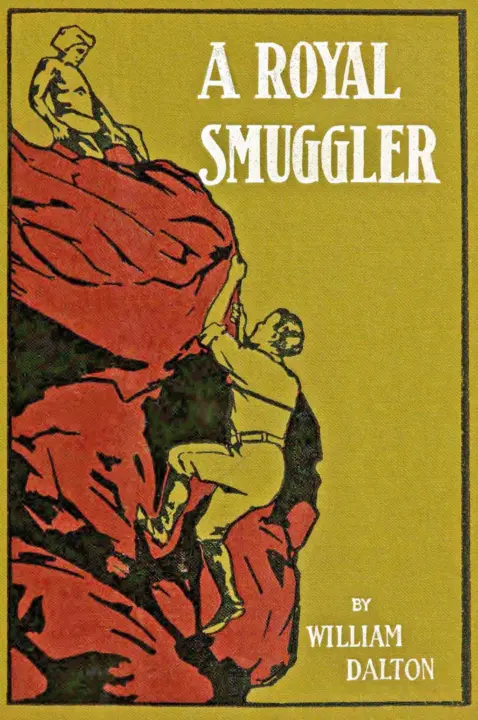
"A Royal Smuggler: or The Adventures of Two Boys in the Indian Archipelago" by William Dalton is a novel written in the early 20th century. The story unfolds the exciting and turbulent adventures of two boys, Claud and Martin, who are thrust into a world of intrigue following the death of their mother and their father’s desperate move to Java to seek fortune. As they settle in their uncle's household, they become embroiled in a complex web of family secrets, impending danger, and a captivating yet threatening new environment. The opening of the novel sets up the backdrop of familial loss and the promise of adventure as the boys receive an unexpected letter from their Uncle Adam. This letter invites them to Java, filled with hope for a new life after their father's financial downfall. However, upon arrival, the boys are met with shock; their uncle has died, leaving them in the guardianship of his widow, who displays dubious motives. As tensions mount within the household, the boys navigate the treacherous waters of suspicion and danger, setting the stage for their courageous escape from a life filled with potential treachery. The dynamics of their relationships, especially with their new aunt and the mysterious characters around them, promise an engaging story filled with adventure, mystery, and the boys' determination to assert their agency in a complex world.
Introduction adapted from the source catalogue; source summaries may be automatically generated.
Free to read · English · 96,774 words · No account needed
MAKE TIME FOR A GOOD BOOK
On by default. Untick to stop anonymous reading totals. Each page counts after 10 seconds in view. How this works.
Anonymous counting is on unless you have switched it off.
“These fellows, Claud, are ‘jolly bricks.’ Hang me, if one of them has laughed at us! But, by Jingo, the fellows at our school would have chaffed us not a little, if we, after nutting in the woods, had shown ourselves in such a precious costume.”
“Ay, Martin; but then our schoolfellows were civilized, and these men
are only savages!”
“Why, Claud, do you mean to say that the more civilized we are, the more prone are we to laugh at the misfortunes of our fellows?”
“Yes; some of the best jokes are made out of the real or fancied (it matters not which to the butt) miseries of others, while savages are always serious, either to friends or to enemies.”
“Claud, old fellow, you are a cynic.”
“That is better than being a wit, or witling, at the expense of the
feelings of others.”
“Well, I don’t know, perhaps you are right--I am not so wise an old fellow as you; but see, Prabu is beckoning us to his cabin.”
Our captain had a meal ready, the best he could have made up, consisting of hot rice, dried fish, a fish-sauce, and slices of pork, to say nothing of a cup of hot rice-spirit, of which he insisted we should partake before saying another word--which good things made Martin bold enough to say:
“Now, Prabu, I don’t like half-confidence, and you know we shall be in a pretty mess if the Dutch happen to catch us; besides, we are all rowing in one boat, or prahu, which is the same thing. Do, therefore, like a good old Prabu as you are, tell us upon what errand you sent Kati up to that town with the very hard name?”
“Sahib,” replied Prabu, in measured tones, “I may tell you, Kati went to tell the Chief of Pugar our adventure with the Dutch ships, that he might be on his guard, knowing that the suspicions of the Government had become excited.”
“New conspiracies!--I thought so,” said Martin, laughing.
“Not so, sahib, but a part of the old one,” replied Prabu, astutely.
“But, anyhow, you will manage to get us hanged, drawn, and quartered, or something equally pleasant, if we don’t look out.”
“Will the sahib go ashore at Pugar? From thence it will not be difficult to get back to Batavia, to Mynheer’s house, if he wills it; nay, he shall have two of the best of the prahu’s men as guides,” replied Prabu, but this time with a serio-comic manner, that showed he understood my brother to be bantering him; but Martin, now in turn most serious, answered:
Your reading position is saved on this browser. Take it to another device with a library code. Reading pages adapt to text, rather than matching a printed edition.
BEHIND THE BOOK
This eBook is for the use of anyone anywhere in the United States and most other parts of the world at no cost and with almost no restrictions whatsoever. You may copy it, give it away or re-use it under the terms of the Project Gutenberg License included with this eBook or online at www.gutenberg.org. If you are not located in the United States, you will have to check the laws of the country where you are located before using this eBook. Read the source licence.
The original source file, including credits and licence, is retained by this library. Request an original-format copy at no charge. Please include the book title and Project Gutenberg identifier #74489.
KEEP YOUR CURIOSITY GOING
Coulson Kernahan

Maurice Baring
Frances Wright
Cécile Tormay

Frederic Jesup Stimson

W. H. P. (William Henry Pope) Jarvis