THE CLASSIC COLLECTION✦A dead man’s diaryCLASSIC FREE BOOKS
A dead man’s diary
Coulson Kernahan
THE CLASSIC COLLECTION · 1902
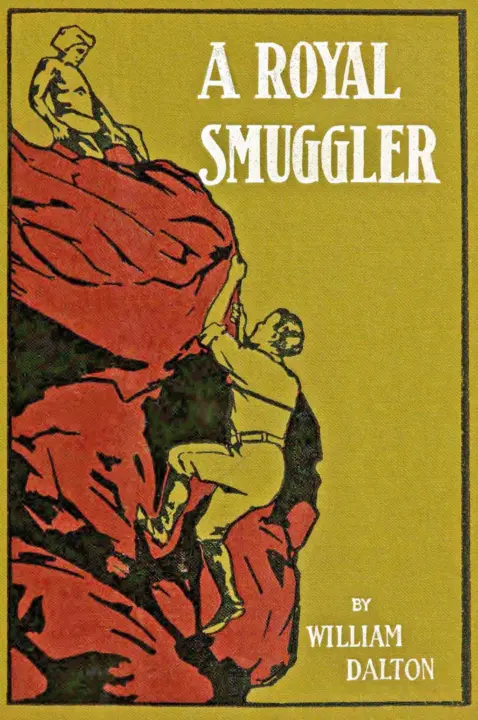
"A Royal Smuggler: or The Adventures of Two Boys in the Indian Archipelago" by William Dalton is a novel written in the early 20th century. The story unfolds the exciting and turbulent adventures of two boys, Claud and Martin, who are thrust into a world of intrigue following the death of their mother and their father’s desperate move to Java to seek fortune. As they settle in their uncle's household, they become embroiled in a complex web of family secrets, impending danger, and a captivating yet threatening new environment. The opening of the novel sets up the backdrop of familial loss and the promise of adventure as the boys receive an unexpected letter from their Uncle Adam. This letter invites them to Java, filled with hope for a new life after their father's financial downfall. However, upon arrival, the boys are met with shock; their uncle has died, leaving them in the guardianship of his widow, who displays dubious motives. As tensions mount within the household, the boys navigate the treacherous waters of suspicion and danger, setting the stage for their courageous escape from a life filled with potential treachery. The dynamics of their relationships, especially with their new aunt and the mysterious characters around them, promise an engaging story filled with adventure, mystery, and the boys' determination to assert their agency in a complex world.
Introduction adapted from the source catalogue; source summaries may be automatically generated.
Free to read · English · 96,774 words · No account needed
MAKE TIME FOR A GOOD BOOK
On by default. Untick to stop anonymous reading totals. Each page counts after 10 seconds in view. How this works.
Anonymous counting is on unless you have switched it off.
“Know then, oh noble youth, that thy servant, the miserable and insignificant Si-Ling, two moons since left Batavia to go to Yugyacarta, where he has since lived with his wife and two children; but, alas! the jungle-fever seized and carried his whole family to the yellow stream (i. e., they had died by fever) three days since. Overcome with grief thy servant started this morning at daybreak in a sampan to reach the coast, where he hoped to find some junk or prahu, whose noble captain would take him back to Batavia; but, alas! thy slave chose an unfortunate day, for when within two leagues of this spot he was surprised by robbers, who, enticing him ashore, took from him his worldly goods and sampan--leaving him, as the noble youths may see, with naught but a bag of fruits.” Then, with a deep groan, he threw the latter, which had been suspended by a string round his neck, upon the bank.
“But, Mr. Si-Ling,” said Martin, “you have not told us how you got your living in Yugyacarta; and we must know that; for if, as an honest trader or laborer, we will take you with us; if, as a vagabond--and you look more like that than anything else--well, you will have to sleep under a palm, and tramp it in the morning.”
“Know then, oh noble youth, that Si-Ling is a great scholar, and the son of a scholar; for his worthy parent was a mandarin of letters, and a member of the college of Han-Lin, at Pekin: thus thy servant is learned in history, and having studied that of Java since he has been here, relates stories to the nobles who seek amusement.”
“A professional story-teller, then?” said I.
“The noble youth has divined aright: his servant, Si-Ling, is of the noble profession of story-tellers.”
“More likely of the ignoble profession of rogues, if there be any truth in physiognomy,” whispered Martin--adding: “Well, Mr. Si-Ling, get in, and stow yourself away in the stern; and as we float down the stream--for, as the tide having turned, we don’t want the oars--you may give us a taste of your quality.”
“May the bones of the noble youths rest with those of their ancestors, and their descendants ever piously keep their tombs well swept, and strewn with fresh flowers!” replied the Chinese, getting into the sampan.
“Much obliged,” replied Martin, laughing. “You are kind, and we are grateful; nevertheless, we are in no hurry for anything half so good.”
When, however, we had put off, and were floating down the stream, he
said:
“Now, my friend, for a ‘taste of your quality.’ Tell us a story.”
Your reading position is saved on this browser. Take it to another device with a library code. Reading pages adapt to text, rather than matching a printed edition.
BEHIND THE BOOK
This eBook is for the use of anyone anywhere in the United States and most other parts of the world at no cost and with almost no restrictions whatsoever. You may copy it, give it away or re-use it under the terms of the Project Gutenberg License included with this eBook or online at www.gutenberg.org. If you are not located in the United States, you will have to check the laws of the country where you are located before using this eBook. Read the source licence.
The original source file, including credits and licence, is retained by this library. Request an original-format copy at no charge. Please include the book title and Project Gutenberg identifier #74489.
KEEP YOUR CURIOSITY GOING
Coulson Kernahan

Maurice Baring
Frances Wright
Cécile Tormay

Frederic Jesup Stimson

W. H. P. (William Henry Pope) Jarvis