THE CLASSIC COLLECTION✦A dead man’s diaryCLASSIC FREE BOOKS
A dead man’s diary
Coulson Kernahan
THE CLASSIC COLLECTION · 1902
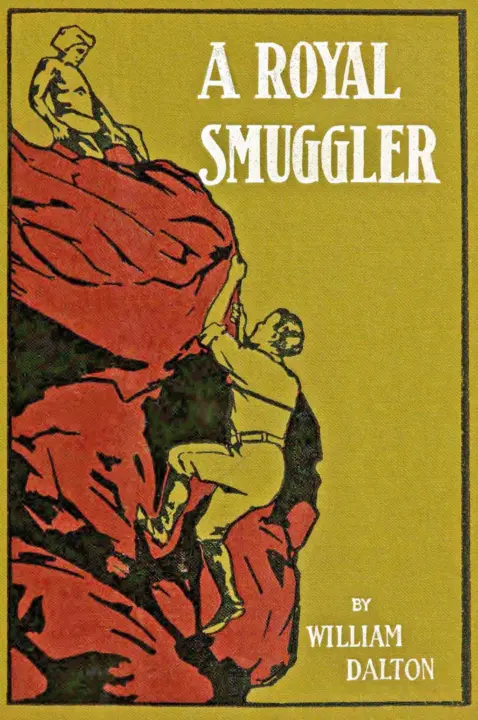
"A Royal Smuggler: or The Adventures of Two Boys in the Indian Archipelago" by William Dalton is a novel written in the early 20th century. The story unfolds the exciting and turbulent adventures of two boys, Claud and Martin, who are thrust into a world of intrigue following the death of their mother and their father’s desperate move to Java to seek fortune. As they settle in their uncle's household, they become embroiled in a complex web of family secrets, impending danger, and a captivating yet threatening new environment. The opening of the novel sets up the backdrop of familial loss and the promise of adventure as the boys receive an unexpected letter from their Uncle Adam. This letter invites them to Java, filled with hope for a new life after their father's financial downfall. However, upon arrival, the boys are met with shock; their uncle has died, leaving them in the guardianship of his widow, who displays dubious motives. As tensions mount within the household, the boys navigate the treacherous waters of suspicion and danger, setting the stage for their courageous escape from a life filled with potential treachery. The dynamics of their relationships, especially with their new aunt and the mysterious characters around them, promise an engaging story filled with adventure, mystery, and the boys' determination to assert their agency in a complex world.
Introduction adapted from the source catalogue; source summaries may be automatically generated.
Free to read · English · 96,774 words · No account needed
MAKE TIME FOR A GOOD BOOK
On by default. Untick to stop anonymous reading totals. Each page counts after 10 seconds in view. How this works.
Anonymous counting is on unless you have switched it off.
The effect of this reply upon the midshipman was comical in the extreme. He first ordered the sailor to take Martin below; then he walked about the deck, giving vent both to rage and fear--the first, that good provisions should have been thrown away--the latter, that he would have to live the rest of the voyage upon rice and water, which, to a high-feeding Dutchman, was something like starvation.
“Oh, dear! oh, dear!” he cried like a child, “what shall I do? Oh! why did I ever leave Amsterdam? The captain should have left provisions on board; I will make my complaint to the Governor-General at Batavia.”
Now, while he was thus soliloquizing, I was standing--watching, listening, and laughing--behind a sail; but, seeing something in the distant horizon which looked like a ship, an idea that might result in advantage to myself occurred to me; so, stepping forward, and touching my cap in mock respect, I said:
“A ship in sight, sir; her captain will, perhaps, spare you some of his
provisions.”
“A ship in sight! Dear me, that’s good news, for we may get some pork,” he replied; then, having swept the horizon with his glass, he said:
“It is a Chinese junk, and she flies the Dutch flag; she must, therefore, thank God, be in the Governor-General’s service: moreover, she seems at anchor among yonder islands.”
Thus, the prospect of a leg of pork being nearer, assuming his usual consequential air, he said--yes, that little whipper-snapper, who did not stand above five feet three in his shoes, said to me, who stood nearly six feet without shoes:
“Now, you boy, do you think I could trust you?”
“Aye, aye, sir!” replied I, touching my cap, and with great difficulty
suppressing a laugh.
“Well, well,” he replied, “I believe I can, for you are not like that other rascal--you have a civil tongue in your head. But do you know what a pig is?”
“I believe I should know one if I saw it, without it was like the wolf in sheep’s clothing.”
“You rascal, are you laughing at me?”--and he shook his fist in my face.
“No, sir; shouldn’t dare to laugh at an officer in command,” I replied, as seriously as possible; and this mollified him, for he replied:
“Well, I don’t think you would, at least not at me--it wouldn’t be safe. But can you tell a good pig from a bad one?”
“Aye, aye, sir!”
Your reading position is saved on this browser. Take it to another device with a library code. Reading pages adapt to text, rather than matching a printed edition.
BEHIND THE BOOK
This eBook is for the use of anyone anywhere in the United States and most other parts of the world at no cost and with almost no restrictions whatsoever. You may copy it, give it away or re-use it under the terms of the Project Gutenberg License included with this eBook or online at www.gutenberg.org. If you are not located in the United States, you will have to check the laws of the country where you are located before using this eBook. Read the source licence.
The original source file, including credits and licence, is retained by this library. Request an original-format copy at no charge. Please include the book title and Project Gutenberg identifier #74489.
KEEP YOUR CURIOSITY GOING
Coulson Kernahan

Maurice Baring
Frances Wright
Cécile Tormay

Frederic Jesup Stimson

W. H. P. (William Henry Pope) Jarvis