THE CLASSIC COLLECTION✦A dead man’s diaryCLASSIC FREE BOOKS
A dead man’s diary
Coulson Kernahan
THE CLASSIC COLLECTION · 1902
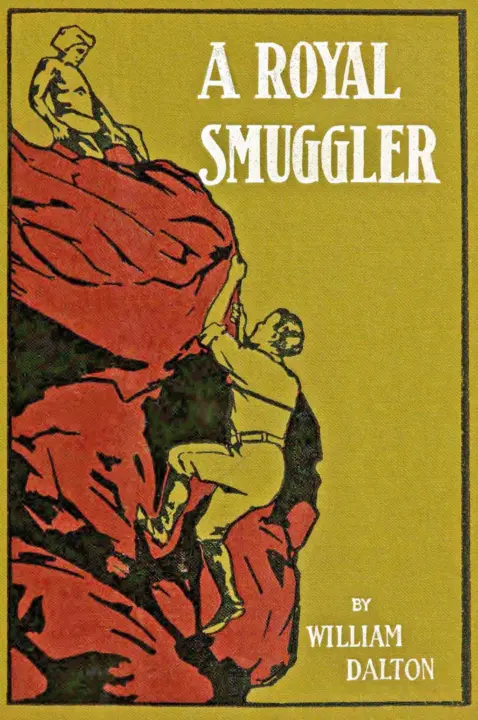
"A Royal Smuggler: or The Adventures of Two Boys in the Indian Archipelago" by William Dalton is a novel written in the early 20th century. The story unfolds the exciting and turbulent adventures of two boys, Claud and Martin, who are thrust into a world of intrigue following the death of their mother and their father’s desperate move to Java to seek fortune. As they settle in their uncle's household, they become embroiled in a complex web of family secrets, impending danger, and a captivating yet threatening new environment. The opening of the novel sets up the backdrop of familial loss and the promise of adventure as the boys receive an unexpected letter from their Uncle Adam. This letter invites them to Java, filled with hope for a new life after their father's financial downfall. However, upon arrival, the boys are met with shock; their uncle has died, leaving them in the guardianship of his widow, who displays dubious motives. As tensions mount within the household, the boys navigate the treacherous waters of suspicion and danger, setting the stage for their courageous escape from a life filled with potential treachery. The dynamics of their relationships, especially with their new aunt and the mysterious characters around them, promise an engaging story filled with adventure, mystery, and the boys' determination to assert their agency in a complex world.
Introduction adapted from the source catalogue; source summaries may be automatically generated.
Free to read · English · 96,774 words · No account needed
MAKE TIME FOR A GOOD BOOK
On by default. Untick to stop anonymous reading totals. Each page counts after 10 seconds in view. How this works.
Anonymous counting is on unless you have switched it off.
The following day we met with an incident equally ludicrous, although of a more vexatious if not mischievous kind. About mid-day, while we were hiding from the burning sun under deck-awnings, we were startled by the report of a great gun, and, jumping to our feet, saw a large ship bearing towards us.
“It is a Dutch war-sloop,” said Prabu.
“Aye,” said Martin, “I can see that by her flag; but that’s no reason why she should send that ball of iron across our bows.”
“See,” replied Prabu, “her captain is signaling us to hove to, while he sends an officer on board.”
“To what are we indebted for the honor of the visit?” I asked, as soon as Prabu had given the order to obey the Dutchman.
“He takes us for Chinese or Malay pirates. Like the English, the Dutch will permit no thieves in the East but themselves--at least, when they can prevent it.”
The war-sloop’s boat was soon alongside, and in it a dozen sailors, armed with cutlasses and pistols, and a boy-officer, very short, very stout, and very consequential.
“Hilloa, you rogues!” said this stripling, as he stepped upon deck, “where do you hail from, to what port are you bound, and what have you on board?”
“From Java, and bound for Singapore, laden with birds’-nests,” was the
reply.
“Laden with what?” asked the youngster, in astonishment.
“Birds’-nests,” replied Prabu, touching his cap, or rather the covering of his head; but the youngster--evidently a fresh arrival in those seas, and who had heard of no birds’-nests excepting those he had himself taken in his school-days--flew into a violent passion.
“You impudent rogue, do you dare to make fun of one of their high mightinesses’ officers?” he roared. “Birds’-nests, indeed! I’ll birds’-nest the lot of you--a precious greenhorn you must take me for!”
Now, I did not at all like the young man’s tone; still, knowing he possessed the power to cause us much annoyance, if he chose to use it, I went up to him, and touching my cap, as bound by etiquette to a naval officer, said:
“Indeed, it is true that we are only laden with birds’-nests.”
“Oh! you are putting a spoke in, are you? Who, pray, are you that speak Dutch, and are yet found among these rascally pirates?”
At these insulting words, Martin, who had less respect for their high mightinesses’ uniform than his elder brother, cried:
“Stand by, Claud. Come, Mr. Midshipman, for all that cocked hat and dirk of yours, you are exceeding your duty. You were not sent here to insult honest traders.”
“You impertinent rapscallion----”
Your reading position is saved on this browser. Take it to another device with a library code. Reading pages adapt to text, rather than matching a printed edition.
BEHIND THE BOOK
This eBook is for the use of anyone anywhere in the United States and most other parts of the world at no cost and with almost no restrictions whatsoever. You may copy it, give it away or re-use it under the terms of the Project Gutenberg License included with this eBook or online at www.gutenberg.org. If you are not located in the United States, you will have to check the laws of the country where you are located before using this eBook. Read the source licence.
The original source file, including credits and licence, is retained by this library. Request an original-format copy at no charge. Please include the book title and Project Gutenberg identifier #74489.
KEEP YOUR CURIOSITY GOING
Coulson Kernahan

Maurice Baring
Frances Wright
Cécile Tormay

Frederic Jesup Stimson

W. H. P. (William Henry Pope) Jarvis