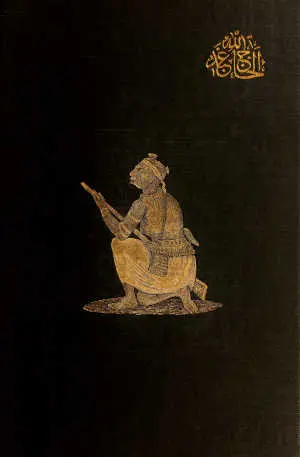
A mission to Gelele, King of Dahome, Vol. 2 (of 2)
Richard Francis, Sir Burton
THE CLASSIC COLLECTION · 1893
"A mission to Gelele, King of Dahome, Vol. 1 (of 2)" by Sir Richard Francis Burton is a travel narrative and ethnographic-historical account written in the mid-19th century. The work chronicles a British diplomatic mission to Dahomey, portraying the king, his female regiments, royal ceremonies, human sacrifices, and the coastal slave trade through first-hand observation. It blends statecraft with vivid reportage across West African locales, including Fernando Po, Lagos, Whydah, and the Dahoman interior.
The opening of the book frames Burton’s mission through Isabel Burton’s memorial preface and official Foreign Office letters directing him to promote lawful trade, curb the slave export, and discourage human sacrifices, while carrying specific royal presents. Before setting out inland, Burton sketches Fernando Po’s climate and the creation of a highland sanitarium at Santa Cecilia, then offers lively ethnographic notes on the Bubé people and his quiet life at Buena Vista. He departs aboard a naval steamer, gives a terse, unhealthy portrait of Lagos, and reaches Whydah, where he undergoes elaborate landings, toasts, and processions across the lagoon, complete with bands, salutes, and strenuous war dances. Formal receptions follow with local Dahoman officials—the Ka-wo, Ainadu, and others—who deliver the king’s messages and gifts, after which Burton begins a brief tour of Whydah’s layout, population, and history, noting its ruined state, origins of its name, and the legacy of Dahomean conquest and European forts.
Introduction adapted from the source catalogue; source summaries may be automatically generated.
Free to read · English · 89,083 words · No account needed
MAKE TIME FOR A GOOD BOOK
On by default. Untick to stop anonymous reading totals. Each page counts after 10 seconds in view. How this works.
Anonymous counting is on unless you have switched it off.
[Footnote 379: Avo (a cloth), and lí or lilli (smoothen!)]
[Footnote 380: This is a Bo name, and imperfectly understood. The words are Anlin (a hole in the ground), wa (make), nun (a thing).]
[Footnote 381: Da (fire!) mon (as you are), i.e., “May you fire straight!” said in praise to one of high name.]
[Footnote 382: Men (man), ho (great), blu (do), to (he who does).]
[Footnote 383: Throughout Yoruba and the Gold Coast to bare the shoulders is like unhatting in England. These men were exempted from the necessity by a mere caprice of the King, not because they have in any respect distinguished themselves.]
[Footnote 384: To the north of this diwan, outside the bamboos, a small heap of silks was raised upon mats, in honour of Addo-kpon, of whom more presently.]
[Footnote 385: The word has already been explained. Mr. Duncan also describes this “noble piece of patchwork,” making it 600 yards by 2; and in another place 1000 yards by 8 (vol. i. p. 264; and vol ii. p. 27).]
[Footnote 386: Described in chap. ix.]
[Footnote 387: Mr. Duncan (vol. i. p. 247), saw King Gezo perform
similar antics.]
[Footnote 388: Vol. i. pp. 239, 240.]
[Footnote 389: Cowries may be remarked in the musket stocks. According to Mr. Duncan (vol. i. p. 261), they are an honourable distinction, given as medals to civilized armies. The stock is repeatedly smeared with the victim’s blood, coat after coat, till the thickness is sufficient to form a setting for the shell, around which it soon dries. Although only one cowrie is given per head, some old soldiers have their weapons entirely covered over with them. This custom, of course, stimulates murder, and excites perpetual jealousies in the service. I have heard the same said of a certain modern English decoration.]
Transcriber's note:
pg 53, Changed: "rash Governor Tetesole was" to: "Testesole"
pg 67, Changed: "Hs was ever hospitable and generous" to: "He"
pg 67, footnote 81, Changed: "says that traveller vol. i." to:
"traveller (vol."
pg 71, Changed: "were lodged in jail ll they could be" to: "till"
pg 80, Changed: "different man. Mr. Beccham was" to: "Beecham"
pg 84, Changed: "the oil-palm Elæis Guineensis)" to:
"oil-palm (Elæis"
pg 99, Changed: "have enjoyed the “demonaic scene" to: "demoniac"
pg 117, Changed: "Other have gone so far as" to: "Others"
pg 149, Changed: "decribed as the head war-man" to: "described"
pg 174, Changed: "ablution neccessary on return home" to: "necessary"
pg 192, Changed: "courses, like the palace encientes" to: "enceintes"
pg 226, footnote 345, Added ,” after: "game is the Sa’ Leone “Wari"
pg 226, footnote 345, Changed: "the Bao Usawahili" to: "the Bao of
Usawahili"
pg 239, Changed: "which the Dahomams admire, probably" to: "Dahomans"
Minor changes in punctuation have been done silently.
Your reading position is saved on this browser. Take it to another device with a library code. Reading pages adapt to text, rather than matching a printed edition.
Richard Francis, Sir Burton
BEHIND THE BOOK
This eBook is for the use of anyone anywhere in the United States and most other parts of the world at no cost and with almost no restrictions whatsoever. You may copy it, give it away or re-use it under the terms of the Project Gutenberg License included with this eBook or online at www.gutenberg.org. If you are not located in the United States, you will have to check the laws of the country where you are located before using this eBook. Read the source licence.
The original source file, including credits and licence, is retained by this library. Request an original-format copy at no charge. Please include the book title and Project Gutenberg identifier #78570.
KEEP YOUR CURIOSITY GOING
Wilfrid Scawen Blunt
Wilfrid Scawen Blunt

E. W. (Edgar Watson) Howe
Francis Greenleaf Allinson & Anne C. E. (Anne Crosby Emery) Allinson
Cyrenus Cole

John Martineau