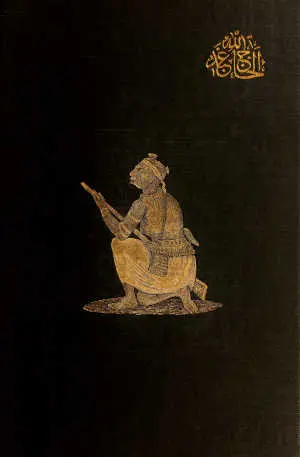
A mission to Gelele, King of Dahome, Vol. 2 (of 2)
Richard Francis, Sir Burton
THE CLASSIC COLLECTION · 1893
"A mission to Gelele, King of Dahome, Vol. 1 (of 2)" by Sir Richard Francis Burton is a travel narrative and ethnographic-historical account written in the mid-19th century. The work chronicles a British diplomatic mission to Dahomey, portraying the king, his female regiments, royal ceremonies, human sacrifices, and the coastal slave trade through first-hand observation. It blends statecraft with vivid reportage across West African locales, including Fernando Po, Lagos, Whydah, and the Dahoman interior.
The opening of the book frames Burton’s mission through Isabel Burton’s memorial preface and official Foreign Office letters directing him to promote lawful trade, curb the slave export, and discourage human sacrifices, while carrying specific royal presents. Before setting out inland, Burton sketches Fernando Po’s climate and the creation of a highland sanitarium at Santa Cecilia, then offers lively ethnographic notes on the Bubé people and his quiet life at Buena Vista. He departs aboard a naval steamer, gives a terse, unhealthy portrait of Lagos, and reaches Whydah, where he undergoes elaborate landings, toasts, and processions across the lagoon, complete with bands, salutes, and strenuous war dances. Formal receptions follow with local Dahoman officials—the Ka-wo, Ainadu, and others—who deliver the king’s messages and gifts, after which Burton begins a brief tour of Whydah’s layout, population, and history, noting its ruined state, origins of its name, and the legacy of Dahomean conquest and European forts.
Introduction adapted from the source catalogue; source summaries may be automatically generated.
Free to read · English · 89,083 words · No account needed
MAKE TIME FOR A GOOD BOOK
On by default. Untick to stop anonymous reading totals. Each page counts after 10 seconds in view. How this works.
Anonymous counting is on unless you have switched it off.
[Footnote 55: No one could explain the meaning of this word. Zó means the later rains, and must not be confounded with Zò, fire, which is pronounced with a depression of the voice. The Yoruban languages, like the Chinese, depend upon accents and intonations which are not ours. For instance, So and Soh, slightly aspirated, is a stick. Sò, with a falling of the voice, has the same signification as Khevio-sò, thunder. Só, with a rising of the voice, means a horse; and with an almost imperceptible variation of voice, means bring; e.g., Só, zò, wá, bring hither fire! Sô (pronounced Saw), means yesterday or to-morrow, a fair specimen of linguistic poverty, and leading to numerous mistakes. But these delicacies of intonation are inherent in monosyllabic tongues. That childish form of human language also delights in imitative words, as Koklo, a “cackler” or fowl (in Prakrit Kukkur), Kra-kra, a watchman’s rattle, and so on.]
[Footnote 56: Wanderings in West Africa. Abeokuta, chap. iii. See also Mr. Duncan, vol. i. p. 121.]
[Footnote 57: Vodun is Fetish in general. I hardly know whether to write it Vodun or Fodun, the sound of the two labials is so similar. New comers are apt to confound this Fetish with the Azan or fringe of dried palm-leaf, which, fastened about a tree, places it under the protection of the Bo-Fetish. When a man wears the latter round his throat, witchcraft can do him no harm; and, if a war captive, he may not be killed.]
[Footnote 58: The food which it contains is called Legba-nun-dudu, or
“eating for Legba.”]
[Footnote 59: There are two kinds, Akrasu, the common Percnopter niger, and a larger grey species, with a very hooked beak, called by the people Akkun.]
[Footnote 60: How strong a superstition this worship is, may be gathered from the annals of the monotheistic Jews, amongst whom Maacah, the queen-mother of Asa, set up the “horror” in a grove.]
[Footnote 61: There is also a great demon in Egba land, who uses a knobstick, called Oggo, and who therefore is known as Agongo-Oggo.]
[Footnote 62: A Description of the Coasts of North and South Guinea. By John Barbot, Agent-General of the Royal African Company and Islands of America, at Paris. This old book is a mine of information.]
[Footnote 63: It was the mess-room of the governor and his officers, with whatever strangers might be staying in the place.]
[Footnote 64: English Town is one of the most populous parts of Whydah, and lies behind its fort. Like the other quarters, it is chiefly inhabited by the descendants of fort slaves, and they are bound to do corvée for English visitors. They speak a little of our language, and they muster perhaps 300 families.]
Your reading position is saved on this browser. Take it to another device with a library code. Reading pages adapt to text, rather than matching a printed edition.
Richard Francis, Sir Burton
BEHIND THE BOOK
This eBook is for the use of anyone anywhere in the United States and most other parts of the world at no cost and with almost no restrictions whatsoever. You may copy it, give it away or re-use it under the terms of the Project Gutenberg License included with this eBook or online at www.gutenberg.org. If you are not located in the United States, you will have to check the laws of the country where you are located before using this eBook. Read the source licence.
The original source file, including credits and licence, is retained by this library. Request an original-format copy at no charge. Please include the book title and Project Gutenberg identifier #78570.
KEEP YOUR CURIOSITY GOING
Wilfrid Scawen Blunt
Wilfrid Scawen Blunt

E. W. (Edgar Watson) Howe
Francis Greenleaf Allinson & Anne C. E. (Anne Crosby Emery) Allinson
Cyrenus Cole

John Martineau