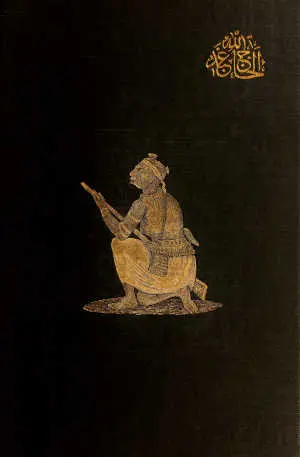
A mission to Gelele, King of Dahome, Vol. 2 (of 2)
Richard Francis, Sir Burton
THE CLASSIC COLLECTION · 1893
"A mission to Gelele, King of Dahome, Vol. 1 (of 2)" by Sir Richard Francis Burton is a travel narrative and ethnographic-historical account written in the mid-19th century. The work chronicles a British diplomatic mission to Dahomey, portraying the king, his female regiments, royal ceremonies, human sacrifices, and the coastal slave trade through first-hand observation. It blends statecraft with vivid reportage across West African locales, including Fernando Po, Lagos, Whydah, and the Dahoman interior.
The opening of the book frames Burton’s mission through Isabel Burton’s memorial preface and official Foreign Office letters directing him to promote lawful trade, curb the slave export, and discourage human sacrifices, while carrying specific royal presents. Before setting out inland, Burton sketches Fernando Po’s climate and the creation of a highland sanitarium at Santa Cecilia, then offers lively ethnographic notes on the Bubé people and his quiet life at Buena Vista. He departs aboard a naval steamer, gives a terse, unhealthy portrait of Lagos, and reaches Whydah, where he undergoes elaborate landings, toasts, and processions across the lagoon, complete with bands, salutes, and strenuous war dances. Formal receptions follow with local Dahoman officials—the Ka-wo, Ainadu, and others—who deliver the king’s messages and gifts, after which Burton begins a brief tour of Whydah’s layout, population, and history, noting its ruined state, origins of its name, and the legacy of Dahomean conquest and European forts.
Introduction adapted from the source catalogue; source summaries may be automatically generated.
Free to read · English · 89,083 words · No account needed
MAKE TIME FOR A GOOD BOOK
On by default. Untick to stop anonymous reading totals. Each page counts after 10 seconds in view. How this works.
Anonymous counting is on unless you have switched it off.
Marshalled by “Silver Bell and Giraffe Horns,” we entered the royal gate, first removing our swords and closing our umbrellas, which may not appear before the King.[240] We were told to walk hurriedly across the nearer half of the palace yard, and presently we halted at a circle of pure loose white sand, where the ministers prostrated themselves—silex, not mud, being Court powder for the great in Dahome. There we doffed hats and caps, and waving them in the right hand, bowed four several times to a figure that was sitting under the chiar’oscuro of the thatch, and was, we were told, returning our compliments.
This preliminary over, we were made to advance very slowly—the native officials bending almost double, and uttering in drawn out unison “á—á—á!” to warn the Court that others besides the inmates of the palace were approaching. A few steps placed us close to the King, who merits especial notice.
Gelele,[241] also known as Dahome-Dadda—the grandfather of Dahome—is in the full vigour of life, from forty to forty-five, before the days of increasing belly and decreasing leg. He looks a king of (negro) men, without tenderness of heart or weakness of head, and he appears in form and complexion the κάλλιστος ἀνὴρ of this black Iliad. His person is athletic, upwards of six feet high, lithe, agile, thin flanked and broad shouldered, with muscular limbs, well turned wrists and neat ankles, but a distinctly cucumber-shaped shin. The skull is rounded and well set on: the organs of locality stand prominently out; a slight baldness appears upon the poll, and the “regions of cautiousness” are covered by two cockade-like tufts of hair, mostly worn in Dahome for the purpose of attaching coral, Popo-beads, or brass and silver conelets. His hair, generally close shaven, is of the peppercorn variety, the eyebrows are scant, the beard is thin, and the moustachios are thinner. He has not his father’s receding forehead, nor the vanishing chin which distinguishes the multitude: his strong jaw renders the face indeed “jowly” rather than oval, consequently the expression is normally hard, though open and not ill-humoured, whilst the smile which comes out of it is pleasant. His nails are allowed to attain mandarin-length[242]: the African king must show that he is an eater of meat, not of “monkey’s food”—fruits and vegetables. Moreover, talons are useful amongst ragoûts, in lands where no man has yet been called furcifer. His sub- tumid lips disclose white, strong, and sound teeth, the inner surfaces being somewhat blackened by tobacco. His eyes are red, bleared, and inflamed, betraying an opacity of the cornea which may end in blindness. An ophthalmist might here thrive upon the smallest display of skill. This complaint is not the gift of rum, for the King is a very moderate drinker, and prefers wines and beer, of which he has an ample store, to rum and gin. The glare of the country, the Harmattan winds, the exposure during the long reception hours, perpetual smoking, and lastly, a somewhat excessive devotion to Venus, are the causes. The nose is distinctly retroussé, quasi-negro, anti-aquiline, looking in fact as if all the lines had been turned the wrong way,—this mean and hideous concave is the African substitute for the beautiful, the sympathetic, and the noble convexity of the Caucasian,—but it is not much flattened, nor does it wholly want bridge. The lines of wrinkle subtending the corners of the mouth are deeply, but not viciously, marked: and the same may be said concerning the crumpling of the forehead during momentary excitement. According to some, he is afflicted with chronic renal disease. He has suffered severely from the small-pox—the national scourge—which has by no means spared his race.[243] The only vestage of tattoo is the usual Dahoman mark, three short parallel and perpendicular lancet cuts, situated nearer the scalp than the eyebrows, a little above the place where the latter meet the zygomata.
Your reading position is saved on this browser. Take it to another device with a library code. Reading pages adapt to text, rather than matching a printed edition.
Richard Francis, Sir Burton
BEHIND THE BOOK
This eBook is for the use of anyone anywhere in the United States and most other parts of the world at no cost and with almost no restrictions whatsoever. You may copy it, give it away or re-use it under the terms of the Project Gutenberg License included with this eBook or online at www.gutenberg.org. If you are not located in the United States, you will have to check the laws of the country where you are located before using this eBook. Read the source licence.
The original source file, including credits and licence, is retained by this library. Request an original-format copy at no charge. Please include the book title and Project Gutenberg identifier #78570.
KEEP YOUR CURIOSITY GOING
Wilfrid Scawen Blunt
Wilfrid Scawen Blunt

E. W. (Edgar Watson) Howe
Francis Greenleaf Allinson & Anne C. E. (Anne Crosby Emery) Allinson
Cyrenus Cole

John Martineau