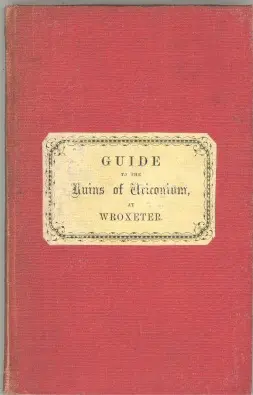
The Ruins of the Roman City of Uriconium, at Wroxeter, near Shrewsbury
Thomas Wright
THE CLASSIC COLLECTION · 1862
"A History of Domestic Manners and Sentiments in England During the Middle Ages" by Thomas Wright is a historical account written in the mid-19th century. The book seeks to provide a comprehensive look at the everyday life, customs, and thoughts of the English people during the Middle Ages, emphasizing their domestic arrangements and practices. The author aims to fill a gap in literature by creating a vivid picture of historical domestic life, juxtaposing it with modern society to illustrate how past customs have shaped contemporary manners and sentiments. At the start of the book, Wright introduces his purpose and methodology, stating that his work focuses on domestic manners and sentiments rather than the traditional histories of rulers and events. He briefly discusses the existing literature on related subjects, emphasizing the need for a cohesive view of domestic life during various historical periods. Wright outlines the structure of his work, which will explore the Anglo-Saxon period through to the Reformation, highlighting the significant transitions in social customs and practices, ultimately aiming to create an engaging narrative that draws from original research rather than previous compilations. The opening chapters promise to examine aspects such as housing, dining customs, and the furnishings of Anglo-Saxon households, setting the stage for a detailed investigation of medieval domestic life.
Introduction adapted from the source catalogue; source summaries may be automatically generated.
Free to read · English · 152,792 words · No account needed
MAKE TIME FOR A GOOD BOOK
On by default. Untick to stop anonymous reading totals. Each page counts after 10 seconds in view. How this works.
Anonymous counting is on unless you have switched it off.
[18] This valuable MS. is preserved in the library of Trinity College, Cambridge. It is a very remarkable circumstance, which has not hitherto been noticed, that the illuminations are in general copies from those of the Harleian MS. No. 603, except that the costume and other circumstances are altered, so that we may take them as correct representatives of the manners of the Anglo-Normans.
[19] “Quod, mola detritum, et aqua rorante perfusum, more usitato, in camino æstuante est depositum.” Reg. Dunelm, p. 128. He owns they were so small that they hardly deserved the name of loaves. “Vix enim bis seni panes erant numero, qui tamen minores adeo quantitate fuerant quod indignum videretur panum eos censeri vocabulo.”
[20] Quod si super aquas seu ad ignem se calefactura sedisset.--Reg.
Dunelm., c. 124.
[21] Quidam de villula in confinio posita, artificiosus minister, sub diurno tempore studiosus advenit, cujus negotiationis opus in pectinibus conformandis, tabulatis et scaccariis, talis, spiniferis, et cæteris talibus, de cornuum vel solidiori ossuum materia procreandis et studium intentionis effulsit.--Reg. Dunelm, c. 88.
[22] Quidam Walterus ... qui ad domum sacerdotis villulæ prædictæ cum hospitibus potaturus accessit. Cum igitur noctis spacium effluxisset, &c.--Reg. Dunelm, c. 17
[23] Lantfridus, in his collection of the miracles of St. Swithun, MS. Reg. 15, C. vii., fol. 41, v^o., tells us how--“quidam consul regis, in caducis præpotens rebus, cum ingenti comitatu, sicut mos est Anglo-Saxonum, properater equitabat ad quendam vicum in quo grandis apparatus ad necessarios convivandi usus erat illi opipare constructus,” &c.
[24] In the description of a splendid hall, in the English metrical romance of kyng Alisaunder (Weber, i. 312), the windows are made “of riche glas.”
[25] The old literary antiquaries, through mistaking the u of the manuscripts for an n, and not attending to the derivation, have created a meaningless word--jongleur--which never existed, and ought now to be entirely abandoned.
[26] The Latin original of this story is so quaint that it deserves to be given ipsissimis verbis. “De rustico et simia. Quidam aulam cujusdam nobilis intrans, vidensque simiam de secta filiorum vestitum, quia dorsum ad eum habebat, filium credidit esse domini, cui cum reverentia qua debuit loqueretur. Invenit esse simiam super eum cachinnantem, cui ille, ‘Maledicaris!’ inquit, ‘credidi quod fuisses Jankyn filius domini mei.’”--Latin Stories, p. 122.
[27] Item, que par la dicte dame Agnes vous faciez principalment et diligemment penser de vos bestes de chambre, comme petis chiennés, oiselets de chambre; et aussi la beguine et vous pensez des autres oiseauls domeschés, car ils ne pevent parler, et pour ce vous devez parler et penser pour eulx, se vous en avez.--(Ménagier de Paris, ii. 62.)
Your reading position is saved on this browser. Take it to another device with a library code. Reading pages adapt to text, rather than matching a printed edition.
BEHIND THE BOOK
This eBook is for the use of anyone anywhere in the United States and most other parts of the world at no cost and with almost no restrictions whatsoever. You may copy it, give it away or re-use it under the terms of the Project Gutenberg License included with this eBook or online at www.gutenberg.org. If you are not located in the United States, you will have to check the laws of the country where you are located before using this eBook. Read the source licence.
The original source file, including credits and licence, is retained by this library. Request an original-format copy at no charge. Please include the book title and Project Gutenberg identifier #59351.
KEEP YOUR CURIOSITY GOING
Cécile Tormay

Moritz Busch
John L. Ransom
Frances Wright
Cécile Tormay

Mabel Potter Daggett