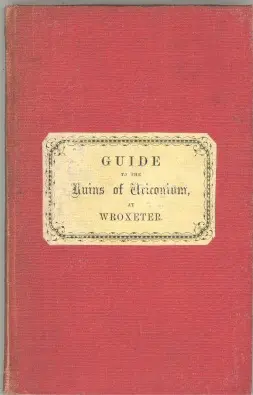
The Ruins of the Roman City of Uriconium, at Wroxeter, near Shrewsbury
Thomas Wright
THE CLASSIC COLLECTION · 1862
"A History of Domestic Manners and Sentiments in England During the Middle Ages" by Thomas Wright is a historical account written in the mid-19th century. The book seeks to provide a comprehensive look at the everyday life, customs, and thoughts of the English people during the Middle Ages, emphasizing their domestic arrangements and practices. The author aims to fill a gap in literature by creating a vivid picture of historical domestic life, juxtaposing it with modern society to illustrate how past customs have shaped contemporary manners and sentiments. At the start of the book, Wright introduces his purpose and methodology, stating that his work focuses on domestic manners and sentiments rather than the traditional histories of rulers and events. He briefly discusses the existing literature on related subjects, emphasizing the need for a cohesive view of domestic life during various historical periods. Wright outlines the structure of his work, which will explore the Anglo-Saxon period through to the Reformation, highlighting the significant transitions in social customs and practices, ultimately aiming to create an engaging narrative that draws from original research rather than previous compilations. The opening chapters promise to examine aspects such as housing, dining customs, and the furnishings of Anglo-Saxon households, setting the stage for a detailed investigation of medieval domestic life.
Introduction adapted from the source catalogue; source summaries may be automatically generated.
Free to read · English · 152,792 words · No account needed
MAKE TIME FOR A GOOD BOOK
On by default. Untick to stop anonymous reading totals. Each page counts after 10 seconds in view. How this works.
Anonymous counting is on unless you have switched it off.
Magpie, the favourite talking bird, 239-242.
Marriage, among the Anglo-Saxons, 54.
Masques after dinner, 462.
Mead, 32.
Meals, Anglo-Saxon, 22.
Meals, hours of the, 155. See Hours.
Meat, how cooked, 148.
Medicine, administered by the ladies, 278, 279.
Mess, meaning of the word, 464.
Milking, 92.
Millichope, Norman house at, 129-131.
Minstrels, 33-37, 106, 164-167, 175-193, 227, 228, 285, 286, 365,
391, 393.
Mirrors, 260, 412-414.
Money dealings, 78, 79, 263, 265.
Monks, luxury of the, 348.
Monkeys, domesticated, 242, 491.
Moon, a contrivance for giving light, 455.
Moral character of the Anglo-Saxons, 53-58.
Morality of the middle ages, 273, 281.
Mummings and masquerades at dinner, 460.
Music, cultivated as a domestic accomplishment, 427.
Musical instruments, 34, 35, 109, 184-192.
Music-galleries in the halls, when introduced, 182, 444.
Naked, sleeping in bed, 257-259, 335, 411.
Nature, beauties of, love of the Anglo-Saxons for, 60; of the English in the middle ages, 283.
Nef, the, an ornamental vessel at the dinner-table, 163.
Nightingales, domesticated, and the food for them, 385.
Noah’s wife, mediæval character of, 420, 437.
Occleve, the poet, his manner of living in his youth, 437.
Oranges, 297.
Ordinaries, 493.
Organ, the musical instrument, 184.
Painting, as a domestic accomplishment, 428, 429.
Paintings, wall, 371-373, 403.
Parlour, the, 134, 370, 371, 379-381, 386, 475, 476.
Parrot, domesticated in the middle ages, 239, 242, 491.
Pavements, under the Anglo-Saxons, 16.
Peaches, known to the Anglo-Saxons, 296; and cultivated in England during the middle ages, 297, 303.
Peacock, how served at table, 354.
Perche, the, 111, 136-138, 305.
Percy family, their diet, 421.
Pic-nics, origin of, 438, 493.
Pie. See Magpie.
Pillion, riding on, 495, 496.
Pine, the kernels of the cone used in the same way as almonds (misprinted olives in the first reference), 296, 350.
Pipe, the musical instrument, 188.
Pipe, double, musical instrument, 64, 190.
Plants, cultivated in gardens, 297, 298, 300, 301.
Plate, an article of ostentation in the middle ages, 174; great fashion for in the sixteenth century, 461.
Play, fondness of the Anglo-Saxons for, 63.
Poisoning in the middle ages, 279, 431.
Pottery, Anglo-Saxon, 6-8;
Anglo-Norman, 85, 90.
Priesthood, family, among the unconverted Angles, 55.
Printing, origin of the art of, 224.
Psaltery, the musical instrument, 186, 187.
Pudding, the love of the English for, 466.
Punch and Judy, 433.
Punishments, Anglo-Saxon, 58, 59;
English, 342-346.
Quarrels in the hall after drinking, 38.
Questions and commands, games of, 232-234.
Ragman’s Roll, game of, 233, 234.
Rere-suppers, 387, 393-395, 467.
Ribalds, or lechers, a class of mediæval society, 85, 104, 178.
Ridels, 403.
Riding, 115, 311-315, 495, 496.
Riding, prejudice against, 313.
Rings, their importance in the middle ages, 266-269.
Roads, insecurity of the, 77, 326, 436.
Robbers, 326, 327.
Roy-qui-ne-ment, game of, 232, 233.
Ruelle, of the bed, 404.
Salt, its importance at table, and superstition concerning it, 362; customs relating to it, 459.
Scholars, begging, 339.
Schools, 117-119.
Scissors, 109.
Seats, among the Anglo-Saxons, 31, 41;
among the Anglo-Normans, 94-97;
in the fifteenth century, 369, 370;
after the Reformation, 472-474.
Servants, cruel treatment of, by the Anglo-Saxon ladies, 56, 57.
Servants, how to be governed, 277;
how treated, 278;
riotous and ungovernable, 313, 424.
Service, young gentlemen going to seek, 269,272.
Settle, the, 97, 401.
Shalm, the musical instrument, 186, 187.
Side-saddles, used by women, 72, 115, 311-313.
Sitting, etiquette in, 293.
Soler, of a house, 12, 83, 126-128.
Spectacles, 439.
Spense, the, 133.
Spinning, an occupation of the ladies, 238, 426, 482.
Squirrels, domesticated, 384-386;
cooked for the table, 355, 356.
Your reading position is saved on this browser. Take it to another device with a library code. Reading pages adapt to text, rather than matching a printed edition.
BEHIND THE BOOK
This eBook is for the use of anyone anywhere in the United States and most other parts of the world at no cost and with almost no restrictions whatsoever. You may copy it, give it away or re-use it under the terms of the Project Gutenberg License included with this eBook or online at www.gutenberg.org. If you are not located in the United States, you will have to check the laws of the country where you are located before using this eBook. Read the source licence.
The original source file, including credits and licence, is retained by this library. Request an original-format copy at no charge. Please include the book title and Project Gutenberg identifier #59351.
KEEP YOUR CURIOSITY GOING
Cécile Tormay

Moritz Busch
John L. Ransom
Frances Wright
Cécile Tormay

Mabel Potter Daggett