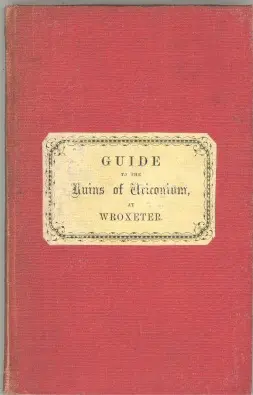
The Ruins of the Roman City of Uriconium, at Wroxeter, near Shrewsbury
Thomas Wright
THE CLASSIC COLLECTION · 1862
"A History of Domestic Manners and Sentiments in England During the Middle Ages" by Thomas Wright is a historical account written in the mid-19th century. The book seeks to provide a comprehensive look at the everyday life, customs, and thoughts of the English people during the Middle Ages, emphasizing their domestic arrangements and practices. The author aims to fill a gap in literature by creating a vivid picture of historical domestic life, juxtaposing it with modern society to illustrate how past customs have shaped contemporary manners and sentiments. At the start of the book, Wright introduces his purpose and methodology, stating that his work focuses on domestic manners and sentiments rather than the traditional histories of rulers and events. He briefly discusses the existing literature on related subjects, emphasizing the need for a cohesive view of domestic life during various historical periods. Wright outlines the structure of his work, which will explore the Anglo-Saxon period through to the Reformation, highlighting the significant transitions in social customs and practices, ultimately aiming to create an engaging narrative that draws from original research rather than previous compilations. The opening chapters promise to examine aspects such as housing, dining customs, and the furnishings of Anglo-Saxon households, setting the stage for a detailed investigation of medieval domestic life.
Introduction adapted from the source catalogue; source summaries may be automatically generated.
Free to read · English · 152,792 words · No account needed
MAKE TIME FOR A GOOD BOOK
On by default. Untick to stop anonymous reading totals. Each page counts after 10 seconds in view. How this works.
Anonymous counting is on unless you have switched it off.
The close of the period of which we are here speaking introduces us to one in which the manners and customs of our forefathers were less widely different from those of our own days; and the history of domestic manners since that time, characterised less by broad outline of the general features in its revolutions than by a gradual succession of minute changes, and fashions which must be traced from day to day, is less capable of being treated in the comprehensive style of these pages. Having now, therefore, brought down our sketch of the History of the Domestic Manners of our forefathers to the middle of the seventeenth century, we shall here, for the reason just stated, conclude it, and leave to some worthier labourer, or to some future occasion, the task of tracing more minutely the history of domestic manners and sentiments during the period which followed the middle ages.
Adulteration of food, 394.
Ale, 32.
Alehouse, road-side, 320, 321.
Ale-stake, 321.
Almsgiving, 61, 158.
Amphitheatres, Roman, continued in use among the Anglo-Saxons, 64;
and Anglo-Normans, 111.
Amusements after dinner, 33, 38, 106, 194-225, 226-236.
Amusements out of doors, 111-113, 432.
Animals, domestic, 239-244, 384-386, 490.
Apple, the chief fruit of the Anglo-Saxons, 295.
Archery, a favourite amusement of the ladies, 310;
practised generally, 433.
Arms suspended in the hall among the Anglo-Saxons, 20;
at a later period, 452.
Axes, Anglo-Saxon, 9, 10.
Backgammon, the game of, 219, 220, 484.
Bagpipe, 184, 185, 188.
Ball, game of, 235.
Banquet, the 387-395;
in the sixteenth and seventeenth centuries, 466, 467.
Barons, feudal, their power and cruelty, 102.
Baths, and bathing, 59, 259, 491, 492.
Bear, dancing, 64, 65, 304; baiting, 305.
Beds, among the Anglo-Saxons, 44-47; among the Anglo-Normans, 110, 111; the bed and its furniture among the English, 256-259, 403-408, 477-481.
Bedsteads, 262, 404.
Bees, 91.
Beggars, in the middle ages, 327, 328.
Bells, attached to the caparisons of horses, 314.
Bellows, 144.
Benches, 139.
Bever, the name of a meal, 395, 456.
Beverley, the minstrels of, 192.
Birds, kept in cages, 239-242, 384, 385, 491.
Blindman’s-buff, game of, 229, 230.
Boar’s head, the, 146.
Bourgeoisie, the, their mode of living, 170-173.
Bower, chamber, or sleeping-room, Anglo-Saxon, 11.
Bowls, vessels found in Anglo-Saxon graves, 8.
Box-iron, ornamental, 447.
Bread, and baking, 92, 161.
Breakfasts of the Percy family, 421.
Brewhouses, places for selling beer, 335.
Buckets, Anglo-Saxon, supposed to be for carrying liquor, 9, 25.
Buffet, or cupboard, 362, 379. See Cupboard.
Bull-baiting, 304.
Your reading position is saved on this browser. Take it to another device with a library code. Reading pages adapt to text, rather than matching a printed edition.
BEHIND THE BOOK
This eBook is for the use of anyone anywhere in the United States and most other parts of the world at no cost and with almost no restrictions whatsoever. You may copy it, give it away or re-use it under the terms of the Project Gutenberg License included with this eBook or online at www.gutenberg.org. If you are not located in the United States, you will have to check the laws of the country where you are located before using this eBook. Read the source licence.
The original source file, including credits and licence, is retained by this library. Request an original-format copy at no charge. Please include the book title and Project Gutenberg identifier #59351.
KEEP YOUR CURIOSITY GOING
Cécile Tormay

Moritz Busch
John L. Ransom
Frances Wright
Cécile Tormay

Mabel Potter Daggett