
Life of Edwin Forrest, the American Tragedian. Volume 2 (of 2)
William Rounseville Alger & Horatio, Jr. Alger
THE CLASSIC COLLECTION · 1898
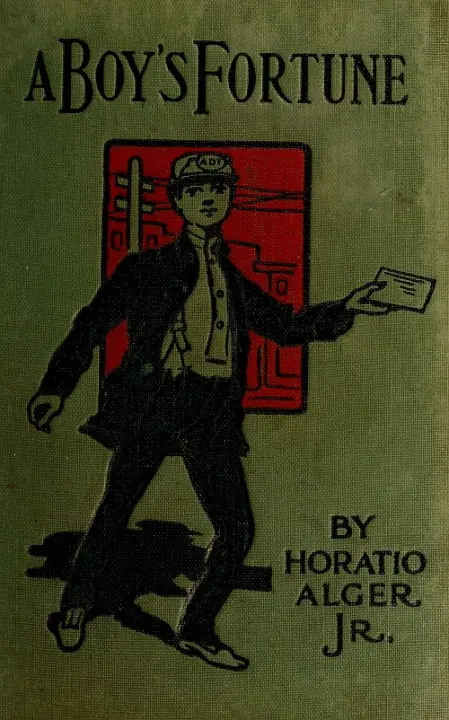
"A Boy's Fortune; Or, The Strange Adventures of Ben Baker" by Horatio Alger, Jr. is a novel written in the late 19th century. The story follows the journey of Ben Baker, a sixteen-year-old boy from the countryside who arrives in New York City with hopes of making a fortune and learning about business. As he navigates the challenges of urban life, he encounters various characters that influence his path, including his estranged uncle, Nicholas Walton, and new friends like a kind reporter named Hugh Manton. The opening of the novel introduces Ben as he spends his first night in the city, having fallen asleep on a park bench. A policeman offers him guidance, leading him to a restaurant where he meets Manton. The young boy's situation is precarious, having just arrived in New York with little money and no place to stay. After enjoying a meal and discussing dreams of success, Ben is offered a place to sleep by Manton, setting him on a path of new adventures. The chapter hints at the complexities of family relations, as Ben's uncle, unbeknownst to him, harbors a deep secret regarding Ben's father, suggesting that his quest for fortune may involve more than just hard work.
Introduction adapted from the source catalogue; source summaries may be automatically generated.
Free to read · English · 51,613 words · No account needed
MAKE TIME FOR A GOOD BOOK
On by default. Untick to stop anonymous reading totals. Each page counts after 10 seconds in view. How this works.
Anonymous counting is on unless you have switched it off.
He led her to her seat, nothing loth, and she had the satisfaction
of following with her glance Clinton Randall and her rival five
minutes more.
"Did you have a good time, Rose?" asked her sister Adeline, next morning, at the breakfast-table.
"Better than I dared to hope," answered Rose, with a smile.
"Did you dance?"
"Two or three times."
She had danced with two partners besides Clinton Randall, and with
him a second time.
"It seemed quite like the old times," she said, after a pause, "when we were in society. Though I only appeared in the character of a governess, I enjoyed it."
"Don't you feel tired?"
"A little; but I don't go out to give lessons till afternoon."
At two o'clock Rose went to Mrs. Tilton's to give her regular
lessons.
"Mrs. Tilton would like to see you," said the servant.
A little surprised, Rose remained in the parlor till that lady
appeared.
"I wish to speak to you, Miss Beaufort," said Mrs. Tilton, coldly, "about your conduct last evening."
"My conduct last evening!" repeated Rose, in utter surprise. "To
what do you refer?"
"To your indelicate conduct with Mr. Clinton Randall and other
gentlemen."
"What do you mean? I demand an explanation!" exclaimed Rose,
indignantly.
"You seem to forget your position, Miss Beaufort. As the instructress of my children, I feel I must be exacting. I do not approve of your bold flirtation with gentlemen above yourself in social position, and I beg to say that I must provide myself with another music-teacher for my girls."
"After your insulting remarks," said Rose, hotly, "nothing would induce me to remain in charge of them. Nothing in my conduct has called for such cruel charges."
"Doubtless you think so. I disagree with you," said Mrs. Tilton,
coldly.
"Good-afternoon, madam!" said Rose, rising abruptly.
"Good-afternoon, Miss Beaufort."
It was like a thunderbolt to Rose, and mystified as well as made her indignant. She could recall nothing that had passed which would justify Mrs. Tilton in her strange treatment.
It was the first blow, but not the last. Arethusa Jayne, with unappeased malice, went the rounds of the families in which Rose was employed, and within a week she received notes from all the parents, expressing regret that they could no longer avail themselves of her services.
It began to look serious for poor Rose.
Your reading position is saved on this browser. Take it to another device with a library code. Reading pages adapt to text, rather than matching a printed edition.
William Rounseville Alger & Horatio, Jr. Alger

William Rounseville Alger & Horatio, Jr. Alger

Horatio, Jr. Alger

Horatio, Jr. Alger
BEHIND THE BOOK
This eBook is for the use of anyone anywhere in the United States and most other parts of the world at no cost and with almost no restrictions whatsoever. You may copy it, give it away or re-use it under the terms of the Project Gutenberg License included with this eBook or online at www.gutenberg.org. If you are not located in the United States, you will have to check the laws of the country where you are located before using this eBook. Read the source licence.
The original source file, including credits and licence, is retained by this library. Request an original-format copy at no charge. Please include the book title and Project Gutenberg identifier #52017.
KEEP YOUR CURIOSITY GOING
Coulson Kernahan

Maurice Baring
Frances Wright
Cécile Tormay

Frederic Jesup Stimson

W. H. P. (William Henry Pope) Jarvis