
Life of Edwin Forrest, the American Tragedian. Volume 2 (of 2)
William Rounseville Alger & Horatio, Jr. Alger
THE CLASSIC COLLECTION · 1898
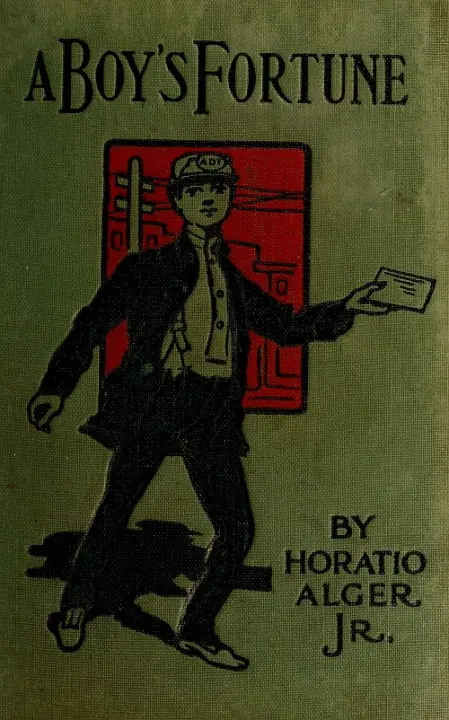
"A Boy's Fortune; Or, The Strange Adventures of Ben Baker" by Horatio Alger, Jr. is a novel written in the late 19th century. The story follows the journey of Ben Baker, a sixteen-year-old boy from the countryside who arrives in New York City with hopes of making a fortune and learning about business. As he navigates the challenges of urban life, he encounters various characters that influence his path, including his estranged uncle, Nicholas Walton, and new friends like a kind reporter named Hugh Manton. The opening of the novel introduces Ben as he spends his first night in the city, having fallen asleep on a park bench. A policeman offers him guidance, leading him to a restaurant where he meets Manton. The young boy's situation is precarious, having just arrived in New York with little money and no place to stay. After enjoying a meal and discussing dreams of success, Ben is offered a place to sleep by Manton, setting him on a path of new adventures. The chapter hints at the complexities of family relations, as Ben's uncle, unbeknownst to him, harbors a deep secret regarding Ben's father, suggesting that his quest for fortune may involve more than just hard work.
Introduction adapted from the source catalogue; source summaries may be automatically generated.
Free to read · English · 51,613 words · No account needed
MAKE TIME FOR A GOOD BOOK
On by default. Untick to stop anonymous reading totals. Each page counts after 10 seconds in view. How this works.
Anonymous counting is on unless you have switched it off.
Clinton Randall, though he had been walking in a different direction, turned and accompanied Rose, both chatting easily and familiarly. It never occurred to Rose that she might meet any one who would comment upon her and her escort. But at the corner of Eighteenth street and Broadway she met a tall young lady, who made her the slightest possible nod, while she fixed eyes of scorn and displeasure upon the two. Clinton Randall raised his hat, and they parted.
"You know Miss Jayne, then, Miss Beaufort," said Randall.
"Yes, slightly, and you?"
"I have met her in society."
"She is a niece of Mrs. Tilton, to whose daughters I am giving
music-lessons."
"Indeed! I know Mrs. Tilton--I am to attend her party next week.
Shall you be there?"
"I believe so--not as a guest, however. She has invited me to play on the piano for the entertainment of the guests. You will probably dance to my music."
"I would rather dance with you to the music of another player, Miss
Beaufort."
"You forget, Mr. Randall, that I am a poor music-teacher."
"I don't think of it at all. It makes no difference in your claims
to consideration."
"The world does not agree with you, Mr. Randall."
"Then it ought. By the way, Miss Beaufort, has your elderly admirer
renewed his proposals?"
"Mr. Parkinson? No, I have not met him since."
"You are sure you won't relent, and make him a happy man?"
"I don't think it at all likely," said Rose, laughing.
Meanwhile Rose had made an enemy without being aware of it.
Miss Arethusa Jayne had long looked upon Clinton Randall with eyes of partiality, not alone on account of his good looks, but because he was wealthy, socially distinguished, and in all respects a desirable parti. In her vanity she had thought that he was not indifferent to her attractions. When, therefore, she saw him walking with her aunt's music-teacher, she was not only angry but jealous. She reluctantly admitted that Rose was pretty, though she considered herself still more so. After this meeting she changed her plans, and went straight to her aunt.
"Aunt," she said, "whom do you think I met on Broadway just now?"
"I am sure I can't tell, Arethusa. I suppose all the world and his
wife are out this fine day."
"Your music-teacher, Miss Beaufort, and Clinton Randall."
"You don't say so!" ejaculated Mrs. Tilton. "How should she know
him?"
"I have no idea they were ever introduced," said Arethusa, sneering. "Probably she isn't particular how she makes acquaintance with gentlemen. I always thought her forward."
"I can't say I ever did, Arethusa."
Your reading position is saved on this browser. Take it to another device with a library code. Reading pages adapt to text, rather than matching a printed edition.
William Rounseville Alger & Horatio, Jr. Alger

William Rounseville Alger & Horatio, Jr. Alger

Horatio, Jr. Alger

Horatio, Jr. Alger
BEHIND THE BOOK
This eBook is for the use of anyone anywhere in the United States and most other parts of the world at no cost and with almost no restrictions whatsoever. You may copy it, give it away or re-use it under the terms of the Project Gutenberg License included with this eBook or online at www.gutenberg.org. If you are not located in the United States, you will have to check the laws of the country where you are located before using this eBook. Read the source licence.
The original source file, including credits and licence, is retained by this library. Request an original-format copy at no charge. Please include the book title and Project Gutenberg identifier #52017.
KEEP YOUR CURIOSITY GOING
Coulson Kernahan

Maurice Baring
Frances Wright
Cécile Tormay

Frederic Jesup Stimson

W. H. P. (William Henry Pope) Jarvis