
The Writing of News A Handbook with Chapters on Newspaper Correspondence and Copy Reading
Charles G. (Charles Griffith) Ross
THE CLASSIC COLLECTION · 1853
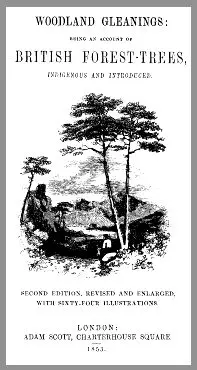
"Woodland Gleanings: Being an Account of British Forest-Trees" by Robert Tyas is a comprehensive account of the timber trees found primarily in the United Kingdom, written in the mid-19th century. This work serves as both an informational guide and an appreciation of Britain’s woodland beauty, focusing specifically on the history, descriptions, botanical characteristics, and cultivation of various indigenous and introduced forest trees. It aims to deepen the reader's understanding of these trees and inspire a greater interest in the natural landscape. The opening of "Woodland Gleanings" introduces the reader to the rich and tranquil beauty of woodland settings, blending poetic reflections on nature with detailed observations about the trees themselves. Tyas begins by inviting readers to explore the charm of forest-dwelling trees, emphasizing their serene and majestic presence. He notes the appeal of different species in various seasons, casting a gaze on how they reflect both the majesty of nature and man's relationship with it. Additionally, the author foreshadows a detailed exploration of each tree species to follow, highlighting their significance to the environment, culture, and economy. Through this opening, Tyas establishes a grounded appreciation for the natural world that encourages a blend of scientific inquiry and aesthetic admiration.
Introduction adapted from the source catalogue; source summaries may be automatically generated.
Free to read · English · 59,693 words · No account needed
MAKE TIME FOR A GOOD BOOK
On by default. Untick to stop anonymous reading totals. Each page counts after 10 seconds in view. How this works.
Anonymous counting is on unless you have switched it off.
Cadenham Oak; 172
Clump of trees; 25
Consecrated Yew-trees, ancient value of; 280
Copse, its use; 29
Cowper's Address to the Yardley Oak; 181
Cowthorpe Oak, near Wetherby; 180
Edlington; 9
Elm-tree, anciently considered as a funeral tree; 86
Ezekiel's (the Prophet) description of the Cedar-tree; 71
Forests and woodlands in the United Kingdom; 281
Gilpin, grave of the Rev. W. ----; 140
Glen, its character; 32
God's First Temples, Bryant's; 36
Gog and Magog; 181
Grove, its character; 33
Harefield Park in 1663, Silver Firs at; 218
Hawthorn, Queen Mary's; 94
Hern's Oak, Windsor Forest; 177
Holly-tree, supposed origin of the name; 107
---- Persian tradition and custom connected with the; 108
Honeysuckle, wild, its ornamental effect; 23
Hop, its effect when supported by a tree; 24
Hornbeam Maze, at Hampton Court; 110
Horse-chestnuts, finest at Bushy Park; 119
Inscription for the entrance into a wood, Bryant's; 40
Ivy on Trees; 22
Larch-tree, durability of its timber; 130
Leafing of Trees; 13
Leonard, Legend of St.; 60
Lightness a characteristic of beauty in Trees; 19
Lime-tree avenues; 133
Lover's Tablet, the; 56
Magdalen College, Oxford, founded near "the great Oak"; 168
Maple-tree crusca and mollusca; 142
---- the Sugar; 143
Mole, the; 42
Moss, its picturesque effect on the trunk of an aged Oak; 21
Motion, a source of picturesque beauty; 24
Mountain-Ash, Supersititions connected with the; 149
Mulberry-tree, Shakspeare's; 153
Norway Spruce Fir, the loftiest of European trees; 223
Nutting, pleasures of; 99
Oak-tree, the emblem of grandeur, strength, and duration; 158
Ornamental appendages to Trees; 22
Pine timber, character and value of; 215
Poplar dedicated to Hercules; 206
Pyramus and Thisbe, Fable of; 155
Queen Mary's Thorn; 94
Ravenna Pines at Hampstead, near London; 216
Reynolds, Tribute to Sir J; 133
Rufus, tradition respecting the place of his death; 170
Scotch Fir or Pine, durability of its timber; 215
Shire-Oak, near Worksop; 170
Swilcar Oak, in Needwood Forest; 179
Sycamore, Wordsworth's allusion to the; 229
Tamer, the finest Chestnut trees on the; 80
Traveller's joy ornamental; 23
Tree as a single object; 18
Venice Turpentine, how obtained; 127
Vernal Melody in the Forest; 15
Vine-clad branches of Trees; 23
Wallace's Oak; 176
Walnut tree, a miraculous; 238
Water-pipes, Elm; 89
Willow bark, a substitute for Jesuit's bark; 267
Woodlands and forests in the United Kingdom; 281
Yardley Oak; 180
Yew-tree, Wordsworth's description of a noted; 278
Zoroaster, the Holly and the disciples of; 108
Transcriber's Note
Although hyphenation was standardized, some words have both hyphaned and seperate words (for example, "light-green" and "light green") which were retained due to usage or being in qouatations. Non-standard formatting of scientific names was not changed (example, both Abies Larix and Abies Larix appear). The Linnean system terminology was NOT standardized with the exception of Monoec. as an abbreviation for the term monoecious.
Your reading position is saved on this browser. Take it to another device with a library code. Reading pages adapt to text, rather than matching a printed edition.
BEHIND THE BOOK
This eBook is for the use of anyone anywhere in the United States and most other parts of the world at no cost and with almost no restrictions whatsoever. You may copy it, give it away or re-use it under the terms of the Project Gutenberg License included with this eBook or online at www.gutenberg.org. If you are not located in the United States, you will have to check the laws of the country where you are located before using this eBook. Read the source licence.
The original source file, including credits and licence, is retained by this library. Request an original-format copy at no charge. Please include the book title and Project Gutenberg identifier #41175.
KEEP YOUR CURIOSITY GOING
Charles G. (Charles Griffith) Ross
Hannah Webster Foster

Emily Lawless
Edwin Hamlin Carr

Charles De Lano Hine
Andrew Ure