
The Writing of News A Handbook with Chapters on Newspaper Correspondence and Copy Reading
Charles G. (Charles Griffith) Ross
THE CLASSIC COLLECTION · 1853
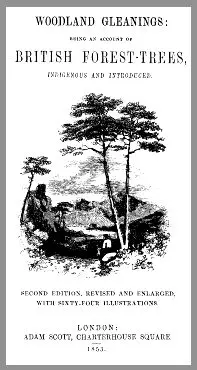
"Woodland Gleanings: Being an Account of British Forest-Trees" by Robert Tyas is a comprehensive account of the timber trees found primarily in the United Kingdom, written in the mid-19th century. This work serves as both an informational guide and an appreciation of Britain’s woodland beauty, focusing specifically on the history, descriptions, botanical characteristics, and cultivation of various indigenous and introduced forest trees. It aims to deepen the reader's understanding of these trees and inspire a greater interest in the natural landscape. The opening of "Woodland Gleanings" introduces the reader to the rich and tranquil beauty of woodland settings, blending poetic reflections on nature with detailed observations about the trees themselves. Tyas begins by inviting readers to explore the charm of forest-dwelling trees, emphasizing their serene and majestic presence. He notes the appeal of different species in various seasons, casting a gaze on how they reflect both the majesty of nature and man's relationship with it. Additionally, the author foreshadows a detailed exploration of each tree species to follow, highlighting their significance to the environment, culture, and economy. Through this opening, Tyas establishes a grounded appreciation for the natural world that encourages a blend of scientific inquiry and aesthetic admiration.
Introduction adapted from the source catalogue; source summaries may be automatically generated.
Free to read · English · 59,693 words · No account needed
MAKE TIME FOR A GOOD BOOK
On by default. Untick to stop anonymous reading totals. Each page counts after 10 seconds in view. How this works.
Anonymous counting is on unless you have switched it off.
In the language of the law, forests and chases differ from parks in not being enclosed by walls or palings, but only encompassed by metes and bounds; and a chase differs from a forest, both in being of much smaller extent (so that there are some chases within forests) and in its capability of being held by a subject, whereas a forest can only be in the hands of the Crown. But the material distinction is, or rather was, that forests alone were subject to the forest laws so long as they subsisted. Every forest, however, was also a chase. A forest is defined by Manwood, the great authority on the forest laws, as being "a certain territory or circuit of woody grounds and pastures, known in its bounds, and privileged, for the peaceable being and abiding of wild beasts, and fowls of forest, chase, and warren, to be under the king's protection for his princely delight; replenished with beasts of venery or chase, and great coverts of vert for succour of the said beasts; for preservation whereof there are particular laws, privileges, and officers belonging thereunto." The beasts of park or chase, according to Coke, are properly the buck, the doe, the fox, the marten, and the roe; but the term, in a wider sense, comprehends all the beasts of the forest. Beasts of warren are such as hares, conies, and roes; fowls of warren, such as the partridge, quail, rail, pheasant, woodcock, mallard, heron, &c.
The national woodlands of England, for many centuries, consisted of 49 forests, 13 chases, and 781 parks; some of them being of great extent, as the New Forest in Hampshire, which still contains about 66,291 acres, and extends over a district of 20 miles from north-east to south-west, and about 15 miles from east to west. Recent parliamentary inquiry has so fully established long-continued mismanagement, embezzlement of timber, and encroachments upon the national forests and parks, that a considerable portion of what remains will probably be shortly sold or leased for general cultivation. The principal remaining national forests and parks are:--
1. New Forest, Hampshire.
2. Dean Forest, Gloucestershire.
3. High Meadow Woods, do.
4. Alice Holt, Hampshire.
5. Woolmer Forest, do.
6. Parkhurst Forest, do.
7. Bere Forest, do.
8. Whittlebury Forest, Notts.
9. Salcey Forest, do.
10. Delamere Forest, Cheshire.
11. Wychwood Forest, Oxfordshire.
12. Waltham Forest, Essex.
13. Chopwell Woods, Durham.
14. The London Parks.
15. Greenwich Park.
16. Richmond Park.
17. Hampton and Bushy Parks.
18. Windsor Forest and Parks.
*_* The Names of the Trees described are given at page vii and viii.
Alder timber valuable for piles; 45
Amazons, spears of the; 49
Aspen described; 204
Autumn, the Season of Landscape; 16
Bees, their fondness for the Linden flower; 136
Birch wine; 66
Blasted tree, its effect; 22
Bryony berries, ornamental, in their various stages; 23
Your reading position is saved on this browser. Take it to another device with a library code. Reading pages adapt to text, rather than matching a printed edition.
BEHIND THE BOOK
This eBook is for the use of anyone anywhere in the United States and most other parts of the world at no cost and with almost no restrictions whatsoever. You may copy it, give it away or re-use it under the terms of the Project Gutenberg License included with this eBook or online at www.gutenberg.org. If you are not located in the United States, you will have to check the laws of the country where you are located before using this eBook. Read the source licence.
The original source file, including credits and licence, is retained by this library. Request an original-format copy at no charge. Please include the book title and Project Gutenberg identifier #41175.
KEEP YOUR CURIOSITY GOING
Charles G. (Charles Griffith) Ross
Hannah Webster Foster

Emily Lawless
Edwin Hamlin Carr

Charles De Lano Hine
Andrew Ure