THE CLASSIC COLLECTION✦Building the pacific railwayCLASSIC FREE BOOKS
Building the pacific railway
Edwin L. (Edwin Legrand) Sabin
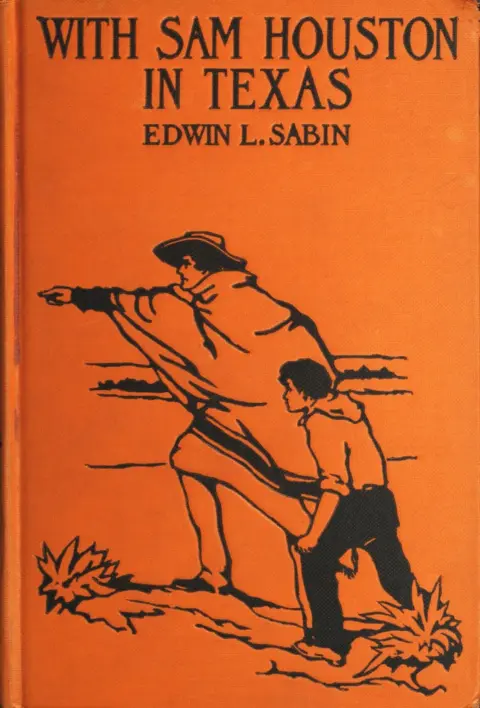
THE CLASSIC COLLECTION · 1916
"With Sam Houston in Texas" by Edwin L. Sabin is a historical account written in the early 20th century. The book focuses on the adventurous tales surrounding the life of Sam Houston during the Texas struggle for independence from Mexico, highlighting the events of 1835-1836 through the eyes of a young volunteer named Ernest Merrill. The narrative endeavors to depict the heroic actions and pivotal decisions that led to the establishment of Texas as an independent republic. The opening of the story introduces readers to Ernest Merrill, who is traveling on a steamboat named "Arkansas" headed to Fort Gibson. The boat becomes stuck on a mud-bar, showcasing the challenges of travel during that era. Among the passengers is Lieutenant Neal, who takes an interest in Ernest's journey. Their encounter with a Texan named Dick Carroll reveals the escalating tensions in Texas and the lure of land and opportunity, setting the stage for Ernest's involvement in the struggles for Texas independence. Moreover, the early chapters establish the character of Sam Houston, referenced as a figure of great importance and destiny for the future of Texas. As Ernest navigates through his adventures, the reader gains insight into the historical significance and colorful personalities of this critical time in American history.
Introduction adapted from the source catalogue; source summaries may be automatically generated.
Free to read · English · 99,392 words · No account needed
MAKE TIME FOR A GOOD BOOK
On by default. Untick to stop anonymous reading totals. Each page counts after 10 seconds in view. How this works.
Anonymous counting is on unless you have switched it off.
November, 1817, being still incapacitated by his wounds, is appointed sub-agent for the Cherokee Indians, whose language he speaks. Conducts for them the negotiations by which they sell to the government their lands in Eastern Tennessee.
In Washington is rebuked by John C. Calhoun, secretary of war, for
appearing in Cherokee Indian costume; is acquitted of misconduct in
office.
March 1, 1818, resigns from the army.
June, 1818, studies law in the office of the Honorable James Trimble, at Nashville. Admitted to the bar in six months.
Practises law for about three years at Lebanon and Nashville, Tennessee. Gains a reputation for his high-sounding phrases, his self-esteem, and his honesty.
In 1819 appointed, through the influence of his patron, General Jackson, adjutant-general of Tennessee, and is elected prosecuting attorney with office at Nashville. Resigns this office because of insufficient income from it, and resumes general practice.
In 1821 elected major-general of the Tennessee militia.
In 1823 elected as representative in Congress from the ninth district of Tennessee. Serves here four years, and is thrown in contact with Henry Clay, John C. Calhoun, Daniel Webster, John Randolph, Nathaniel Macon, and other distinguished American statesmen.
September 23, 1826, severely wounds General William White in a duel fought in Simpson County, Kentucky, just across the Tennessee line. Thereafter declines to engage in duels, although many times challenged.
August, 1827, elected governor of Tennessee; appears at the polls mounted on a fine dapple-gray horse, and wearing a tall black beaver hat, high patent-leather stock, ruffled white shirt, black silk trousers with legs cut straight and full, embroidered silk stockings, pumps with silver buckles, and a long Indian hunting-shirt of red figured calico belted about with a beaded red sash.
In January, 1829, marries Miss Eliza Allen, of Sumner County, Tennessee; after three months separates from her, for cause unknown to the world; resigns his governorship, and joins the Cherokee Indians again on their new reservation in Arkansas, near Fort Gibson of the Indian Territory.
Is welcomed as a son, by Chief Oolootekah, resumes his Indian life and receives the title of Col-lon-neh, or the Raven. By his dissolute habits earns also the name “Drunken Sam,” from the whites, and “Big Drunk,” from the Cherokees.
During 1830–1831, while attempting to protect the Cherokees against frauds from traders and contractors, is falsely accused of the same improper practices, himself.
April 13, 1832, while in Washington assaults and beats with a cane Representative William Stanberry, of Ohio, as retaliation for an insulting public speech. Is arraigned before the House of Representatives, and employs as counsel Francis Scott Key, author of the “Star Spangled Banner”; is reprimanded by the House, but is commended by President Jackson, who remits his fine.
Your reading position is saved on this browser. Take it to another device with a library code. Reading pages adapt to text, rather than matching a printed edition.
Edwin L. (Edwin Legrand) Sabin

Edwin L. (Edwin Legrand) Sabin

Edwin L. (Edwin Legrand) Sabin

Edwin L. (Edwin Legrand) Sabin
BEHIND THE BOOK
This eBook is for the use of anyone anywhere in the United States and most other parts of the world at no cost and with almost no restrictions whatsoever. You may copy it, give it away or re-use it under the terms of the Project Gutenberg License included with this eBook or online at www.gutenberg.org. If you are not located in the United States, you will have to check the laws of the country where you are located before using this eBook. Read the source licence.
The original source file, including credits and licence, is retained by this library. Request an original-format copy at no charge. Please include the book title and Project Gutenberg identifier #62898.
KEEP YOUR CURIOSITY GOING
Cécile Tormay

Moritz Busch
Coulson Kernahan
John L. Ransom

Maurice Baring
Frances Wright