THE CLASSIC COLLECTION✦Building the pacific railwayCLASSIC FREE BOOKS
Building the pacific railway
Edwin L. (Edwin Legrand) Sabin
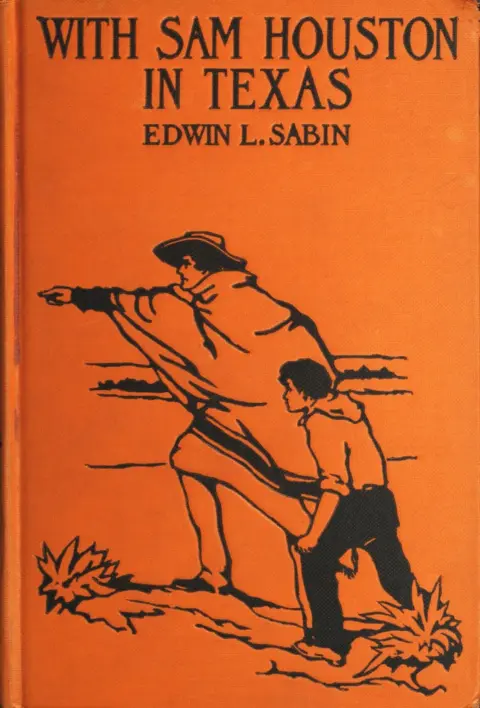
THE CLASSIC COLLECTION · 1916
"With Sam Houston in Texas" by Edwin L. Sabin is a historical account written in the early 20th century. The book focuses on the adventurous tales surrounding the life of Sam Houston during the Texas struggle for independence from Mexico, highlighting the events of 1835-1836 through the eyes of a young volunteer named Ernest Merrill. The narrative endeavors to depict the heroic actions and pivotal decisions that led to the establishment of Texas as an independent republic. The opening of the story introduces readers to Ernest Merrill, who is traveling on a steamboat named "Arkansas" headed to Fort Gibson. The boat becomes stuck on a mud-bar, showcasing the challenges of travel during that era. Among the passengers is Lieutenant Neal, who takes an interest in Ernest's journey. Their encounter with a Texan named Dick Carroll reveals the escalating tensions in Texas and the lure of land and opportunity, setting the stage for Ernest's involvement in the struggles for Texas independence. Moreover, the early chapters establish the character of Sam Houston, referenced as a figure of great importance and destiny for the future of Texas. As Ernest navigates through his adventures, the reader gains insight into the historical significance and colorful personalities of this critical time in American history.
Introduction adapted from the source catalogue; source summaries may be automatically generated.
Free to read · English · 99,392 words · No account needed
MAKE TIME FOR A GOOD BOOK
On by default. Untick to stop anonymous reading totals. Each page counts after 10 seconds in view. How this works.
Anonymous counting is on unless you have switched it off.
In the Indian nation he has taken to wife the stately Tyania Rodgers, a half-breed woman of unusual qualities; he establishes a small farm and trading-post on the west bank of the Grand River, opposite Fort Gibson, and spends much of his time hunting, trading and drinking.
In December, 1832, proceeds alone to Texas, under commission from President Jackson to conclude a treaty of peace with the Comanche Indians, for the protection of the United States borders; and under instructions, also, to investigate the feasibility of the annexation of Texas to the United States.
April, 1833, is a delegate from Nacogdoches, Texas, to the Texas convention held for the purpose of demanding a separation from the province of Coahuila.
Through 1833, 1834 and 1835, while residing at Nacogdoches, San Augustine and Washington, of East Texas, he takes prominent part in meetings which discuss freedom for Texas under the Mexican constitution of 1824.
October, 1835, is elected at Nacogdoches commander-in-chief of the army
of Eastern Texas.
November, 1835, by the convention which meets at San Felipe to form a temporary state government is elected, with only one opposing vote, commander-in-chief of the armies of Texas.
At the close of January, 1836, by reason of a quarrel between Governor Henry Smith and the council, finding himself without the means of enforcing his authority among the Texas troops, Houston virtually retires from his office of major-general.
February, 1836, as one of three commissioners from Texas to the Cherokees and other Indians, he so reassures the uneasy tribes that they remain quiet throughout the war of Texas and Mexico.
March, 1836, is a delegate from Refugio of Southern Texas to the Texas general convention which at Washington on the Brazos declares for a Texas independent republic; by practically a unanimous vote is re-elected commander-in-chief.
March and April, 1836, conducts his little army in a long retreat eastward across Texas. Handicapped by the rains, and by soldiers and settlers accused of cowardice and of leaving the country needlessly exposed to the Mexican forces, he labors hard amidst tremendous discouragements.
April 20, 1836, suddenly cuts off President Santa Anna’s column of
Mexican troops, at the head of San Jacinto Bay, on the coast of East
Texas.
April 21, 1836, with his 743 Texans, mainly rough and ready volunteers, from his camp on Buffalo Bayou, near its juncture with the San Jacinto River, charges the breastworks of the Santa Anna 1350 regulars, and in fifteen minutes of fighting wins the battle of San Jacinto. Eight Texans were killed, twenty-three wounded; Houston’s ankle was shattered while he was leading his men. Of the Mexicans 630 were killed, 730 wounded and captured, or both. Santa Anna was made prisoner on the next day.
Your reading position is saved on this browser. Take it to another device with a library code. Reading pages adapt to text, rather than matching a printed edition.
Edwin L. (Edwin Legrand) Sabin

Edwin L. (Edwin Legrand) Sabin

Edwin L. (Edwin Legrand) Sabin

Edwin L. (Edwin Legrand) Sabin
BEHIND THE BOOK
This eBook is for the use of anyone anywhere in the United States and most other parts of the world at no cost and with almost no restrictions whatsoever. You may copy it, give it away or re-use it under the terms of the Project Gutenberg License included with this eBook or online at www.gutenberg.org. If you are not located in the United States, you will have to check the laws of the country where you are located before using this eBook. Read the source licence.
The original source file, including credits and licence, is retained by this library. Request an original-format copy at no charge. Please include the book title and Project Gutenberg identifier #62898.
KEEP YOUR CURIOSITY GOING
Cécile Tormay

Moritz Busch
Coulson Kernahan
John L. Ransom

Maurice Baring
Frances Wright