THE CLASSIC COLLECTION✦Building the pacific railwayCLASSIC FREE BOOKS
Building the pacific railway
Edwin L. (Edwin Legrand) Sabin
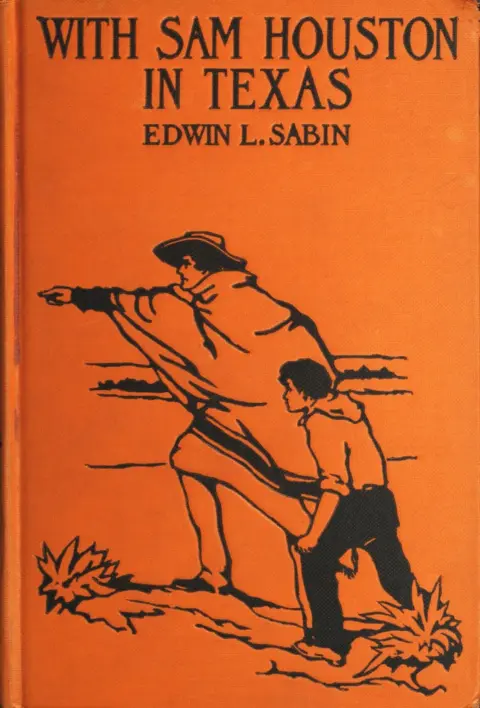
THE CLASSIC COLLECTION · 1916
"With Sam Houston in Texas" by Edwin L. Sabin is a historical account written in the early 20th century. The book focuses on the adventurous tales surrounding the life of Sam Houston during the Texas struggle for independence from Mexico, highlighting the events of 1835-1836 through the eyes of a young volunteer named Ernest Merrill. The narrative endeavors to depict the heroic actions and pivotal decisions that led to the establishment of Texas as an independent republic. The opening of the story introduces readers to Ernest Merrill, who is traveling on a steamboat named "Arkansas" headed to Fort Gibson. The boat becomes stuck on a mud-bar, showcasing the challenges of travel during that era. Among the passengers is Lieutenant Neal, who takes an interest in Ernest's journey. Their encounter with a Texan named Dick Carroll reveals the escalating tensions in Texas and the lure of land and opportunity, setting the stage for Ernest's involvement in the struggles for Texas independence. Moreover, the early chapters establish the character of Sam Houston, referenced as a figure of great importance and destiny for the future of Texas. As Ernest navigates through his adventures, the reader gains insight into the historical significance and colorful personalities of this critical time in American history.
Introduction adapted from the source catalogue; source summaries may be automatically generated.
Free to read · English · 99,392 words · No account needed
MAKE TIME FOR A GOOD BOOK
On by default. Untick to stop anonymous reading totals. Each page counts after 10 seconds in view. How this works.
Anonymous counting is on unless you have switched it off.
Released from Mexican misrule, free to turn its arms against the marauding Indians, and by the payment of $10,000,000 by the United States soon made financially independent, the great State of Texas, 800 miles long, 750 miles wide, has prospered abundantly. The spirit of the Lone Star Republic still lives in the words, always proudly spoken: “I am a Texan.”
March 2, 1793, born at Timber Ridge Church, near Lexington, Rockbridge County, Virginia, of Scotch-Irish ancestry.
Father: Major Samuel Houston, soldier of the Revolution and Assistant Inspector-General of the frontier troops.
Mother: Elizabeth Paxton Houston, a large woman of fine physique and
strong character.
At eight years of age young Sam attends country school in the “Field School,” which occupied the old building out of which Washington University had removed to Lexington.
In 1807 his father dies, and his brave-spirited mother, now left with six sons and three daughters, crosses the Allegheny Mountains and resettles eight miles east of the Tennessee River in Blount County, Tennessee, here to build a cabin and clear the land.
Sam hunts, traps, works on the farm, is fascinated by the battles and adventures in the Iliad as translated by Alexander Pope, and intermittently attends the Maryville Academy, where his especial pleasure is to drill his mates in military tactics.
Apprenticed to a blacksmith, and later hired out as a clerk in a general store, he runs away and joins the Cherokee Indians, across the Tennessee River.
Is adopted by the sub-chief Oolootekah or John Jolly. Refuses to return when found by his brothers, and spends his time living as an Indian. Is now almost six feet tall, and of large frame.
In 1811, when aged eighteen, returns to white civilization. Wearing a calico hunting-shirt, and his hair in a pigtail, he teaches country school, in Eastern Tennessee, to pay off debts contracted while he played Indian.
In 1813 enlists at Maryville, with the approval of his mother, as a private soldier in the war against Great Britain. He is promoted to sergeant, in the 39th Regiment, Tennessee Volunteers, serves as drill-master in Tennessee and Alabama, and soon is appointed to ensign, by President Madison.
March 27, 1814, under General Andrew Jackson and General John Coffee, engages in the desperate battle with the Creek Indians at To-ho-pe-ka, or Horseshoe Bend, at the Tallapoosa River, in Alabama; is badly wounded by an arrow while leading his men over the breastworks, and again by two bullets.
Slowly recovers from his wounds, and, December 31, 1813, is promoted and commissioned third lieutenant.
May 20, 1814, commissioned second lieutenant.
May 17, 1815, transferred to the First Infantry of the regular army.
May 1, 1817, commissioned first lieutenant.
Serves in the adjutant-general’s office at Nashville, Tennessee.
Your reading position is saved on this browser. Take it to another device with a library code. Reading pages adapt to text, rather than matching a printed edition.
Edwin L. (Edwin Legrand) Sabin

Edwin L. (Edwin Legrand) Sabin

Edwin L. (Edwin Legrand) Sabin

Edwin L. (Edwin Legrand) Sabin
BEHIND THE BOOK
This eBook is for the use of anyone anywhere in the United States and most other parts of the world at no cost and with almost no restrictions whatsoever. You may copy it, give it away or re-use it under the terms of the Project Gutenberg License included with this eBook or online at www.gutenberg.org. If you are not located in the United States, you will have to check the laws of the country where you are located before using this eBook. Read the source licence.
The original source file, including credits and licence, is retained by this library. Request an original-format copy at no charge. Please include the book title and Project Gutenberg identifier #62898.
KEEP YOUR CURIOSITY GOING
Cécile Tormay

Moritz Busch
Coulson Kernahan
John L. Ransom

Maurice Baring
Frances Wright