THE CLASSIC COLLECTION✦Building the pacific railwayCLASSIC FREE BOOKS
Building the pacific railway
Edwin L. (Edwin Legrand) Sabin
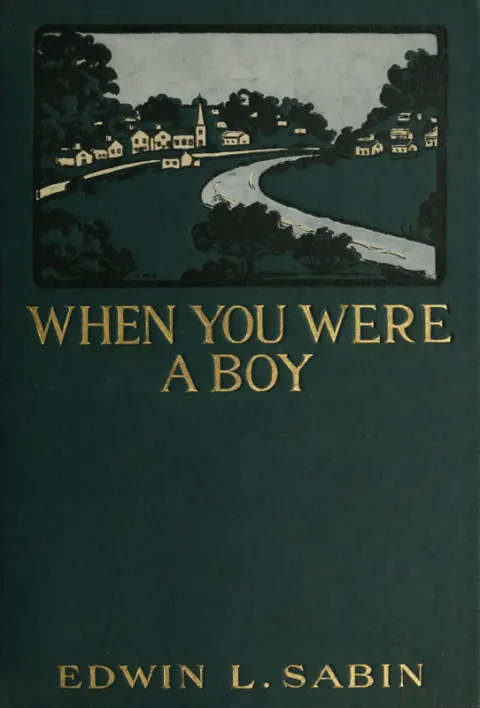
THE CLASSIC COLLECTION · 1905
"When You Were a Boy" by Edwin L. Sabin is a nostalgic children's narrative written in the early 20th century. The text is likely a novel or a collection of intertwined stories centered around the experiences of boys during childhood, exploring themes of innocence, adventure, and the simplicity of pastimes like baseball and the circus. The main character, addressed as "you," engages with a cast of friends, including relatable figures such as Fat Day, Hen Schmidt, and Billy Lunt, who embody the essence of youthful camaraderie and imaginative play. The opening portion of the work introduces the reader to a lively scene where the main character joins friends in forming a baseball team, the North Stars. The camaraderie is palpable as they organize their lineup, discuss their uniforms, and anticipate an upcoming match against the Second-street kids. The sense of competition, childhood rivalry, and the spirit of playfulness is highlighted as the boys navigate the trials of their baseball game, culminating in moments filled with excitement and disappointment. The narrative captures the essence of boyhood adventures, from the thrill of playing sports to the simplicity of the friendships formed during these formative years.
Introduction adapted from the source catalogue; source summaries may be automatically generated.
Free to read · English · 42,358 words · No account needed
MAKE TIME FOR A GOOD BOOK
On by default. Untick to stop anonymous reading totals. Each page counts after 10 seconds in view. How this works.
Anonymous counting is on unless you have switched it off.
“He did, too! No fair! He shoved him like everything!” vociferated all the North Stars and their supporters.
“You’re out! You’re out!” gibed the Second-streets, from catcher to
farthest fielder.
“Out!” majestically pronounced the umpire again.
Slowly, obedient to the higher authority represented in the freckled-faced Hoptoad, you walked down the base-line. In some way, apparently, you had disgraced your blue star, begrimed from your manful slide, for “Why did you let him touch you?” accused your comrades.
The idea! How could you help it, you’d like to know.
It was the first half of the fifth inning. The score, according to the notches on the sticks, was fifty to thirty-one, in favor of the Second-streets. Those spectators who had exercised the forethought to start with long sticks were in clover, while those with short sticks were having hard work to find space for all the runs.
The sun was not so high as when the game began, neither were your spirits. Much excited chasing, and much strenuous yelling, had told upon you. Your face was streaked; your hair was in dank disorder; your blue star flapped, and your waistband sagged behind, mourning for departed buttons. You were what mothers style “a perfect sight.”
The air had been rent by incessant wranglings. Tom Kemp and Screw Major had indulged in a brief rough-and-tumble, because Screw had thought that Tom had purposely trodden upon his sore toe, Screw injudiciously being barefoot.
Every member of the North Stars had committed egregious errors, and had been tartly excoriated by all hands. You yourself had muffed, and had thrown the ball seven ways for Sunday.
Fat was still doggedly clinging to pitch, and Doc was throwing swift. The two little girls, once your admirers, had gone away in disgust. And the score, as remarked above, was fifty to thirty-one.
Tug McCormack it was who picked out one of Fat’s wonderful twisters and batted it over your head. After it you raced, deliriously discarding, of course, your sadly abused cap, that you might gain in speed. Behind you bellowed friends and enemies, and around the bases was pelting Tug.
Where was the ball—oh, where was it! It must have struck a can or stick, and bounded crooked.
“Hurry! Hurry!” exhorted the Second-streets to Tug.
“Home! Home! Home with it!” exhorted the North Stars to you.
“Pick it up now and look for it afterward!” yelled second base.
“What’s the matter with you? It’s right there!” yelled Captain Fat.
“Darn it! Ain’t you got eyes?” yelled left-field, and “You darned fool!” yelled right-field, converging from each side.
Your reading position is saved on this browser. Take it to another device with a library code. Reading pages adapt to text, rather than matching a printed edition.
Edwin L. (Edwin Legrand) Sabin

Edwin L. (Edwin Legrand) Sabin

Edwin L. (Edwin Legrand) Sabin

Edwin L. (Edwin Legrand) Sabin
BEHIND THE BOOK
This eBook is for the use of anyone anywhere in the United States and most other parts of the world at no cost and with almost no restrictions whatsoever. You may copy it, give it away or re-use it under the terms of the Project Gutenberg License included with this eBook or online at www.gutenberg.org. If you are not located in the United States, you will have to check the laws of the country where you are located before using this eBook. Read the source licence.
The original source file, including credits and licence, is retained by this library. Request an original-format copy at no charge. Please include the book title and Project Gutenberg identifier #58165.
KEEP YOUR CURIOSITY GOING
Coulson Kernahan

Maurice Baring
Frances Wright
Cécile Tormay

Frederic Jesup Stimson

W. H. P. (William Henry Pope) Jarvis