THE CLASSIC COLLECTION✦Building the pacific railwayCLASSIC FREE BOOKS
Building the pacific railway
Edwin L. (Edwin Legrand) Sabin
THE CLASSIC COLLECTION · 1905
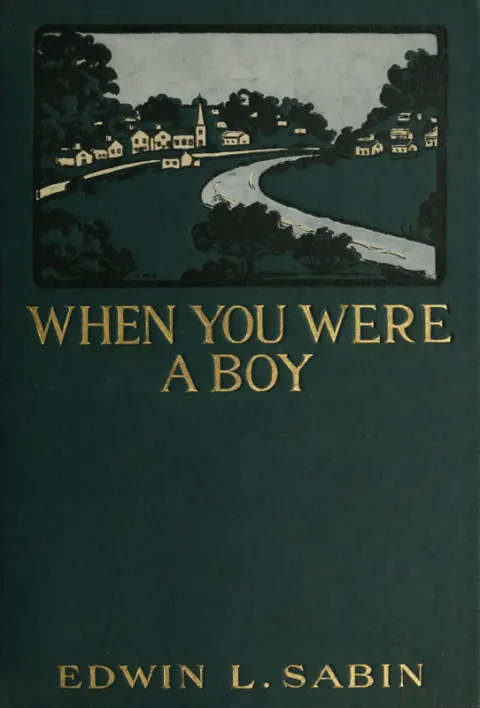
"When You Were a Boy" by Edwin L. Sabin is a nostalgic children's narrative written in the early 20th century. The text is likely a novel or a collection of intertwined stories centered around the experiences of boys during childhood, exploring themes of innocence, adventure, and the simplicity of pastimes like baseball and the circus. The main character, addressed as "you," engages with a cast of friends, including relatable figures such as Fat Day, Hen Schmidt, and Billy Lunt, who embody the essence of youthful camaraderie and imaginative play. The opening portion of the work introduces the reader to a lively scene where the main character joins friends in forming a baseball team, the North Stars. The camaraderie is palpable as they organize their lineup, discuss their uniforms, and anticipate an upcoming match against the Second-street kids. The sense of competition, childhood rivalry, and the spirit of playfulness is highlighted as the boys navigate the trials of their baseball game, culminating in moments filled with excitement and disappointment. The narrative captures the essence of boyhood adventures, from the thrill of playing sports to the simplicity of the friendships formed during these formative years.
Introduction adapted from the source catalogue; source summaries may be automatically generated.
Free to read · English · 42,358 words · No account needed
MAKE TIME FOR A GOOD BOOK
On by default. Untick to stop anonymous reading totals. Each page counts after 10 seconds in view. How this works.
Anonymous counting is on unless you have switched it off.
“’Leven to five!” declared the sprawling spectators, every one a score-keeper, to each other, as at last in scampered the Second-streets and out lagged the North Stars.
You had not batted, and you were relieved, because batting was a great responsibility, with your critical fellows advising you, and castigating you whenever you missed.
In this their next inning the Second-streets made fourteen! Notwithstanding Fat’s utmost art, as signified by his various occult motions, they batted him only too easily, and kept infield and outfield chasing all over the lot. Yet he angrily refused to “let somebody else pitch.” Bob Leslie even attempted to take the ball away from him and forcibly trade places—a mutiny which called forth an “Aw, g’wan an’ play ball, you kids!” from the waiting batter, Screw Major.
“Why don’t you fellows stop some of them grounders, then?” retorted Fat to derogatory accusations. “Gee whiz! You don’t stop nothin’!”
Thus it resolved into a question of whether ’t was not stopping, or having o’ermuch to stop, that brought disaster.
It was your turn. You faced the mighty Doc. He threw, and the ball came like a cannon—shot, you thought.
“You’re throwin’ swift!” you remonstrated.
“Shut up!” sneered Red, from third. “Who’s a—throwin’ swift? Give him one in the head, Doc!”
Blindly you struck, and the condemnations of your mentors squatting anear raked you fore and aft.
Quite unexpectedly you hit it. You did not know where it went, but you
scudded for first.
“Second! Second!” gesticulating frantically, bawled all your companions, coaching you onward.
“Second! Second!” bawled with equal fervor your opponents, coaching the
fielder.
You grabbed off your cap,—it is strange how much faster a boy can run when thus assisted,—and madly dug for second. Praise be! There you were, beating the ball, which appeared from a mysterious somewhere, by a hair’s-breadth.
You stuck to second, meanwhile dancing and prancing to tantalize the pitcher, until another hit forwarded you to third, for which you slid, not because it was absolutely necessary to slide, but because the slide was a part of the game.
Here, at third, while you were dreaming of the home slab, and the honor of admonishing, hoarsely, for the information of the world, “Tally me!” Red, the ruthless, abruptly gave you a shove, hurling you from position.
“Quick, Doc!” he cried.
Doc responded with the ball.
“Out!” decreed the umpire.
“But he shoved me! He shoved me off the base!” you shrieked.
“Who shoved yer? I didn’t, neither! G’wan! Yer out; don’t you hear the empire?” snarled back Red.
“You did, too!” you asserted.
Your reading position is saved on this browser. Take it to another device with a library code. Reading pages adapt to text, rather than matching a printed edition.
Edwin L. (Edwin Legrand) Sabin

Edwin L. (Edwin Legrand) Sabin

Edwin L. (Edwin Legrand) Sabin

Edwin L. (Edwin Legrand) Sabin
BEHIND THE BOOK
This eBook is for the use of anyone anywhere in the United States and most other parts of the world at no cost and with almost no restrictions whatsoever. You may copy it, give it away or re-use it under the terms of the Project Gutenberg License included with this eBook or online at www.gutenberg.org. If you are not located in the United States, you will have to check the laws of the country where you are located before using this eBook. Read the source licence.
The original source file, including credits and licence, is retained by this library. Request an original-format copy at no charge. Please include the book title and Project Gutenberg identifier #58165.
KEEP YOUR CURIOSITY GOING
Coulson Kernahan

Maurice Baring
Frances Wright
Cécile Tormay

Frederic Jesup Stimson

W. H. P. (William Henry Pope) Jarvis