THE CLASSIC COLLECTION✦Building the pacific railwayCLASSIC FREE BOOKS
Building the pacific railway
Edwin L. (Edwin Legrand) Sabin
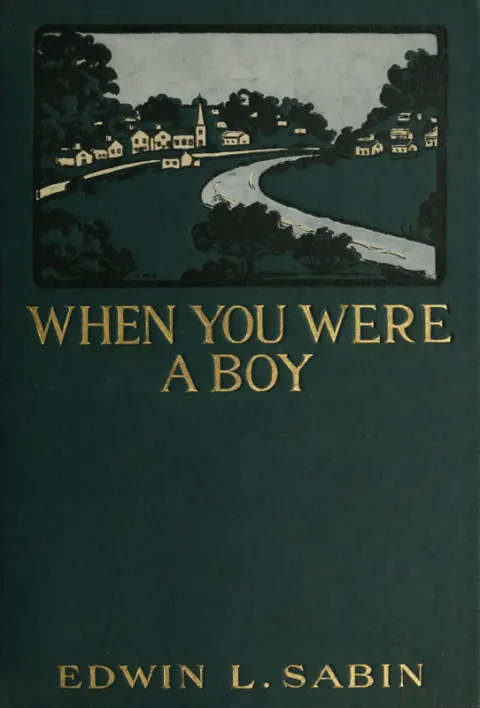
THE CLASSIC COLLECTION · 1905
"When You Were a Boy" by Edwin L. Sabin is a nostalgic children's narrative written in the early 20th century. The text is likely a novel or a collection of intertwined stories centered around the experiences of boys during childhood, exploring themes of innocence, adventure, and the simplicity of pastimes like baseball and the circus. The main character, addressed as "you," engages with a cast of friends, including relatable figures such as Fat Day, Hen Schmidt, and Billy Lunt, who embody the essence of youthful camaraderie and imaginative play. The opening portion of the work introduces the reader to a lively scene where the main character joins friends in forming a baseball team, the North Stars. The camaraderie is palpable as they organize their lineup, discuss their uniforms, and anticipate an upcoming match against the Second-street kids. The sense of competition, childhood rivalry, and the spirit of playfulness is highlighted as the boys navigate the trials of their baseball game, culminating in moments filled with excitement and disappointment. The narrative captures the essence of boyhood adventures, from the thrill of playing sports to the simplicity of the friendships formed during these formative years.
Introduction adapted from the source catalogue; source summaries may be automatically generated.
Free to read · English · 42,358 words · No account needed
MAKE TIME FOR A GOOD BOOK
On by default. Untick to stop anonymous reading totals. Each page counts after 10 seconds in view. How this works.
Anonymous counting is on unless you have switched it off.
“Lost ball!” you screamed, tramping hither and thither to show that you
spoke truth.
“Lost ball!” screamed the Kemp brothers.
“Lost ball! Lo-o-ost ba-a-all!” chimed in the North Stars generally.
But Tug had scored.
“No fair!” objected Billy Lunt. “He’s got to go back to second. Lost ball! Don’t you hear? Lost ball!”
“I don’t care. ’Tain’t my fault,” confuted Tug.
“Course not!” said Captain Spunk, scornfully.
“But you can’t come in on a lost ball; can he, Hop?” appealed Billy to
the umpire.
“Shut up! What yer talkin’ about? Course he can,” affirmed Red.
“Shut up yourself!” hotly bade Billy. “You aren’t runnin’ the game.
Can he, Hop?”
“I dunno!” confessed Umpire Hop, digging with his toe at a mound of
dirt.
“Ya-a-a-a-ah!” sneered Red at the discomfited Billy.
“Well, he can’t just the samee!” resolved Captain Fat. “It’s my ball.”
“Just the samee, he can!” contradicted Captain Spunk. “It’s my father’s
lot.”
“Lost ball! Lo-o-ost ba-a-all!” you and Nixie and Tom had been calling as unceasingly as the tolling of a bell; and continuing the discussion, which abated never, the members of both nines, and the spectators, who also were the score-keepers, scattered over the ground to assist in the search.
It seemed that no effort or artifice, even to lying down and rolling where the weeds were thick, could bring to light that ball, until suddenly piped little Jamie Watson:
“Red Conroy’s runnin’ off!”
“He’s got it, I bet you! Hey! Stop, thief!” hailed Tom, quickly.
“Drop that ball! Stop, thief!” swelled the chorus.
But down the alley legged Red, and disappeared over a fence. Evidently
he had “got it.”
“Wait till I catch him!” promised Fat, in deep, wrathful tones.
You ought to have been very tired that evening at the supper-table, but you were not, for in those days you never were tired, save momentarily. However, you still were green and brown in spots that your hurried washing had not touched, and dusty in other sections that your equally hurried brushing had omitted. Your face was as red as a setting sun, and you were full of experiences—a fulness that did not in the slightest impair your appetite.
“Who beat?” had inquired mother, as you had come trudging in.
“We only played four innin’s, and they were fifty and we were thirty-one, and then Red Conroy stole the ball,” you explained.
“Well, who beat?” asked father, at the table.
“Nobody did,” you stated, this solution having occurred to you. “We didn’t finish, ’cause Red Conroy he ran off with the ball.”
Your reading position is saved on this browser. Take it to another device with a library code. Reading pages adapt to text, rather than matching a printed edition.
Edwin L. (Edwin Legrand) Sabin

Edwin L. (Edwin Legrand) Sabin

Edwin L. (Edwin Legrand) Sabin

Edwin L. (Edwin Legrand) Sabin
BEHIND THE BOOK
This eBook is for the use of anyone anywhere in the United States and most other parts of the world at no cost and with almost no restrictions whatsoever. You may copy it, give it away or re-use it under the terms of the Project Gutenberg License included with this eBook or online at www.gutenberg.org. If you are not located in the United States, you will have to check the laws of the country where you are located before using this eBook. Read the source licence.
The original source file, including credits and licence, is retained by this library. Request an original-format copy at no charge. Please include the book title and Project Gutenberg identifier #58165.
KEEP YOUR CURIOSITY GOING
Coulson Kernahan

Maurice Baring
Frances Wright
Cécile Tormay

Frederic Jesup Stimson

W. H. P. (William Henry Pope) Jarvis