THE CLASSIC COLLECTION✦Building the pacific railwayCLASSIC FREE BOOKS
Building the pacific railway
Edwin L. (Edwin Legrand) Sabin
THE CLASSIC COLLECTION · 1905
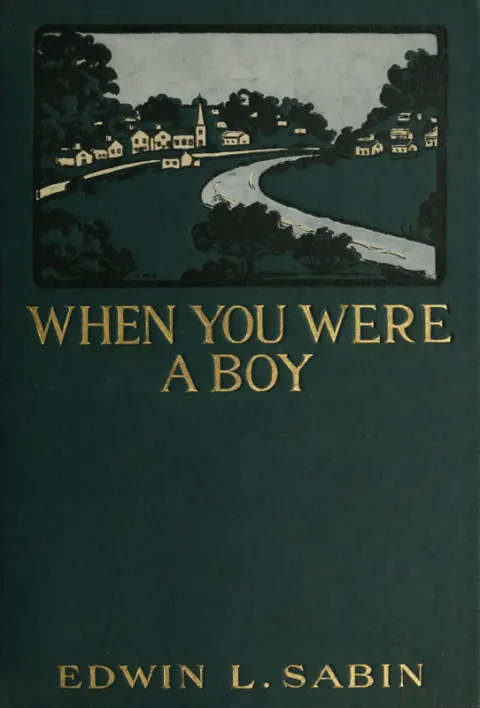
"When You Were a Boy" by Edwin L. Sabin is a nostalgic children's narrative written in the early 20th century. The text is likely a novel or a collection of intertwined stories centered around the experiences of boys during childhood, exploring themes of innocence, adventure, and the simplicity of pastimes like baseball and the circus. The main character, addressed as "you," engages with a cast of friends, including relatable figures such as Fat Day, Hen Schmidt, and Billy Lunt, who embody the essence of youthful camaraderie and imaginative play. The opening portion of the work introduces the reader to a lively scene where the main character joins friends in forming a baseball team, the North Stars. The camaraderie is palpable as they organize their lineup, discuss their uniforms, and anticipate an upcoming match against the Second-street kids. The sense of competition, childhood rivalry, and the spirit of playfulness is highlighted as the boys navigate the trials of their baseball game, culminating in moments filled with excitement and disappointment. The narrative captures the essence of boyhood adventures, from the thrill of playing sports to the simplicity of the friendships formed during these formative years.
Introduction adapted from the source catalogue; source summaries may be automatically generated.
Free to read · English · 42,358 words · No account needed
MAKE TIME FOR A GOOD BOOK
On by default. Untick to stop anonymous reading totals. Each page counts after 10 seconds in view. How this works.
Anonymous counting is on unless you have switched it off.
“Aren’t you fellows comin’ out?” queried Hen.
“Uh-uh! ’Tain’t any fun,” grunted Billy, spokesman.
“They say they won’t play any more,” you reported to Hen.
“I guess that’s all, then,” stated Hen to the spectators.
With high hoots from the boys, and rustling of dresses from the ladies, the amphitheater was emptied.
“I didn’t do nothin’,” insisted Snoopie, grinning. “You needn’t go to blamin’ me!”
But nobody answered him; and with a derisive, “Ya-a-a! Your old show ain’t worth shucks!” he scampered below, to join riotous, admiring spirits elsewhere.
“How was the circus?” asked father, politely, at supper.
“Aw, Snoopie Mitchell spoilt it,” you accused.
“What was the matter with Snoopie?”
“Why, he went and did everything ’fore the rest had any chance—didn’t he, mama!” you asserted.
“Is that so?”
Father glanced at mother, and they exchanged a subtle smile.
“What’s become of the receipts?” he inquired.
You did not comprehend.
“Papa means the pins you took in,” explained mother.
“Oh, I dunno,” you responded, your chief interest just now being in your dish of strawberries.
Oh, the noble king of France,
He had ten thousand men;
He marched them up the hill one day
And he marched them down again.
FATHER and mother not only cherished the idea that “it was good for boys to have some work to do,” but they cherished it in a distorted form. ’Twas not as though you were opposed to work, per se. No, indeed; there was a time for work and a time for play, and any day you would have been very willing to stay out of school and run errands or pile wood or rake up. Then, work would have been (just as your copy-book informed) a “privilege.”
But witness: only Saturdays and after-school and vacation would do for that, and the privilege was changed into a hardship, with your father, from his security, recollecting what he did “when he was a boy,” and evidently taking it out on you!
For “when he was a boy” father “had to work,” and rather vaingloriously (egotistically, to say the least) presented himself as a living, moving argument to apply to your case. However, he was of little weight with you because, privately, you bet with yourself that he never had to work as hard as you—never! Other fellows could skip off fishing, and everything, while you’d got to pile wood or rake the yard.
“Can I go fishin’ to-morrow?”
Your reading position is saved on this browser. Take it to another device with a library code. Reading pages adapt to text, rather than matching a printed edition.
Edwin L. (Edwin Legrand) Sabin

Edwin L. (Edwin Legrand) Sabin

Edwin L. (Edwin Legrand) Sabin

Edwin L. (Edwin Legrand) Sabin
BEHIND THE BOOK
This eBook is for the use of anyone anywhere in the United States and most other parts of the world at no cost and with almost no restrictions whatsoever. You may copy it, give it away or re-use it under the terms of the Project Gutenberg License included with this eBook or online at www.gutenberg.org. If you are not located in the United States, you will have to check the laws of the country where you are located before using this eBook. Read the source licence.
The original source file, including credits and licence, is retained by this library. Request an original-format copy at no charge. Please include the book title and Project Gutenberg identifier #58165.
KEEP YOUR CURIOSITY GOING
Coulson Kernahan

Maurice Baring
Frances Wright
Cécile Tormay

Frederic Jesup Stimson

W. H. P. (William Henry Pope) Jarvis