THE CLASSIC COLLECTION✦Building the pacific railwayCLASSIC FREE BOOKS
Building the pacific railway
Edwin L. (Edwin Legrand) Sabin
THE CLASSIC COLLECTION · 1905
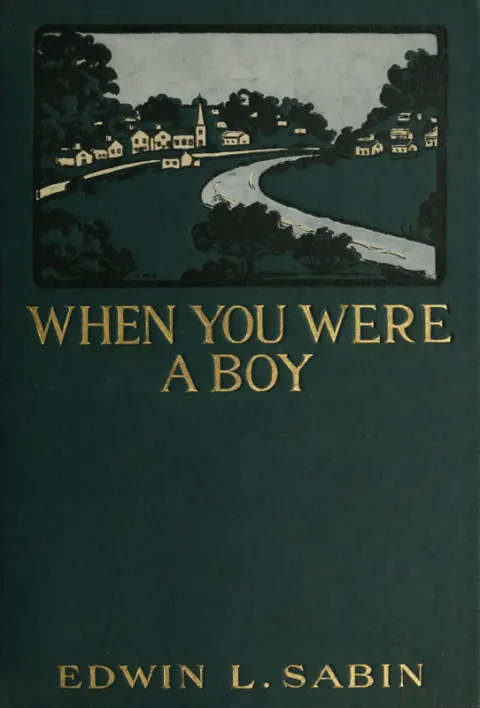
"When You Were a Boy" by Edwin L. Sabin is a nostalgic children's narrative written in the early 20th century. The text is likely a novel or a collection of intertwined stories centered around the experiences of boys during childhood, exploring themes of innocence, adventure, and the simplicity of pastimes like baseball and the circus. The main character, addressed as "you," engages with a cast of friends, including relatable figures such as Fat Day, Hen Schmidt, and Billy Lunt, who embody the essence of youthful camaraderie and imaginative play. The opening portion of the work introduces the reader to a lively scene where the main character joins friends in forming a baseball team, the North Stars. The camaraderie is palpable as they organize their lineup, discuss their uniforms, and anticipate an upcoming match against the Second-street kids. The sense of competition, childhood rivalry, and the spirit of playfulness is highlighted as the boys navigate the trials of their baseball game, culminating in moments filled with excitement and disappointment. The narrative captures the essence of boyhood adventures, from the thrill of playing sports to the simplicity of the friendships formed during these formative years.
Introduction adapted from the source catalogue; source summaries may be automatically generated.
Free to read · English · 42,358 words · No account needed
MAKE TIME FOR A GOOD BOOK
On by default. Untick to stop anonymous reading totals. Each page counts after 10 seconds in view. How this works.
Anonymous counting is on unless you have switched it off.
He flip-flopped frontward clear across the loft from the dressing-room corner into Mrs. Schmidt’s lap, and flip-flopped backward to the dressing-room again; and bowed. He walked about on his hands; and bowed. He stood on his head (“That ain’t fair!” called Billy. “I did that!”) longer than Billy did, and while in that position spit, besides; and bowed. He did the “splits” farther than you could, and kissed his hand, while the spectators murmured various acknowledgments of his posture.
He rubbed his palms and lightly sprang to the trapeze dangling from the
beam.
He skinned the cat, but he skinned it twice, and half into the third, and impishly hung poised, while his shoulder-joints cracked and the Schmidt hired girl moaned:
“Howly saints!”
He hung by his toes and threw wide his arms; but, suddenly letting go, with preconceived adroitness fell on his back, amidst muffled shrieks.
He chinned himself, but he did it ten times.
“Come in! That’s enough!” you ordered.
He obeyed you not. Instead, he hung by his knees; he hung by one elbow and swayed and kicked; he straddled the bar and went around it faster and faster; and with feet between hands, soles against it, he went around that way, too.
In the dressing-room reigned despair and lamentation.
“’Tain’t fair!” wailed Tom, hotly. “I was goin’ to do some of those things myself.”
“So was I!” declared Nixie.
Snoopie was now juggling balls while traversing the official tight rope stretched between two of the saw-horses.
“Make him come in, Hen!” you called.
Hen snapped his whip at Snoopie’s bare legs, and brought him to the
boards.
“Quit, will you!” snarled Snoopie. “Don’t you go whippin’ me, or I’ll paste you!”
“You darned old fool!” you scolded.
He wiggled his ears—wiggled them much more than Fat could his—and twitched his scalp, accommodatingly turning to right and to left so that all might see.
Then, breathless, crimson, perspiring, he walked on his hands into the
dressing-room.
“What did you do all that for?” demanded you, angrily.
“Do what?” retorted Snoopie. “I didn’t do nothin’! What’s the matter with you kids, anyhow?”
“You did, too!” berated Nixie. “You showed off an’ spoilt everything. I ain’t goin’ out.”
“Don’t you—an’ we won’t, either!” chorused Tom and Billy.
“Oh, Jock! Fat’s got his rats and he’s takin’ ’em away with him!”
announced Hen.
“You come back, there, Fat! Darn you! bring them back!” you cried,
rushing to the rescue.
Too late. Fat was stamping rebelliously down the stairs. The
disintegration of Schmidt & Walker’s United Shows, through jealousy, had
begun.
Your reading position is saved on this browser. Take it to another device with a library code. Reading pages adapt to text, rather than matching a printed edition.
Edwin L. (Edwin Legrand) Sabin

Edwin L. (Edwin Legrand) Sabin

Edwin L. (Edwin Legrand) Sabin

Edwin L. (Edwin Legrand) Sabin
BEHIND THE BOOK
This eBook is for the use of anyone anywhere in the United States and most other parts of the world at no cost and with almost no restrictions whatsoever. You may copy it, give it away or re-use it under the terms of the Project Gutenberg License included with this eBook or online at www.gutenberg.org. If you are not located in the United States, you will have to check the laws of the country where you are located before using this eBook. Read the source licence.
The original source file, including credits and licence, is retained by this library. Request an original-format copy at no charge. Please include the book title and Project Gutenberg identifier #58165.
KEEP YOUR CURIOSITY GOING
Coulson Kernahan

Maurice Baring
Frances Wright
Cécile Tormay

Frederic Jesup Stimson

W. H. P. (William Henry Pope) Jarvis