THE CLASSIC COLLECTION✦Building the pacific railwayCLASSIC FREE BOOKS
Building the pacific railway
Edwin L. (Edwin Legrand) Sabin
THE CLASSIC COLLECTION · 1905
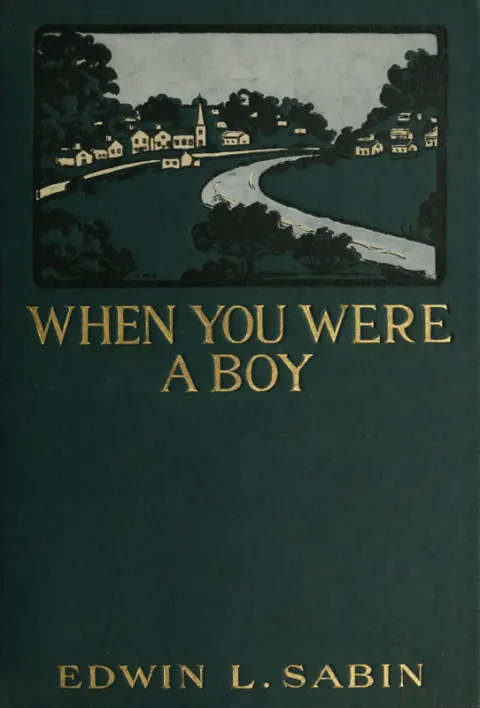
"When You Were a Boy" by Edwin L. Sabin is a nostalgic children's narrative written in the early 20th century. The text is likely a novel or a collection of intertwined stories centered around the experiences of boys during childhood, exploring themes of innocence, adventure, and the simplicity of pastimes like baseball and the circus. The main character, addressed as "you," engages with a cast of friends, including relatable figures such as Fat Day, Hen Schmidt, and Billy Lunt, who embody the essence of youthful camaraderie and imaginative play. The opening portion of the work introduces the reader to a lively scene where the main character joins friends in forming a baseball team, the North Stars. The camaraderie is palpable as they organize their lineup, discuss their uniforms, and anticipate an upcoming match against the Second-street kids. The sense of competition, childhood rivalry, and the spirit of playfulness is highlighted as the boys navigate the trials of their baseball game, culminating in moments filled with excitement and disappointment. The narrative captures the essence of boyhood adventures, from the thrill of playing sports to the simplicity of the friendships formed during these formative years.
Introduction adapted from the source catalogue; source summaries may be automatically generated.
Free to read · English · 42,358 words · No account needed
MAKE TIME FOR A GOOD BOOK
On by default. Untick to stop anonymous reading totals. Each page counts after 10 seconds in view. How this works.
Anonymous counting is on unless you have switched it off.
With a bluffness cloaking sundry misgivings you laid the question before mother, hoping that she would unwittingly answer yes, and that you might entrap her into a family division. Alas, mother was not to be entrapped.
“Ask your father,” she evaded, just as you had feared that she might.
So, reluctantly, you sought father.
“Well, John?” he prompted as you stood before him.
Sharpened to X-ray acuteness through strenuous sire-ship, he interpreted perfectly what was forthcoming.
“Can I go fishin’ to-morrow?”
“But you have the yard to rake, you know, don’t you?”
“I’ll rake it after school next week.”
The promise tumbled eagerly out for inspection, and father summarily
condemned it.
“You promised that if I let you off last Saturday you’d rake it this
week—”
“It rained,” you faltered.
So it did. Monday, Tuesday, Wednesday, and Thursday you had carefully reconnoitered, estimated, circled the prospect, so to speak; given the yard every chance within your power to rake itself, and thus add to nature phenomena; and then, on Friday, when you had got all ready, had come the rain, and balked your farther efforts.
Yes. You had done your best, and now was it for you or yours to discourage Providence? But father rashly plunged ahead.
“I guess you’d better rake and have it done with. Then you can go.”
“I promised Snoopie and Fat I’d go to-morrow. Fishin’ will be dandy to-morrow. It’s always best right after a rain.”
You had begun to whine.
“John!”
When father said “John!” in that tone, and with one exclamation-point, it indicated that your cause was finally and flatly dismissed. An additional exclamation-point might mean committal for contempt. Accordingly, unwilling to provoke this, after sniffling a moment, on the safe side of his newspaper, and morosely kicking the porch railing, you stalked off, slamming behind you the inoffensive gate, and quite ripe for any desperate deed that could readily be undone, if necessary.
The next day dawned splendidly. Never was a better fishing day—never! Never would be another so good—never! Yet father and mother did not seem to care, and ate breakfast as indifferently as though raking the yard was fully as much fun for a boy as pulling out bullheads!
From in front somebody whistled persistently.
“There’s Snoopie. He wants me to go,” you reminded.
Still remained time for a revision of the program, if—if—
“I hear him,” responded mother, mildly.
“Run out and tell him, so he won’t wait,” suggested father.
Enveloped in sorrow and shame you emerged to the impatient Snoopie and
broke the news.
Your reading position is saved on this browser. Take it to another device with a library code. Reading pages adapt to text, rather than matching a printed edition.
Edwin L. (Edwin Legrand) Sabin

Edwin L. (Edwin Legrand) Sabin

Edwin L. (Edwin Legrand) Sabin

Edwin L. (Edwin Legrand) Sabin
BEHIND THE BOOK
This eBook is for the use of anyone anywhere in the United States and most other parts of the world at no cost and with almost no restrictions whatsoever. You may copy it, give it away or re-use it under the terms of the Project Gutenberg License included with this eBook or online at www.gutenberg.org. If you are not located in the United States, you will have to check the laws of the country where you are located before using this eBook. Read the source licence.
The original source file, including credits and licence, is retained by this library. Request an original-format copy at no charge. Please include the book title and Project Gutenberg identifier #58165.
KEEP YOUR CURIOSITY GOING
Coulson Kernahan

Maurice Baring
Frances Wright
Cécile Tormay

Frederic Jesup Stimson

W. H. P. (William Henry Pope) Jarvis