THE CLASSIC COLLECTION✦Building the pacific railwayCLASSIC FREE BOOKS
Building the pacific railway
Edwin L. (Edwin Legrand) Sabin
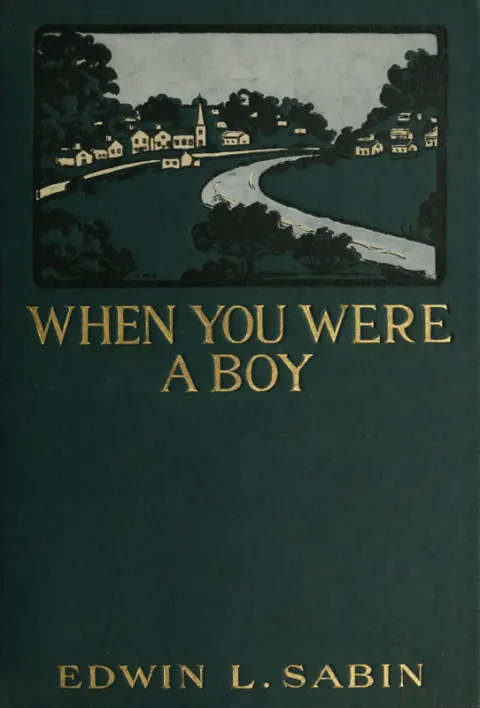
THE CLASSIC COLLECTION · 1905
"When You Were a Boy" by Edwin L. Sabin is a nostalgic children's narrative written in the early 20th century. The text is likely a novel or a collection of intertwined stories centered around the experiences of boys during childhood, exploring themes of innocence, adventure, and the simplicity of pastimes like baseball and the circus. The main character, addressed as "you," engages with a cast of friends, including relatable figures such as Fat Day, Hen Schmidt, and Billy Lunt, who embody the essence of youthful camaraderie and imaginative play. The opening portion of the work introduces the reader to a lively scene where the main character joins friends in forming a baseball team, the North Stars. The camaraderie is palpable as they organize their lineup, discuss their uniforms, and anticipate an upcoming match against the Second-street kids. The sense of competition, childhood rivalry, and the spirit of playfulness is highlighted as the boys navigate the trials of their baseball game, culminating in moments filled with excitement and disappointment. The narrative captures the essence of boyhood adventures, from the thrill of playing sports to the simplicity of the friendships formed during these formative years.
Introduction adapted from the source catalogue; source summaries may be automatically generated.
Free to read · English · 42,358 words · No account needed
MAKE TIME FOR A GOOD BOOK
On by default. Untick to stop anonymous reading totals. Each page counts after 10 seconds in view. How this works.
Anonymous counting is on unless you have switched it off.
Well as Speck and you are satisfied with bravado and careful avoidance of each other, it is inevitable that you meet.
“There’s Speck—see? Come on; you ain’t afraid of him!”
You have committed yourself too far for graceful retreat, and in the midst of your crowd you advance boldly to join Speck and his crowd.
The rival clans come together and mingle, but Speck and you pretend not
to see each other.
“John says he can lick you, Speck!”
Yes, you have said so, but it was under provocation of, presumably, a direct challenge from him. However, the duello does not thrive on explanations, and Speck and you are in the hands of your friends.
The all-engaging topic has been broached. Speck apparently does not hear. Maybe the matter will be dropped. But no.
“He says he can lick you with one hand—aw, Speck!”
“He can’t, though,” defends Speck.
“Speck says he can’t, either,” obligingly announces his backers.
“Well, he can, I bet you.”
“Bet you he can’t.”
“He’ll show him whether he can or not.”
“Huh! I’d just like to see him once!”
You find yourself hustled forward and set against Speck, who in like manner has been pressed to the front. Your hands hang limply by your side; so do Speck’s. You feel very tame and pale and artificial; not a whit mad; not a whit like fighting. The pugnacity is your seconds’.
Somebody laboriously balances a small block on Speck’s shoulder.
“Knock that off, if you dare,” bids a Speck chorus.
“I will if I want to,” you assert.
“Well, do it, then!” invites Speck.
“I will if I want to.”
“Well, do it, then!”
“I will if I want to.”
You strive to work up steam by biting your lips, and raising your voice, and spitting ferociously into the dust; you are assisted by the irritating shoves bestowed upon you from behind.
“Well, do it, then!”
“I will if I want to.”
Impatient fingers supply you also with a gage of defiance, an impertinent sliver laid athwart your collarbone.
“Now let’s see Speck knock that off!”
Speck disdainfully lifts his hand and brushes the offending chip to the
ground.
“Hit him, John!”
“Don’t you stand that!”
“There!” you say, tapping him gently on the breast.
“There!” he answers, tapping you a little harder.
“There!” you return, tapping him harder still.
“There!” he retaliates, tapping you yet harder.
Your reading position is saved on this browser. Take it to another device with a library code. Reading pages adapt to text, rather than matching a printed edition.
Edwin L. (Edwin Legrand) Sabin

Edwin L. (Edwin Legrand) Sabin

Edwin L. (Edwin Legrand) Sabin

Edwin L. (Edwin Legrand) Sabin
BEHIND THE BOOK
This eBook is for the use of anyone anywhere in the United States and most other parts of the world at no cost and with almost no restrictions whatsoever. You may copy it, give it away or re-use it under the terms of the Project Gutenberg License included with this eBook or online at www.gutenberg.org. If you are not located in the United States, you will have to check the laws of the country where you are located before using this eBook. Read the source licence.
The original source file, including credits and licence, is retained by this library. Request an original-format copy at no charge. Please include the book title and Project Gutenberg identifier #58165.
KEEP YOUR CURIOSITY GOING
Coulson Kernahan

Maurice Baring
Frances Wright
Cécile Tormay

Frederic Jesup Stimson

W. H. P. (William Henry Pope) Jarvis