THE CLASSIC COLLECTION✦Building the pacific railwayCLASSIC FREE BOOKS
Building the pacific railway
Edwin L. (Edwin Legrand) Sabin
THE CLASSIC COLLECTION · 1905
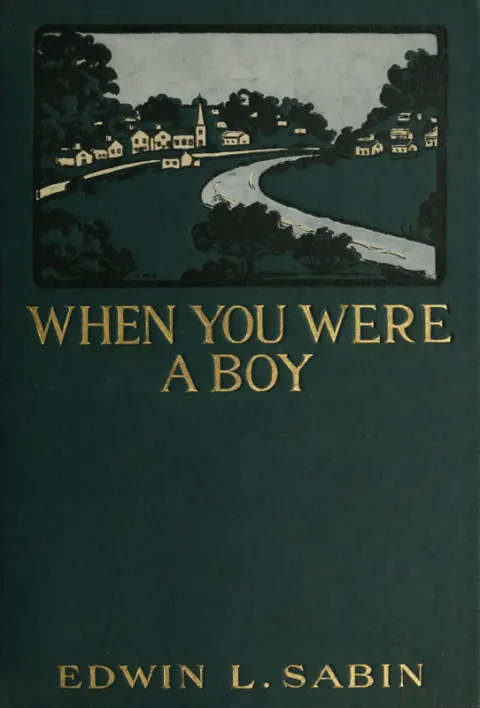
"When You Were a Boy" by Edwin L. Sabin is a nostalgic children's narrative written in the early 20th century. The text is likely a novel or a collection of intertwined stories centered around the experiences of boys during childhood, exploring themes of innocence, adventure, and the simplicity of pastimes like baseball and the circus. The main character, addressed as "you," engages with a cast of friends, including relatable figures such as Fat Day, Hen Schmidt, and Billy Lunt, who embody the essence of youthful camaraderie and imaginative play. The opening portion of the work introduces the reader to a lively scene where the main character joins friends in forming a baseball team, the North Stars. The camaraderie is palpable as they organize their lineup, discuss their uniforms, and anticipate an upcoming match against the Second-street kids. The sense of competition, childhood rivalry, and the spirit of playfulness is highlighted as the boys navigate the trials of their baseball game, culminating in moments filled with excitement and disappointment. The narrative captures the essence of boyhood adventures, from the thrill of playing sports to the simplicity of the friendships formed during these formative years.
Introduction adapted from the source catalogue; source summaries may be automatically generated.
Free to read · English · 42,358 words · No account needed
MAKE TIME FOR A GOOD BOOK
On by default. Untick to stop anonymous reading totals. Each page counts after 10 seconds in view. How this works.
Anonymous counting is on unless you have switched it off.
This harmless verbal fencing might have been continued up to the very present, and the ethics of the duello not have been violated, had not some over-zealous enthusiast pushed Ted and you together, with the result that, in fending each other off, you, according to the eager verdict of the highly observant critics, “backed it,” and he hit you, simultaneously; whereupon, not seeing anything else left to do, at each other you went like a couple of jumping-jacks, until (fortunately, you held, for Ted) the approach of the man caused him to be removed from on top of you.
Flushed, excited, and disheveled, you went your way; and flushed, excited, and disheveled, Ted went his way. Throughout your route, you and your babbling escorts, with many a “Gee!” and “Darn!” discoursed upon what you had done, and what Ted had not done, and what would have happened had the fight lasted only a minute longer.
Loudly you wrangled with them as to which got the worst of it, quite blind to the fact, which now you are free to acknowledge, that the one who got the worst of it was your mother, for she had to mend your clothes.
She was always getting the worst of it. She was the unlucky
non-combatant.
The duello produced the best of feeling between Ted and you. Fights were for mutual benefit. Swelling dignity and biceps so demanded expression that they could not forever be gratified by merely playfully poking chums in the ribs.
Therefore it is plain why, when a friend mischievously reported to you, “Say, Speck says he can lick you,” it was all that was required. Like to a strutting cockerel who hears a distant crow, you bristled in answer.
“He can’t, either. I can lick him with one hand tied behind my back.”
Fast flew the news to Speck, and Speck promptly resented the slur, as he should. The boys of the neighborhood were pleased.
Now you, and likewise Speck, are the objects of much flattering attention. You let your following feel your muscle, and they let you feel theirs, and you are firmly convinced that yours is the hardest. Also, you are convinced that you have a great knack at fisticuffs, and are the inventor of a peculiar, irresistible blow which you deliver, the knuckle of the middle finger carefully protruded, under your warding left arm. More or less secretly you have demonstrated it while “fooling” with your companions.
You can chin yourself six times, and you are, in valor and strength, a
boy wonder.
Your companions favor you with adulation to a degree compatible with their own self-respect; for most of them, too, are boy wonders.
Your reading position is saved on this browser. Take it to another device with a library code. Reading pages adapt to text, rather than matching a printed edition.
Edwin L. (Edwin Legrand) Sabin

Edwin L. (Edwin Legrand) Sabin

Edwin L. (Edwin Legrand) Sabin

Edwin L. (Edwin Legrand) Sabin
BEHIND THE BOOK
This eBook is for the use of anyone anywhere in the United States and most other parts of the world at no cost and with almost no restrictions whatsoever. You may copy it, give it away or re-use it under the terms of the Project Gutenberg License included with this eBook or online at www.gutenberg.org. If you are not located in the United States, you will have to check the laws of the country where you are located before using this eBook. Read the source licence.
The original source file, including credits and licence, is retained by this library. Request an original-format copy at no charge. Please include the book title and Project Gutenberg identifier #58165.
KEEP YOUR CURIOSITY GOING
Coulson Kernahan

Maurice Baring
Frances Wright
Cécile Tormay

Frederic Jesup Stimson

W. H. P. (William Henry Pope) Jarvis