THE CLASSIC COLLECTION✦Building the pacific railwayCLASSIC FREE BOOKS
Building the pacific railway
Edwin L. (Edwin Legrand) Sabin
THE CLASSIC COLLECTION · 1905
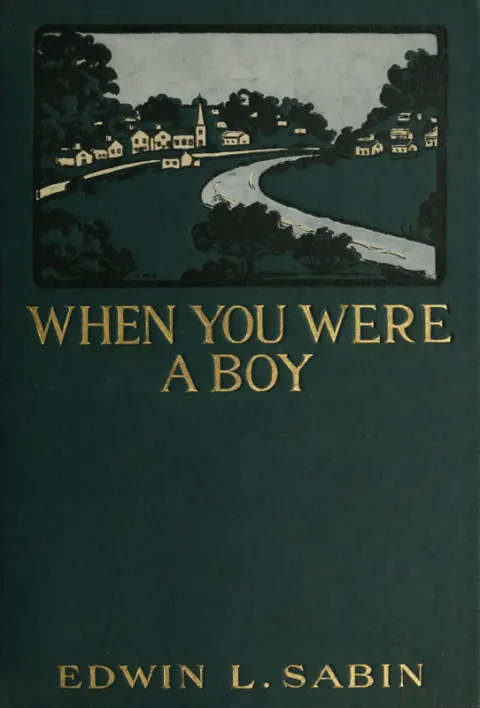
"When You Were a Boy" by Edwin L. Sabin is a nostalgic children's narrative written in the early 20th century. The text is likely a novel or a collection of intertwined stories centered around the experiences of boys during childhood, exploring themes of innocence, adventure, and the simplicity of pastimes like baseball and the circus. The main character, addressed as "you," engages with a cast of friends, including relatable figures such as Fat Day, Hen Schmidt, and Billy Lunt, who embody the essence of youthful camaraderie and imaginative play. The opening portion of the work introduces the reader to a lively scene where the main character joins friends in forming a baseball team, the North Stars. The camaraderie is palpable as they organize their lineup, discuss their uniforms, and anticipate an upcoming match against the Second-street kids. The sense of competition, childhood rivalry, and the spirit of playfulness is highlighted as the boys navigate the trials of their baseball game, culminating in moments filled with excitement and disappointment. The narrative captures the essence of boyhood adventures, from the thrill of playing sports to the simplicity of the friendships formed during these formative years.
Introduction adapted from the source catalogue; source summaries may be automatically generated.
Free to read · English · 42,358 words · No account needed
MAKE TIME FOR A GOOD BOOK
On by default. Untick to stop anonymous reading totals. Each page counts after 10 seconds in view. How this works.
Anonymous counting is on unless you have switched it off.
Then with a final “There!” that breaks through all restraint, and amid shrill, rapturous cheers, two pairs of arms begin to whirl with wild rapidity, the sole thought of their owners being a blind offense according to hit-who-hit-can rules.
The engagement did not last long. A horrified and meddlesome old lady interfered, and after informing you both many times that “little boys shouldn’t fight,” your temperature down again to normal, she sent you off with your disappointed encouragers, while she conscientiously watched you out of sight.
Up to date the question whether you can lick Speck or Speck can lick you is no further settled. Henceforth the spirit of amity prevailed between you. Mettle had been proved, the fight had been fought, and now somebody else must furnish entertainment.
Although victory, actual or prospective, of course never was doubtful (either you were winning, or the other fellow was winning, according as to which did the telling), at some times it appeared to a spectator more decisive than at others.
You were feeling very spunky that noon when amid your preserves you descried a stranger boy; but civilly you challenged him. One may witness two bluff but wary fox-terriers thus approach each other, accost, and investigate.
“Hello!” you wagged; that is, said.
“Hello, yourself!” wagged he.
“Say—what’s your name?” you inquired, as you had every right to do.
“Puddin’ tame; ask me again, an’ I’ll tell you the same,” he replied
insolently.
At the unmerited rebuff you stiffened.
“Better not give me any of your sass!” you growled.
“Pooh! What’ll you do!” he growled back.
“I’ll show you what I’ll do.”
“You couldn’t hurt a flea.”
“I couldn’t, couldn’t I?”
“Naw, you couldn’t, ‘couldn’t I.’”
Walking circles around each other, after this fashion you and he sowed crimination and recrimination, while larger and larger waxed an audience hopeful of seeing them spring up as blows.
Only when the flurry came did you discover too late how much taller and stronger and older than you he was. Your bleeding nose showed this to you; and cowed and weeping, you retreated in bad order.
“I’ll tell my big brother, an’ he’ll fix you!” you howled
threateningly.
“Aw, he ain’t got any big brother,” jeered the heartless crowd, who saw no pathos in your abused organ.
That was true; you had none.
“I’ll tell my father, then,” you wailed angrily—another empty boast; and still sniffling and, fearsomely gory, with the handkerchiefs of yourself and your one faithful companion quite exhausted, you reached the haven of a friendly pump.
Yet you had not been whipped—not exactly.
Your reading position is saved on this browser. Take it to another device with a library code. Reading pages adapt to text, rather than matching a printed edition.
Edwin L. (Edwin Legrand) Sabin

Edwin L. (Edwin Legrand) Sabin

Edwin L. (Edwin Legrand) Sabin

Edwin L. (Edwin Legrand) Sabin
BEHIND THE BOOK
This eBook is for the use of anyone anywhere in the United States and most other parts of the world at no cost and with almost no restrictions whatsoever. You may copy it, give it away or re-use it under the terms of the Project Gutenberg License included with this eBook or online at www.gutenberg.org. If you are not located in the United States, you will have to check the laws of the country where you are located before using this eBook. Read the source licence.
The original source file, including credits and licence, is retained by this library. Request an original-format copy at no charge. Please include the book title and Project Gutenberg identifier #58165.
KEEP YOUR CURIOSITY GOING
Coulson Kernahan

Maurice Baring
Frances Wright
Cécile Tormay

Frederic Jesup Stimson

W. H. P. (William Henry Pope) Jarvis