THE CLASSIC COLLECTION✦Building the pacific railwayCLASSIC FREE BOOKS
Building the pacific railway
Edwin L. (Edwin Legrand) Sabin
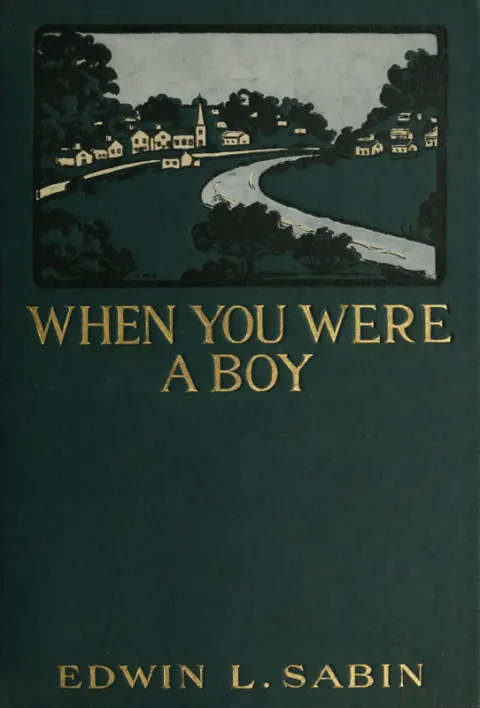
THE CLASSIC COLLECTION · 1905
"When You Were a Boy" by Edwin L. Sabin is a nostalgic children's narrative written in the early 20th century. The text is likely a novel or a collection of intertwined stories centered around the experiences of boys during childhood, exploring themes of innocence, adventure, and the simplicity of pastimes like baseball and the circus. The main character, addressed as "you," engages with a cast of friends, including relatable figures such as Fat Day, Hen Schmidt, and Billy Lunt, who embody the essence of youthful camaraderie and imaginative play. The opening portion of the work introduces the reader to a lively scene where the main character joins friends in forming a baseball team, the North Stars. The camaraderie is palpable as they organize their lineup, discuss their uniforms, and anticipate an upcoming match against the Second-street kids. The sense of competition, childhood rivalry, and the spirit of playfulness is highlighted as the boys navigate the trials of their baseball game, culminating in moments filled with excitement and disappointment. The narrative captures the essence of boyhood adventures, from the thrill of playing sports to the simplicity of the friendships formed during these formative years.
Introduction adapted from the source catalogue; source summaries may be automatically generated.
Free to read · English · 42,358 words · No account needed
MAKE TIME FOR A GOOD BOOK
On by default. Untick to stop anonymous reading totals. Each page counts after 10 seconds in view. How this works.
Anonymous counting is on unless you have switched it off.
“You do as mama says. She’s always right,” he answered, and you had a dim suspicion that he was begging the question.
The little encounter between Ted and you was described much more quickly than it had occurred. The duello as practised in your corps did not admit of undue precipitancy in falling to blows. A certain amount of palaver was obligatory first—an exchange of witticism and defiance, beyond which, as often as not, one did not proceed.
When Ted had tripped you, and you had angrily accused him of having done it on purpose, he had denied it just as angrily:
“Didn’t, neither!”
“Did’t, either!” said you.
“Didn’t, neither!” said he.
“Did’t, either!” said you.
“Didn’t, neither. You’re a liar!” said he.
“Did’t, either. You’re another!” said you.
“You’re another ’nother!” said he.
“You’re twice as big as anything you can call me!” said you—a crusher, and quite unanswerable.
“You’re twice as big as that, an’ you da’sn’t back it!” said he, also scoring a point.
“He says you da’sn’t back it! Ya-a-a-a-ah! he says you da’sn’t back it!” gibed the boys about you, glorying in the crisis.
Ted and you were now uncomfortably in the center of a circle which was ever being increased by the jubilant cries of “Fight! Fight!” which summoned spectators from all quarters.
“G’wan an’ back it! You can lick him!” urged your supporters.
“Aw, he’s ’fraid to! He’s ’fraid to!” scoffed your rivals.
Ted and you, grimy fists doubled, not knowing exactly what to do, faced each other. Neither of you wanted to fight. Fighting was being forced upon you. You were to amuse the pitiless crowd.
“I ain’t, either, afraid,” you asserted sullenly.
“I wouldn’t let him trip me up that way, you bet,” inspired a friend on your right, boldly.
“An’ call me a liar an’ everything!” added a friend on your left.
Oh, how solicitous of your honor were they who were not to do the
fighting!
“He is a liar if he says I tripped him on purpose,” stoutly reiterated Ted, slightly qualifying his former blunt statement.
“You’re another!” you returned. “Anyhow, it looked as if you tripped
me on purpose.”
You, likewise, were hedging a mite.
“There! He called you a liar, too!” admonished the circle to Ted.
“Then he’s another, an’ he da’sn’t back it,” responded Ted, grimly performing his duty.
Your reading position is saved on this browser. Take it to another device with a library code. Reading pages adapt to text, rather than matching a printed edition.
Edwin L. (Edwin Legrand) Sabin

Edwin L. (Edwin Legrand) Sabin

Edwin L. (Edwin Legrand) Sabin

Edwin L. (Edwin Legrand) Sabin
BEHIND THE BOOK
This eBook is for the use of anyone anywhere in the United States and most other parts of the world at no cost and with almost no restrictions whatsoever. You may copy it, give it away or re-use it under the terms of the Project Gutenberg License included with this eBook or online at www.gutenberg.org. If you are not located in the United States, you will have to check the laws of the country where you are located before using this eBook. Read the source licence.
The original source file, including credits and licence, is retained by this library. Request an original-format copy at no charge. Please include the book title and Project Gutenberg identifier #58165.
KEEP YOUR CURIOSITY GOING
Coulson Kernahan

Maurice Baring
Frances Wright
Cécile Tormay

Frederic Jesup Stimson

W. H. P. (William Henry Pope) Jarvis