THE CLASSIC COLLECTION✦Doodles, the Sunshine BoyCLASSIC FREE BOOKS
Doodles, the Sunshine Boy
Emma C. Dowd
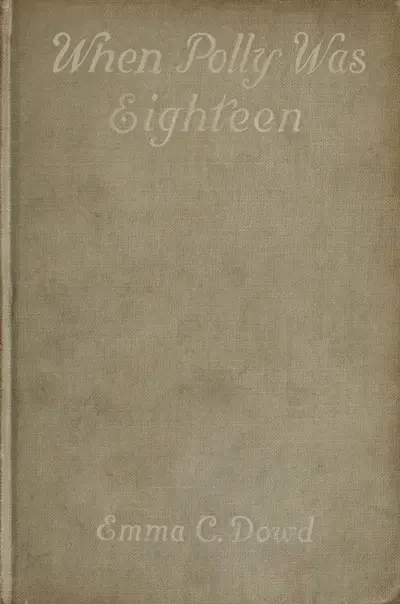
THE CLASSIC COLLECTION · 1921
"When Polly Was Eighteen" by Emma C. Dowd is a novel written in the early 20th century. The story follows Polly Dudley, a young woman navigating her relationships and personal growth amidst the complexities of love, friendship, and societal expectations. In the opening chapters, we are introduced to Polly, her love interest David, and the unfolding dynamics of their connection as they struggle with jealousy, misunderstandings, and the challenges of young adulthood. The opening of the book sets the stage with a significant walk between Polly and David, highlighting the tension in their relationship as David grapples with jealousy over Polly's interactions with other boys. This emotional backdrop creates an atmosphere of uncertainty for Polly, who is equally perplexed by David’s mood swings. As the narrative progresses, we see Polly's character evolve; she is caught between her desire for independence and the constraints imposed by her feelings for David. The initial chapters delve into themes of trust, freedom, and self-discovery, as Polly begins to articulate her need for autonomy even while being deeply entwined in her romantic feelings.
Introduction adapted from the source catalogue; source summaries may be automatically generated.
Free to read · English · 60,208 words · No account needed
MAKE TIME FOR A GOOD BOOK
On by default. Untick to stop anonymous reading totals. Each page counts after 10 seconds in view. How this works.
Anonymous counting is on unless you have switched it off.
“You don’t think there’s any danger in leaving the house quite alone, do you?” inquired the White Nurse anxiously.
Benedicta laughed. “It’s safe as Sunday,” she answered. “I’ve set a chair right in front of the front door, and anybody that knows me knows that means nobody’s home.”
“Oh, but, Benedicta,” the White Nurse protested, “if a tramp should come along, it would tell him there isn’t a soul in the house, and he’d steal everything he could lay hold of!”
“Tramp!” scorned the housekeeper. “Never but a solitary one ever did meander up here, an’ he’d lost his way and was on the road back when Young Ben met him.”
“I think there is not the slightest danger,” Polly reassured those that had begun to look worried.
“Do tell another story!” pleaded Jozy.
“About the twin that didn’t know himself!” suggested Grissel.
“Oh, no!” cried Timmy; “let’s have that one about the boy who killed the big wolf and got the money to go to school with.”
“No, don’t!” shivered Muriel. “Please tell about the Ten Little Girls
and Mr. Cross.”
“We will put it to vote,” said Polly. “Those in favor of the Ten Little Girls, say ‘I.’”
“That sounds like more than ten little girls,” she smiled, clapping her hands to her ears, as the chorus of shrill voices rang through the woods.
All but two or three settled themselves with content, as the story-teller started in the good old-fashioned way.
“Once upon a time ten little girls were on their way home from school. There were Eunice and Lucy and Jane and Susan and Nancy and Martha and Ruth, besides the three Marys--Mary Fox, Mary Lyon, and Mary Lamb.
“Mary Fox was talking.
“‘Let’s go over in the pasture and see those dear little lambs,’ she
said.
“‘Oh, I’m afraid of the sheep!’ gasped Susan.
“‘They won’t hurt you,’ Ruth assured her. ‘Come!’
“The three Marys were already over the fence. The rest followed, timid Susan at the end of the line.
“For an instant the sheep stared at their visitors; then the leader turned suddenly and vaulted a low stone wall into another field, and the rest dashed after him. It was over in a minute, and the sheep pasture was left in sole possession of the ten little girls.
“They looked at one another with frightened eyes.
“‘I wish we hadn’t come,’ mourned Mary Lamb, and the nine others said that they wished they had not come, too.
“‘What will Mr. Cross say!’ cried Jane. ‘Jim Tucker says he is just like his name--Oh, dear! oh, dear!’
Your reading position is saved on this browser. Take it to another device with a library code. Reading pages adapt to text, rather than matching a printed edition.
BEHIND THE BOOK
This eBook is for the use of anyone anywhere in the United States and most other parts of the world at no cost and with almost no restrictions whatsoever. You may copy it, give it away or re-use it under the terms of the Project Gutenberg License included with this eBook or online at www.gutenberg.org. If you are not located in the United States, you will have to check the laws of the country where you are located before using this eBook. Read the source licence.
The original source file, including credits and licence, is retained by this library. Request an original-format copy at no charge. Please include the book title and Project Gutenberg identifier #58512.
KEEP YOUR CURIOSITY GOING
Coulson Kernahan

Maurice Baring
Frances Wright
Cécile Tormay

Frederic Jesup Stimson

W. H. P. (William Henry Pope) Jarvis