THE CLASSIC COLLECTION✦Doodles, the Sunshine BoyCLASSIC FREE BOOKS
Doodles, the Sunshine Boy
Emma C. Dowd
THE CLASSIC COLLECTION · 1921
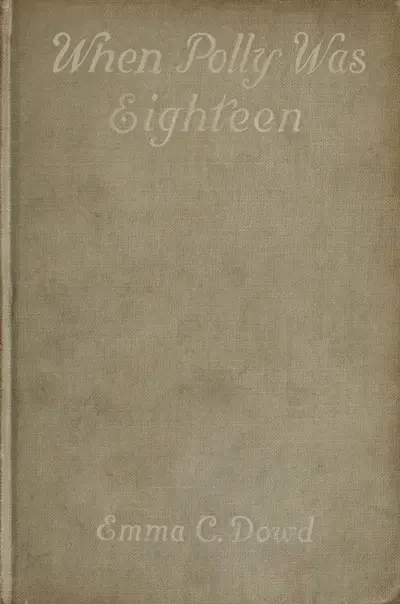
"When Polly Was Eighteen" by Emma C. Dowd is a novel written in the early 20th century. The story follows Polly Dudley, a young woman navigating her relationships and personal growth amidst the complexities of love, friendship, and societal expectations. In the opening chapters, we are introduced to Polly, her love interest David, and the unfolding dynamics of their connection as they struggle with jealousy, misunderstandings, and the challenges of young adulthood. The opening of the book sets the stage with a significant walk between Polly and David, highlighting the tension in their relationship as David grapples with jealousy over Polly's interactions with other boys. This emotional backdrop creates an atmosphere of uncertainty for Polly, who is equally perplexed by David’s mood swings. As the narrative progresses, we see Polly's character evolve; she is caught between her desire for independence and the constraints imposed by her feelings for David. The initial chapters delve into themes of trust, freedom, and self-discovery, as Polly begins to articulate her need for autonomy even while being deeply entwined in her romantic feelings.
Introduction adapted from the source catalogue; source summaries may be automatically generated.
Free to read · English · 60,208 words · No account needed
MAKE TIME FOR A GOOD BOOK
On by default. Untick to stop anonymous reading totals. Each page counts after 10 seconds in view. How this works.
Anonymous counting is on unless you have switched it off.
A half-dozen wheel-chair girls and boys were ranged along the wide veranda, all smilingly alert to their new surroundings.
Polly, seated on the top step of the stairs that faced the south, looked dreamily off to the hills--thinking of David.
Russell Ely came suddenly into her line of vision, and her eyes followed him, a trim young figure in the morning sunshine.
“Hullo!” he called presently, “come and show me the rest of it!”
“I can’t,” Polly answered. “Dr. Abbe will take you all over.”
He came nearer.
“I didn’t ask Dr. Abbe,” he objected quietly; “I asked you.”
Polly smiled and moved nearer the post as he dropped to the step beside
her.
“I have to stay with the children,” she explained.
“All the time?” queried the young man.
“Nearly.”
He shook his head. “Don’t believe I’d like it.”
“It is much more satisfactory,” she returned, “than watching time all
day.”
Russell looked at her keenly; but her eyes still kept to the hills.
“Miss Dudley, what does that mean?” Grissel pointed upward, stretching sidewise in a vain attempt to see the words over the entrance.
“Oh! ‘Sunrise Chalet’?”
“Yes’m--I mean, Miss Dudley. Clementina said it was ‘Sunrise something’--she didn’t know what.”
“It is the name of the house,” Polly explained. “All the houses up here have names or inscriptions. We’ll go to see them some day.”
“What do they have ’em for?” persisted Grissel. “And what does
‘shallay’ mean?”
“I’ll tell you all about it, honey,” broke in Benedicta, appearing in the doorway. She moved a chair towards the child, and sat in it, pulling her sleeves down and buttoning them about her wrists.
“You see, my Miss Flora and Mr. Aimé who live here were part Swiss and part Scotch. Their pa was a Swiss gentleman, a descendant of the great patriot, Mr. Arnold von Winkelried, and their ma was a Scotland girl, and they lived in a shally in Switzerland till their pa passed over. Then their ma, bein’ raised in Scotland, begun to hanker after the heather--that’s a little pink flower--or sometimes white. Wal, back she went, and it kicked up a prodigious muss with their pa’s brother, and the joke of it is, their uncle--the old bach, him who’s just gone--procrastinated one day too many and passed over sudden, without a will, and my Miss Flora and Mr. Aimé possess all that property! They inhabited Scotland as long as their ma lived; then they came out to New York and sojourned there until Mr. Aimé got to be a lawyer and my Miss Flora learned to be a beautiful singer--oh, you ought to hear her! I don’t ever expect to hear anybody sing like her till I get to heaven. My, can’t she sing! Wal, where was I? Oh, yes! They wanted to be out in God’s country, and they built here. They had an appalling time gettin’ somebody to do their cookin’ till I come--that was five years ago, when my twin passed over. My twin--his name was Benedict--lived down the mountain a piece, and after his wife was gone I resided with him and took care of the kids. Ben was always grumpy and he kep’ sayin’ he was going pretty quick, pretty quick, and one day I said I sh’d think he’d try to hold on a while longer, funerals were so inordinately expensive just then, and he said he didn’t see much use in waitin’ when anybody felt as bad as he did. But I could see he exhilarated up a bit, and he stayed quite a period after that. My Miss Flora and Mr. Aimé came for me before he passed over; but I said no, I’d stay till he got through. After a while he had a stroke, and we buried him right out front. Maybe you saw it comin’ up.... Yes, a little brown house with a red barn alongside of it and the graves across the road. That’s the place. My nephew, Young Ben, sojourns there now. I get all our milk of him. He’s got three Guernsey cows, and they’re amazin’ healthy--sinners and snobs! I forgot!”
Your reading position is saved on this browser. Take it to another device with a library code. Reading pages adapt to text, rather than matching a printed edition.
BEHIND THE BOOK
This eBook is for the use of anyone anywhere in the United States and most other parts of the world at no cost and with almost no restrictions whatsoever. You may copy it, give it away or re-use it under the terms of the Project Gutenberg License included with this eBook or online at www.gutenberg.org. If you are not located in the United States, you will have to check the laws of the country where you are located before using this eBook. Read the source licence.
The original source file, including credits and licence, is retained by this library. Request an original-format copy at no charge. Please include the book title and Project Gutenberg identifier #58512.
KEEP YOUR CURIOSITY GOING
Coulson Kernahan

Maurice Baring
Frances Wright
Cécile Tormay

Frederic Jesup Stimson

W. H. P. (William Henry Pope) Jarvis