THE CLASSIC COLLECTION✦Doodles, the Sunshine BoyCLASSIC FREE BOOKS
Doodles, the Sunshine Boy
Emma C. Dowd
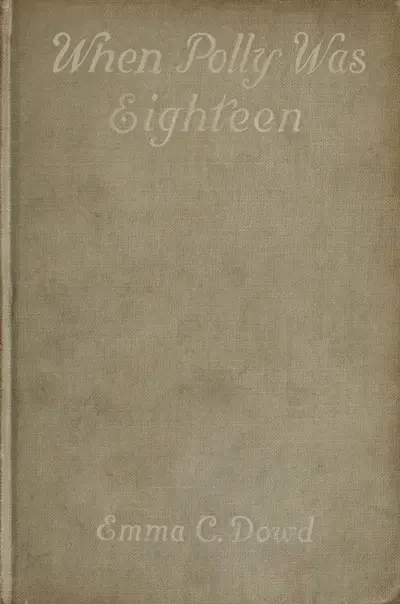
THE CLASSIC COLLECTION · 1921
"When Polly Was Eighteen" by Emma C. Dowd is a novel written in the early 20th century. The story follows Polly Dudley, a young woman navigating her relationships and personal growth amidst the complexities of love, friendship, and societal expectations. In the opening chapters, we are introduced to Polly, her love interest David, and the unfolding dynamics of their connection as they struggle with jealousy, misunderstandings, and the challenges of young adulthood. The opening of the book sets the stage with a significant walk between Polly and David, highlighting the tension in their relationship as David grapples with jealousy over Polly's interactions with other boys. This emotional backdrop creates an atmosphere of uncertainty for Polly, who is equally perplexed by David’s mood swings. As the narrative progresses, we see Polly's character evolve; she is caught between her desire for independence and the constraints imposed by her feelings for David. The initial chapters delve into themes of trust, freedom, and self-discovery, as Polly begins to articulate her need for autonomy even while being deeply entwined in her romantic feelings.
Introduction adapted from the source catalogue; source summaries may be automatically generated.
Free to read · English · 60,208 words · No account needed
MAKE TIME FOR A GOOD BOOK
On by default. Untick to stop anonymous reading totals. Each page counts after 10 seconds in view. How this works.
Anonymous counting is on unless you have switched it off.
It was not until Polly returned from taking her last guests to the Overlook train that she inquired of Esther Tenniel about the note with which David had entrusted her.
At the start the little girl smiled into Polly’s eyes in happy forgetfulness of her failure in duty until suddenly memory asserted itself. Then she hid her face in her little hands and broke into a wailing cry.
“Oh, Miss Dudley, I forgot! I forgot! I never did think of it till this minute! I told that sweet young man I would give it to you, and now I don’t know where it is. Oh, Miss Dudley!”
“Hush, dear,” said Polly soothingly. “It isn’t of the least consequence. I think it is not lost, and if it is, I shall not shed a single tear. Don’t cry another bit.”
The child continued to sob, while Polly, with her usual practicality,
went on:--
“You were playing with your paper dolls that morning, weren’t you?”
“Yes, Miss Dudley--the beautiful ones--that the Butterfly Lady gave us.”
Polly went to the cupboard where they were kept and looked through the envelopes. The note was not among the dolls.
“Do you remember what you wore that day?”
Esther reflected. “I think I had on my blue gingham and the white pinafore that goes with it.”
Polly examined Esther’s wardrobe, but did not see the white “pinafore.” Then she went to the big laundry hamper and looked over the clothes. The missing apron soon was in her hands, and down in the depths of the little pocket was the note.
Esther smiled wanly when she saw it, and began to cry.
“I want to tell you a secret,” said Polly. “You’ll promise not to repeat it to anybody?” Then said Polly, “I am glad you forgot! I would a great deal rather have the note now than when it was given you.”
Esther looked at her doubtingly. “Glad?” she queried.
“Yes, really and truly glad,” laughed Polly. “Now go and play and
forget all about it.”
“And I needn’t feel sorry?” questioned the little girl.
“No, you are to be glad, too.”
Esther smiled and flung her arms about Polly’s neck, whispering, “You are the nicest lady that ever was!”
Alone with the note, Polly did not open it at once. She sat still with her own thoughts. Finally she unfolded the paper, and read:--
DEAR POLLY: I must see you alone, and somebody is always tagging you round. Please arrange your work so as to meet me up in the grove this evening. I shall be there directly after tea.
Your reading position is saved on this browser. Take it to another device with a library code. Reading pages adapt to text, rather than matching a printed edition.
BEHIND THE BOOK
This eBook is for the use of anyone anywhere in the United States and most other parts of the world at no cost and with almost no restrictions whatsoever. You may copy it, give it away or re-use it under the terms of the Project Gutenberg License included with this eBook or online at www.gutenberg.org. If you are not located in the United States, you will have to check the laws of the country where you are located before using this eBook. Read the source licence.
The original source file, including credits and licence, is retained by this library. Request an original-format copy at no charge. Please include the book title and Project Gutenberg identifier #58512.
KEEP YOUR CURIOSITY GOING
Coulson Kernahan

Maurice Baring
Frances Wright
Cécile Tormay

Frederic Jesup Stimson

W. H. P. (William Henry Pope) Jarvis