THE CLASSIC COLLECTION✦Doodles, the Sunshine BoyCLASSIC FREE BOOKS
Doodles, the Sunshine Boy
Emma C. Dowd
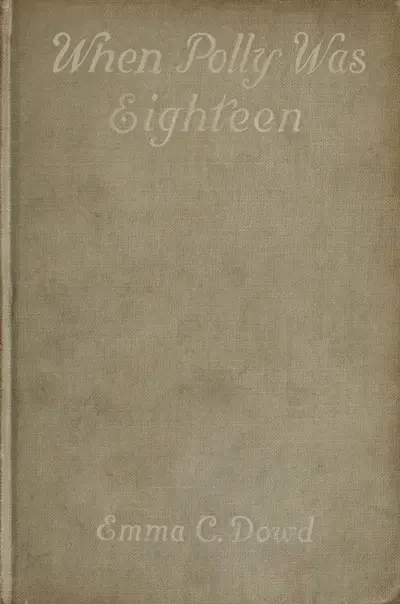
THE CLASSIC COLLECTION · 1921
"When Polly Was Eighteen" by Emma C. Dowd is a novel written in the early 20th century. The story follows Polly Dudley, a young woman navigating her relationships and personal growth amidst the complexities of love, friendship, and societal expectations. In the opening chapters, we are introduced to Polly, her love interest David, and the unfolding dynamics of their connection as they struggle with jealousy, misunderstandings, and the challenges of young adulthood. The opening of the book sets the stage with a significant walk between Polly and David, highlighting the tension in their relationship as David grapples with jealousy over Polly's interactions with other boys. This emotional backdrop creates an atmosphere of uncertainty for Polly, who is equally perplexed by David’s mood swings. As the narrative progresses, we see Polly's character evolve; she is caught between her desire for independence and the constraints imposed by her feelings for David. The initial chapters delve into themes of trust, freedom, and self-discovery, as Polly begins to articulate her need for autonomy even while being deeply entwined in her romantic feelings.
Introduction adapted from the source catalogue; source summaries may be automatically generated.
Free to read · English · 60,208 words · No account needed
MAKE TIME FOR A GOOD BOOK
On by default. Untick to stop anonymous reading totals. Each page counts after 10 seconds in view. How this works.
Anonymous counting is on unless you have switched it off.
“I guess she’s taking a nap,” were the unspoken words that tried to chase away a wee doubt which for a good many minutes had been pressing its way into the hopeful little heart. “Of course, she’d take a nap before going out again!”
Whether there was a nap or not, neither of the chauffeurs came into sight. Half past two--three--half-past three--four--all ticked themselves away on the old clock. It was very quiet in the front room of the little gray house. The light haze that brooded over the hills seemed also to have veiled the blue eyes at the window. Still, they kept loyal watch.
By and by the child suddenly straightened--the tall young chauffeur was striding down to the garage! It seemed as if the blue eyes must pierce the side of the low building, so eager were they to see inside. Presently the big automobile came out and whizzed past the window.
“Aunt Sophie! Aunt Sophie!” cried the little one joyously, “do come and put on my things! She’ll be here in a minute! The man’s gone round!”
The little plump woman ran in breezily. “What is it, dear?”
“Please bring my things. I don’t want to make her wait. There! they’re
coming!”
“No, no, child! That’s only the undertaker.”
“Well, she will be here right off. Do hurry, auntie! The man just went round to get her!” The child leaned forward, to catch the first glimpse of the returning car.
Aunt Sophie stood--unmoved as to feet.
“Better wait,” she said, “till she comes.”
The little one turned to look up into her aunt’s face, and her
eagerness nearly faltered.
“Why, you don’t want to make her you?” she asked wonderingly.
“Well, I guess her time isn’t over valuable,” she said slowly. “Anyway, I wouldn’t put on my things yet.”
They waited, the one all a-quiver with anticipation, the other gazing, not down the street, but at the child, her round, usually placid face now lengthened by lines of tenderness and pain.
The automobile did not come back. Finally Aunt Sophie crept quietly away to the kitchen, where she could not see the little white face by the window. The child was still scanning the road hopefully when, just before six o’clock, the big car returned to the garage, empty except for the liveried driver.
Aunt Sophie entered the room in her preparations for tea.
“She didn’t come,” needlessly announced the small voice. “I guess she thought she’d wait till to-morrow.”
The little woman sighed softly.
“I think she’ll come to-morrow,” went on the voice in cheerful tone.
“Maybe,” returned Aunt Sophie.
Your reading position is saved on this browser. Take it to another device with a library code. Reading pages adapt to text, rather than matching a printed edition.
BEHIND THE BOOK
This eBook is for the use of anyone anywhere in the United States and most other parts of the world at no cost and with almost no restrictions whatsoever. You may copy it, give it away or re-use it under the terms of the Project Gutenberg License included with this eBook or online at www.gutenberg.org. If you are not located in the United States, you will have to check the laws of the country where you are located before using this eBook. Read the source licence.
The original source file, including credits and licence, is retained by this library. Request an original-format copy at no charge. Please include the book title and Project Gutenberg identifier #58512.
KEEP YOUR CURIOSITY GOING
Coulson Kernahan

Maurice Baring
Frances Wright
Cécile Tormay

Frederic Jesup Stimson

W. H. P. (William Henry Pope) Jarvis