THE CLASSIC COLLECTION✦Doodles, the Sunshine BoyCLASSIC FREE BOOKS
Doodles, the Sunshine Boy
Emma C. Dowd
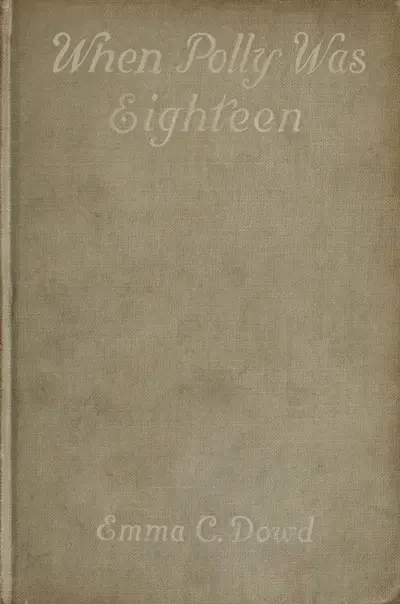
THE CLASSIC COLLECTION · 1921
"When Polly Was Eighteen" by Emma C. Dowd is a novel written in the early 20th century. The story follows Polly Dudley, a young woman navigating her relationships and personal growth amidst the complexities of love, friendship, and societal expectations. In the opening chapters, we are introduced to Polly, her love interest David, and the unfolding dynamics of their connection as they struggle with jealousy, misunderstandings, and the challenges of young adulthood. The opening of the book sets the stage with a significant walk between Polly and David, highlighting the tension in their relationship as David grapples with jealousy over Polly's interactions with other boys. This emotional backdrop creates an atmosphere of uncertainty for Polly, who is equally perplexed by David’s mood swings. As the narrative progresses, we see Polly's character evolve; she is caught between her desire for independence and the constraints imposed by her feelings for David. The initial chapters delve into themes of trust, freedom, and self-discovery, as Polly begins to articulate her need for autonomy even while being deeply entwined in her romantic feelings.
Introduction adapted from the source catalogue; source summaries may be automatically generated.
Free to read · English · 60,208 words · No account needed
MAKE TIME FOR A GOOD BOOK
On by default. Untick to stop anonymous reading totals. Each page counts after 10 seconds in view. How this works.
Anonymous counting is on unless you have switched it off.
“How do you know?” queried Lilith in surprise.
“I asked him when I went out to offer my services as dish-wiper,” replied Polly. “Do you know what was in that salad?”
“No, I couldn’t quite make out--tomatoes and cabbage for two things.”
“And macaroni!”
“I thought of that, but I couldn’t believe it was.”
“He found some in the refrigerator, so he chopped some cabbage to go with it; he says he often puts them together.”
“And wasn’t it arranged prettily? Where in the world did he learn to do
those things?”
Polly shook her head. “I am going to find out.”
Two days afterward she came upon the new cook in the kitchen scanning a
small volume.
“I am hunting for a pudding recipe,” he told her.
“It is an imposition for us to let you do all this work,” she said
apologetically.
“No, indeed,” he replied; “it is a real pleasure. Besides, I was falling out of practice. I ought to remember how to make this pudding without consulting a recipe.”
Polly looked at him curiously. “You talk--and cook--as if you were a professional,” she laughed.
“I am. This is the first summer for five years that I have not been concocting dishes for the table. I cooked my way through college, first at the commons, then at a New York restaurant. Finally a Yale boy rescued me, and for three summers I was chef at his father’s home up the Hudson.”
“Isn’t that fine!” exclaimed Polly, her eyes shining.
“Some people don’t see it that way,” smiled the young man.
“Why not?” Polly returned in an astonished tone. “I think it is splendid to work one’s way through college; but I never should have thought of cooking.”
“It pays pretty well, and it was the money I was looking for,” he
laughed.
“I knew a boy who took care of furnaces; but cooking is ever so much better. And you do know how to cook!” Polly wagged her head in approval.
“It is well you think so,” he replied; “seeing you have to eat the
cooking.”
“By the way,” he went on, “my sub-conscious mind has just notified me of a neglected duty. While you were down in Overlook this forenoon Mr. Wheatley came to see his little granddaughter. He rode up with the grocer.”
“Oh, did he!” cried Polly. “Rosalind must have been delighted.”
“Yes, but you should have seen her grandfather. He was almost beside himself to find how much she had improved. Is she really expected to walk at the end of two years?”
“Father thinks she will.”
There was a moment of tense silence.
Your reading position is saved on this browser. Take it to another device with a library code. Reading pages adapt to text, rather than matching a printed edition.
BEHIND THE BOOK
This eBook is for the use of anyone anywhere in the United States and most other parts of the world at no cost and with almost no restrictions whatsoever. You may copy it, give it away or re-use it under the terms of the Project Gutenberg License included with this eBook or online at www.gutenberg.org. If you are not located in the United States, you will have to check the laws of the country where you are located before using this eBook. Read the source licence.
The original source file, including credits and licence, is retained by this library. Request an original-format copy at no charge. Please include the book title and Project Gutenberg identifier #58512.
KEEP YOUR CURIOSITY GOING
Coulson Kernahan

Maurice Baring
Frances Wright
Cécile Tormay

Frederic Jesup Stimson

W. H. P. (William Henry Pope) Jarvis